

Donald Trump Renews Push for a $1 Coin Portrait, Testing Limits of Presidential Power
Trump's renewed push to put his image on a semiquincentennial $1 coin energises supporters, alarms critics
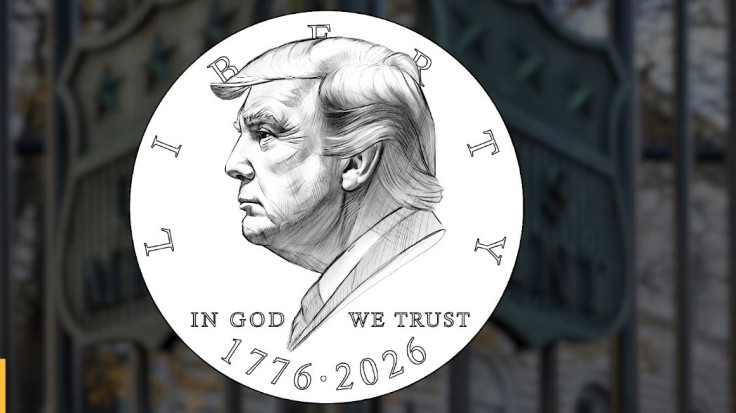
President Donald Trump's bid to place his own likeness on a commemorative $1 coin has ignited vigorous debate about presidential authority and national symbolism.
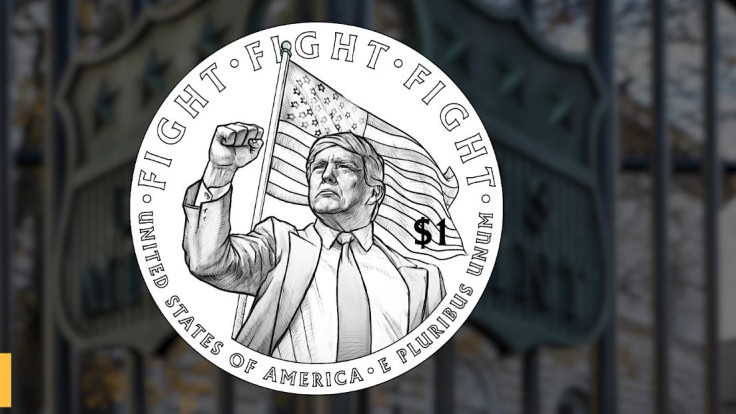
The Treasury Department is considering a draft design for a 250th-anniversary $1 coin featuring Trump's profile and imagery drawn from his recent political life, in a move that ties political branding to national heritage. The proposal has raised questions about legality, tradition, and the role of a sitting president in shaping national icons. The coin concept, which could be minted for the United States' semiquincentennial in 2026, shows Trump's profile under the word 'liberty' and the dates '1776–2026', along with a reverse side image of him raising a clenched fist beside the words 'fight, fight, fight', a phrase he uttered after a 2024 assassination attempt.
A Symbolic Coin or an Unprecedented Presidential Monument?
The semiquincentennial coin designs were first disclosed by US Treasurer Brandon Beach on social media late last year. The sketches quickly captured public attention because they break with a long-standing American tradition: presidents, especially those still living, are rarely, if ever, depicted on circulating money.
A Treasury Department spokesperson told reporters that although no final coin design has been selected, the draft 'reflects well the enduring spirit of our country and democracy, even in the face of immense obstacles'. Trump's supporters view the concept as a celebration of resilience and national pride, particularly linking the imagery to his survival of a violent attack during the 2024 campaign.
Legal Tradition Meets Political Ambition
However, the idea has sparked legal scrutiny. US law generally prohibits images of living individuals—including presidents—on currency or coins, a safeguard rooted in republican principles meant to avoid echoes of monarchical iconography.
Legislation authorised in 2020, the Circulating Collectible Coin Redesign Act, permits the Treasury to issue semiquincentennial coins with designs emblematic of America's 250th anniversary. Yet that same law also bars any 'head and shoulders portrait or bust of any person, living or dead, and no portrait of a living person may be included in the design on the reverse of any coin' in that series.
To navigate this, the draft design places Trump's portrait on the obverse—the front—of the coin, whilst the reverse features a more dynamic illustration rather than a traditional bust. Whether this distinction will withstand legal challenge remains uncertain. Legal analysts note that existing statutes governing coinage do not explicitly prohibit living individuals from appearing on every type of coin, despite centuries of tradition to that effect.
Political Pushback and Congressional Tension
The proposal has also drawn political pushback. Critics argue that featuring a sitting president on national currency blurs the line between government commemoration and political promotion.
Some lawmakers, including prominent senators, have urged Treasury officials to reject the Trump-centric designs, citing the importance of maintaining non-partisan symbolism on money. Senator Jeff Merkley and a group of Democratic colleagues wrote to Treasury Secretary Scott Bessent asserting that placing Trump's likeness on US currency would disrupt historic precedent and 'is not only inconsistent with congressional intent to honour 250 years of United States' history, but also un-American'.
Supporters of the coin design point to rare historical exceptions — such as President Calvin Coolidge's appearance on a 1926 commemorative half dollar — to argue that living figures have appeared on US coins in the past. Still, those instances are anomalies rather than norms, and many experts caution that precedent alone may not clear the several legal obstacles this proposal faces.
Treasury officials have signalled that they will share further details once the current government shutdown, which has delayed multiple federal processes, including coinage decisions, is resolved. Whether Trump's likeness ultimately appears on a $1 coin remains an open question. But the very possibility has turned a simple piece of metal into a focal point of national debate about leadership, legacy, and the symbolism of American money.
© Copyright IBTimes 2026. All rights reserved.