

Donald Trump Sends Missile-Armed Destroyers To Middle East Following Iran Execution Plans
Trump deploys missile-armed destroyers to Persian Gulf as Iran halts executions amid escalating military standoff
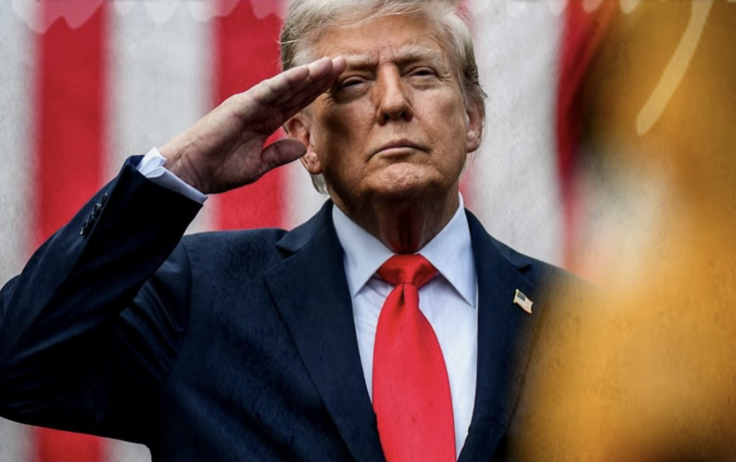
US President Donald Trump has escalated military pressure on Iran by ordering a powerful Carrier Strike Group to abandon operations in the South China Sea and sail directly towards the Persian Gulf, a journey that will consume five to eight days.
The USS Abraham Lincoln, accompanied by advanced Arleigh Burke-class guided-missile destroyers, has received explicit orders to reposition amidst escalating tensions surrounding mass anti-government protests that have engulfed Iran for nearly three weeks and threatened to destabilise the entire region.
Naval Manoeuvre Arrives At A Critical Juncture
Trump claims to have received assurances from Iranian officials that killings of detained protesters have ceased and that planned executions have been indefinitely postponed, yet his administration has pointedly refused to abandon military contingency planning.
The president has communicated unmistakable instructions to his national security team: any military intervention must be executed with decisive speed rather than a prolonged engagement.
According to senior administration officials and sources close to the White House, Trump articulated his fundamental strategic objective to Vice President JD Vance and the Pentagon during Tuesday afternoon meetings: achieve maximum impact whilst avoiding the protracted conflicts that have characterised previous Middle East interventions.
One defence official disclosed the crux of this approach, saying: 'If he does something, he wants it to be definitive.' This emphasis on swift action reflects Trump's repeated warnings that he will 'hit Iran hard' should the regime continue executing demonstrators, yet his measured response to reported execution reprieves suggests a president balancing military readiness against potential diplomatic breakthroughs.
Strategic Calculus On Iran Military Action
The current crisis represents a dramatic test of Trump's resolve following his previous strike on Iranian nuclear facilities.
Operation Midnight Hammer, carried out in June 2025, deployed seven B-2 Spirit stealth bombers in what the Pentagon described as the largest B-2 operational strike in history, striking three major nuclear sites at Fordow, Natanz and Isfahan. More than 125 aircraft participated in that operation, unleashing fourteen bunker-buster bombs alongside thirty Tomahawk cruise missiles from Navy submarines.
Remarkably, Iran mounted no defensive response—its fighter jets remained grounded and surface-to-air missile batteries did not engage the American strike package. The psychological impact of that operation looms heavily over current negotiations, with Iran's Foreign Minister Abbas Araghchi recently warning Trump not to 'repeat the same error' that produced such devastating results six months ago.
The Iranian protests, which erupted on 28 December over currency devaluation and soaring living costs, have spiralled into the most serious domestic challenge to the clerical regime since 2022.
Casualty figures remain contested: Amnesty International reports at least 2,400 deaths, whilst the Norway-based Iran Human Rights Organisation documents 3,428 killed as of 14 January.
More than 10,600 demonstrators have been detained within a fortnight, and the regime imposed a near-total internet blackout to suppress documentation and international coordination of the uprising.
Iran's Execution Reprieve And Tactical Uncertainty
The reported pause in executions provides limited comfort to observers tracking this volatile situation.
Erfan Soltani, a 26-year-old clothing shop owner arrested during early protests, was reportedly scheduled for execution on Wednesday but received an eleventh-hour reprieve confirmed by his family and the human rights organisation Hengaw. Yet Iran's chief justice, Ghol-Hosseini, had previously advocated for expedited executions, and the regime has a documented history of mass executions following prior uprisings.
When Trump announced on Wednesday that he had been informed 'by very important sources on the other side' that 'the killing has stopped and the executions won't take place,' he added an element of caution, remarking: 'I hope it's true. Who knows?'
The positioning of the USS Abraham Lincoln strike group signals that Trump retains robust military options should the Iranian regime resume mass killings. The destroyer flotilla, equipped with advanced surface-to-air missile defence systems proven during the June 2025 operation, can sustain strikes far from Iranian shores, limiting risk to American personnel.
Whether this naval deployment serves primarily as diplomatic leverage or constitutes preparation for kinetic action remains the defining uncertainty of the coming weeks.
© Copyright IBTimes 2026. All rights reserved.