

Doomsday Clock 2026 Reveal May Shift Closer to Midnight, Raising Global Panic
As the countdown tightens, scientists prepare to explain what humanity risks losing
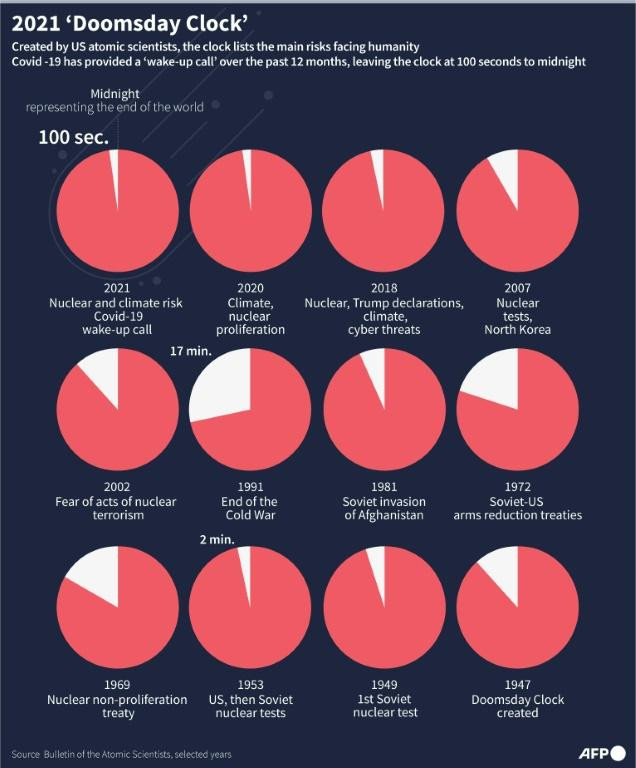
The world is bracing for a pivotal moment as scientists prepare to unveil the 2026 setting of the Doomsday Clock, a symbolic measure of how close humanity stands to self-destruction. Currently set at 89 seconds to midnight, the clock reflects escalating global threats ranging from nuclear conflict to climate instability.
The Bulletin of the Atomic Scientists is scheduled to announce the updated time at 10 am Eastern Time on Tuesday, 27 January. Experts and global policy leaders are expected to explain whether humanity has moved closer to catastrophe or stepped back from the brink.
Beyond symbolism, the clock has become a barometer of public anxiety. Its movement often triggers renewed debate about political accountability, scientific responsibility and the collective choices shaping the planet's future.
What the Doomsday Clock Measures — and Why It Matters
Created in 1947 by atomic scientists, the Doomsday Clock tracks humanity's proximity to existential threats. Midnight represents global catastrophe. Each adjustment reflects expert assessments of nuclear risk, climate change, technological disruption and geopolitical instability.
The current setting at 89 seconds to midnight marks one of the closest points in the clock's history. Analysts say it underscores intensifying dangers such as renewed nuclear tensions, misinformation-driven conflict and the accelerating climate crisis, according to USA Today.
Although symbolic, the clock's impact is tangible. Governments, educators and advocacy groups often use it to draw attention to urgent policy needs and to mobilise public awareness around global security.
Why the 2026 Update Is Raising Alarm
This year's announcement carries heightened tension. Scientists and world experts will not only reveal the new time but also explain the reasoning behind any shift, including whether recent global developments have reduced or amplified existential risk.
Recent conflicts, artificial intelligence concerns and stalled climate action have added to fears that the clock could inch even closer to midnight. Observers warn that such a move could deepen public anxiety and intensify calls for international cooperation, WION noted.
At the same time, experts note that even a slight reversal away from midnight would signal hope, reflecting meaningful progress in diplomacy, innovation or environmental commitments.
Impending Doom or Wake-Up Call?
The clock's movement is more than a scientific update. For many, it represents a psychological threshold, a reminder that the consequences of political and technological decisions may shape generations.
A shift closer to midnight could reinforce a sense of looming apocalypse, while also placing pressure on world leaders to demonstrate urgency and accountability. Critics argue the clock risks fuelling fear, but supporters counter that discomfort can drive action, Daily Star reported.
The announcement is expected to reignite public debate about how much control humanity truly has over its fate and whether time is running out faster than governments are willing to admit.
What a Time Change Could Mean for Ordinary People
Although the Doomsday Clock does not predict specific events, its message resonates deeply with communities facing real-world consequences of global instability. From rising energy costs and climate-driven disasters to nuclear security fears, the clock reflects risks that increasingly feel personal.
Educators and mental health advocates warn that constant exposure to existential threats can heighten stress, particularly among younger generations. Others see the clock as a tool for empowerment, urging people to demand safer policies and sustainable innovation.
As Tuesday's announcement approaches, the central question remains: will humanity step back from the brink, or edge even closer to midnight?
© Copyright IBTimes 2026. All rights reserved.