

Einstein Was Right: Astronomers Watch a Black Hole Drag Spacetime Into a Wobble
A rare stellar destruction has revealed spacetime wobbling around a fast-spinning black hole, validating Einstein's theory under extreme conditions
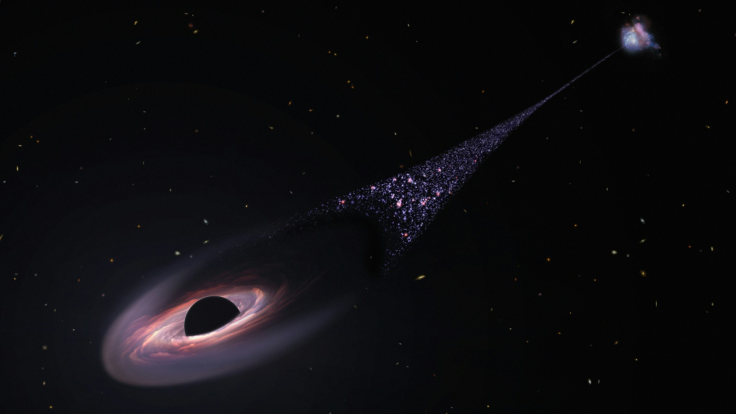
For the first time, astronomers have directly observed a spinning black hole bending space and time, as predicted in Albert Einstein's theory of general relativity more than a hundred years ago.
The observation also captured a star being torn apart by the black hole, a phenomenon rarely seen. Scientists say the discovery could provide new insights into the behaviour of black holes.
A One-Hundred-Year-Old Prediction Tested
In 1915, Einstein developed a general theory of relativity, which transformed the way we think about gravity, viewing it as a curvature of spacetime due to mass and energy.
One of its less-obvious forecasts was that a rotating mass must drag spacetime along with it, a formulation later developed by physicists Josef Lense and Hans Thirring in 1918. This Lense-Thirring effect, or frame-dragging as it is often called, implies that spinning objects, such as a black hole, can cause space itself to twist around itself.
Direct evidence of this effect near black holes, where gravity is most intense, has been the goal of astronomers for decades. However, because black holes do not emit light either, and their surroundings are shrouded in copious energy and a flow of matter, it has been insanely hard to observe frame-dragging in action until now.
Watching A Star's Demise
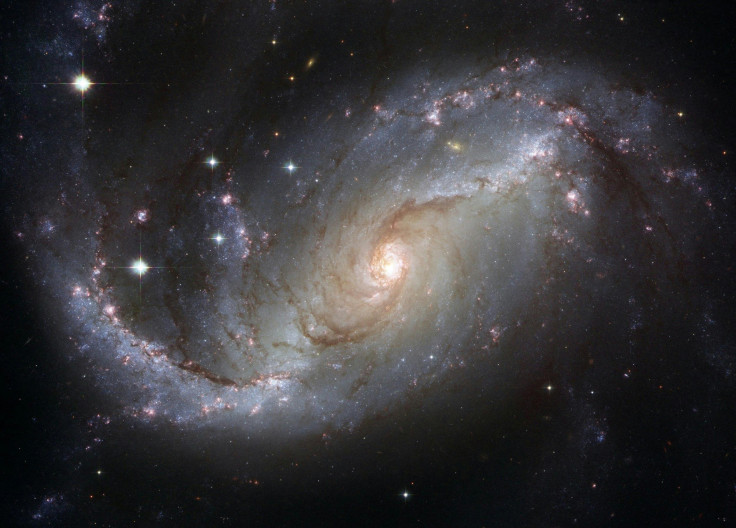
Observations of AT2020afhd made the breakthrough, an event considered a tidal disruption event (TDE), in which a star comes too close to a supermassive black hole and is ripped apart by its strong gravity. In the resulting confusion, the star's remains formed a rotating accretion disc that quickly orbited the black hole, with powerful jets of material ejected at nearly the speed of light.
The patterns in the emissions of the disc and the jets were observed by analysing data from both X-ray and radio telescopes, such as the Neil Gehrels Swift Observatory and the Karl G. Jarinsky Very Large Array. Evidently, they discovered that the two were wobbling at a constant rhythm with a period of about 20 days.
This synchronised wobble, the researchers believe, is definitive evidence that spacetime itself is being dragged and twisted by the black hole's spin, exactly what would happen according to general relativity.
The Signature Of Frame-Dragging
Frame-dragging is a purely relativistic phenomenon that occurs when a large object with angular momentum is spinning and acts as a gravitomagnetic influence on the surrounding space, much like the rotation of a charged electric charge produces a magnetic field. This is the most substantial effect near a black hole, characterised by a very strong gravitational force and rapid rotation.
Empirical evidence of such phenomena was, until recently, secondary or observable only in less extreme space environments, such as the relativistic precession of the orbits of stars or pulsars around massive bodies.
Nevertheless, this most recent observation is the first clear observation of Lense–Thirring precession in such a strong gravitational field surrounding a black hole. It is one of the strongest tests known so far of Einstein's theory in the strong-gravity regime.
What The Scientists Say
Another co-author of the study, a Reader in the School of Physics and Astronomy at Cardiff University, called the work by Dr Cosimo Inserra, the most convincing evidence of Lense-Thirring precession to date. He likened the effect to that of a spinning top, which rotates the water around it into a whirlpool, giving someone a vivid analogy of how spacetime seems to move in response to the black hole's spin.
Besides the fact that these observations confirmed predictions made over one hundred years ago, according to Dr Inserra, these observations also help to understand the character of tidal disruption events, as short-term variations in the signal of this TDE played a central role in separating the effect of frame-dragging of the system by other violent processes.
Beyond Confirmation: New Tools For Black Hole Physics
Although general relativity, as proposed by Einstein, has been proven in most settings, including the discovery of gravitational waves and the secondary observations of the accurate movements of planets, observations of frame-dragging in the most profound regions of a black hole have been sought.
The novel findings not only strengthen Einstein's theory but also provide astronomers with one of the most powerful tools for studying black-hole spin, accretion, and jet formation.
The approaches used in this research represent a perfect example of how multi-wavelength astronomy (the synthesis of X-ray and radio) can reveal remnants of hidden extreme physics. Due to advances in observational capabilities, astronomers are optimistic that similar methods can be applied to other tidal disruption events and to the Universe's black holes, unlocking more information about the most mysterious phenomena in the Universe.
Establishing the Legacy of Einstein
New discoveries that a black hole is curving the space confirm the timeless relevance of Einstein's findings. Over 100 years after the formulation of general relativity, scientists are still working to come up with ways of testing the predictions of the theory in the harshest conditions ever witnessed.
© Copyright IBTimes 2026. All rights reserved.