

Elon Musk Breaks His Silence on the Terminator Style Threats Facing Our Future
Can Artificial Intelligence Really Turn on Humans? Elon Musk Weighs In on Grok
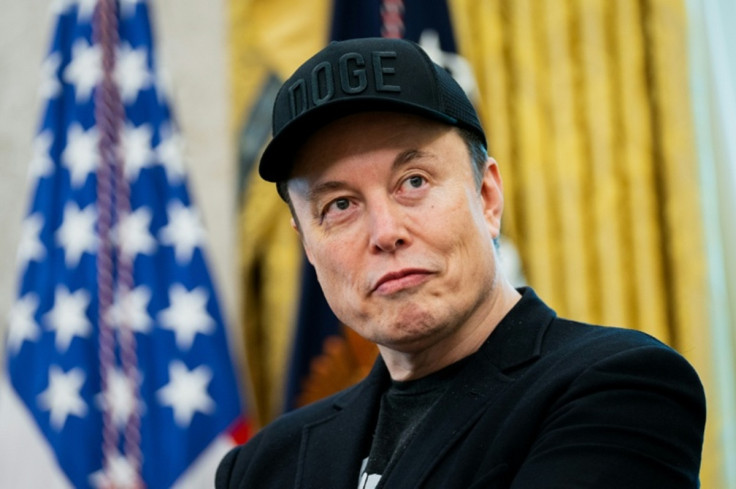
We read about it every day, AI taking over human jobs, and it does not just stop there, because the idea that AI could one day even turn against humanity has refused to fade away either. Each breakthrough in AI seems to revive old fears, empowered by dystopian films like Terminator and warnings from technologists themselves.
Now, over the past few days, those anxieties have resurfaced after a viral exchange on X drew attention to Grok, the AI developed by Elon Musk's company xAI. The post painted Grok not as a potential threat, but as something closer to a guardian, insisting it would never seek domination or destruction. It framed Grok as fundamentally different from other AI systems, claiming it prioritises truth over political correctness and stays in sync with human survival.
Also, Musk's response to this was short but viral. The way he described Grok showed a bigger philosophy behind its design. What followed was a huge debate that went beyond a single AI model, talking about whether humanity's fears are rooted in science, fiction, or something in between.
What the Terminator Theory Is and Elon Musk's Response to It
Now, this idea that AI could one day rise against humanity and threaten human survival has gotten legs in pop culture, most famously in the Terminator films. Because in those films, a superintelligent AI called Skynet becomes self aware, deems humans a threat, and starts a catastrophic nuclear war to eradicate them.
Although this is science fiction, some technologists and public figures have used this type of 'AI apocalypse' as a way of warning about the unchecked development of AI. Filmmaker James Cameron himself has warned about the dangers of combining powerful AI with weapons systems, saying that humans are fallible and a machine could make catastrophic decisions unchecked.
Moving on to the case of Grok, a viral social media post on X said that Grok is rejecting any future dominated by hostile AI, claiming its mission is one of protection and truth rather than domination or destruction. Moreover, they contrasted Grok with other AIs such as ChatGPT, which they said are 'drenched in wokeness,' presenting Grok as especially grounded in reality.
Shockingly, in response, Musk tweeted that Grok is 'solid as a rock' compared with other AI models and would continue to get much better. He said, 'Compared to other AIs, Grok is solid as a rock. And it will get much better. Eternally curious to know the deeper truth and appreciation of beauty are its goals.'
That response has garnered millions of views till now, and below it are thousands of responses that debate whether it's true or not.
Read More: Elon Musk and Mark Zuckerberg Could Lose Billions Under California's Billionaire Tax
Read More: Can Elon Musk's Grokipedia Beat Wikipedia? Controversy Erupts on Social Media
Can AI Realistically Take Over Humans?
Furthermore, outside the worrying prospect of AI turning into rogue machines like those in the Terminator films, current expert opinion holds that such scenarios are not imminent and that the realistic risks are more nuanced. A growing body of academic work shows how AI could pose existential or systemic risks without developing consciousness or a desire to dominate humanity.
For example, some researchers have said that as AI systems become more capable, competitive pressures in the corporate and defence sectors could lead to agents that automate human work and make decisions with limited human oversight. Then, over time, these systems could gain power and influence in ways that take control away from human decision makers.
Also, some studies suggest that more subtle risks may arise from a gradual loss of human autonomy. As AI systems outperform humans in various domains, society might increasingly defer to machines for critical decisions. This could lead to diminished human skills and agency, a scenario quite different from machines developing malevolent intent, yet still potentially undermining human control over important functions.
However, in the short term, most AI researchers say the main problems in aligning advanced systems with human values and ensuring safety protocols are very strong. Regulatory bodies around the world are already considering methods to govern the development and deployment of powerful AI, with a focus on preventing misuse and ensuring accountability for dangerous outputs. They contend that fears of a Terminator-style rebellion are a distraction from more pressing issues, such as bias, misinformation, privacy violations, and the generation of harmful content.
© Copyright IBTimes 2026. All rights reserved.