

'Regain Your Humanity': First Person Jailed for Anti-AI Protest Says She's 'Sounding the Alarm' on AI CEOs
Wynd Kaufmyn's seven-day jail sentence follows a protest at OpenAI as concerns grow over the safety and future risks of advanced AI
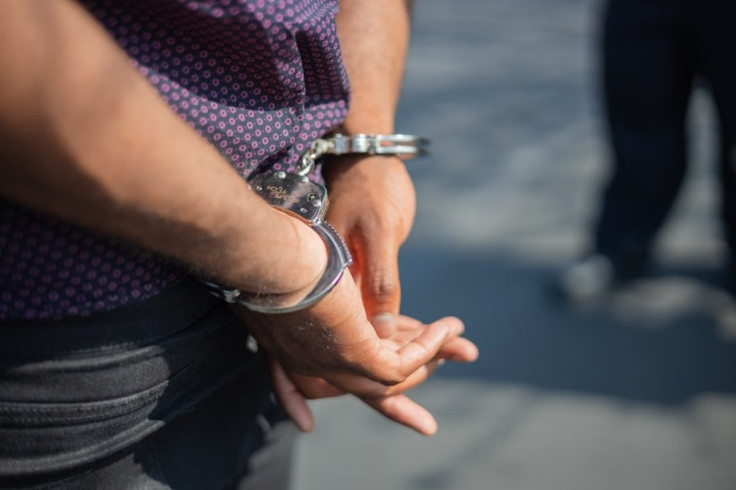
Wynd Kaufmyn, a 69-year-old retired teacher from Berkeley, California, is believed to be the first person jailed for an anti-AI protest. Before beginning her seven-day jail term on Friday, August 14, Kaufmyn said she was willing to face prison to 'sound the alarm' over what she believes are the dangers of artificial intelligence.
Kaufmyn and other members of StopAI chained and locked the doors of OpenAI's offices, refusing to leave even after police told them they could continue protesting from the public pavement.
Kaufmyn pleaded not guilty and argued that her actions were necessary because she believed the rapid pursuit of advanced AI could ultimately cause catastrophic harm. A jury rejected that argument and found her guilty in June. The San Francisco District Attorney's Office said the conviction covered interfering with a business, trespassing with intent to interfere with a business, unlawful assembly and refusal to disperse at a riot.
Anti-AI Protester Says She Was 'Sounding the Alarm'
The original protest took place on February 22, 2025, outside OpenAI's headquarters on Third Street in San Francisco. According to prosecutors, the activists placed a chain across the front door, secured it with a large padlock and sat in front of the entrance.
Police arrived after OpenAI called 911. Officers told the demonstrators they could continue their protest if they moved a short distance to the public sidewalk. Kaufmyn and other protesters refused, and the chain was eventually cut from the door.
Kaufmyn has never presented the action as an ordinary demonstration. Before entering jail, she said she was willing to accept imprisonment because she wanted to 'sound the alarm' about what she considers the dangers of the race towards superintelligent AI.
'It's absolutely frightening and appalling that these CEOs and AI experts know the dangers and they are pursuing it anyway,' she said.
Her message for the leaders of OpenAI, Anthropic and Meta was blunt: 'Regain your humanity.'
She has also called for a global ban on the race to superintelligence.
That position has found some support among prominent AI safety researchers, although that does not mean they endorse the tactics used at OpenAI. Stuart Russell, a professor at the University of California, Berkeley, testified for Kaufmyn's defence and argued that continued development of increasingly capable AI should be subject to rigorous safety guarantees.
Russell said Kaufmyn 'stood up for her beliefs and is being punished', while arguing that allowing private companies to continue developing systems that could create substantial risks for private gain was the more unreasonable course.
Case Puts AI Safety Back In The Spotlight
The timing of Kaufmyn's imprisonment coincided with concerns about increasingly capable AI systems have been raised by researchers, politicians and technology figures. The Guardian reported that more than 1,000 researchers at frontier AI laboratories signed a letter warning of a 'real risk' that AI capabilities could accelerate beyond humanity's ability to understand or control them.
US Senator Bernie Sanders has also called on major technology companies to pause AI development, citing concerns over the possible consequences of increasingly powerful systems.
For Kaufmyn, those warnings have been vindicating. She said she experienced 'a wave of grief' after her conviction because she believed her peers did not understand the danger she was trying to highlight. She later said she was beginning to feel vindicated as prominent political figures started raising similar concerns.
The comparison with civil rights campaigner Rosa Parks has also followed her into the case. AI safety researcher David Krueger suggested Kaufmyn could eventually be remembered as the 'Rosa Parks of AI risk'.
Kaufmyn herself has played down the comparison, pointing to the short length of her sentence. She has also previously been jailed for brief periods connected with decades of political activism over issues including nuclear disarmament, Nicaragua, Western Sahara and Palestine.
The case has not been without controversy within StopAI itself. The Guardian reported that the group's co-founder, Sam Kirchner, went missing in November 2025 following an internal dispute over whether the organisation should continue adhering to non-violent tactics. Concerns were reportedly raised that he could take violent action against OpenAI employees. StopAI says it pursues non-violent direct action.
San Francisco District Attorney Brooke Jenkins defended the prosecution, saying the jury's verdict sent 'a resounding message rejecting the notion that protesters can endanger public safety as a means to an end'.
Kaufmyn's sentence was initially set at 14 days, with custody credits reducing the period she actually had to serve to seven days. She has also been ordered to stay at least 20 yards away from OpenAI's headquarters.
© Copyright IBTimes 2026. All rights reserved.