Conrad Scheibye Spent 18 Months Developing a Rocket Engine Cycle, Then Walked Away From It
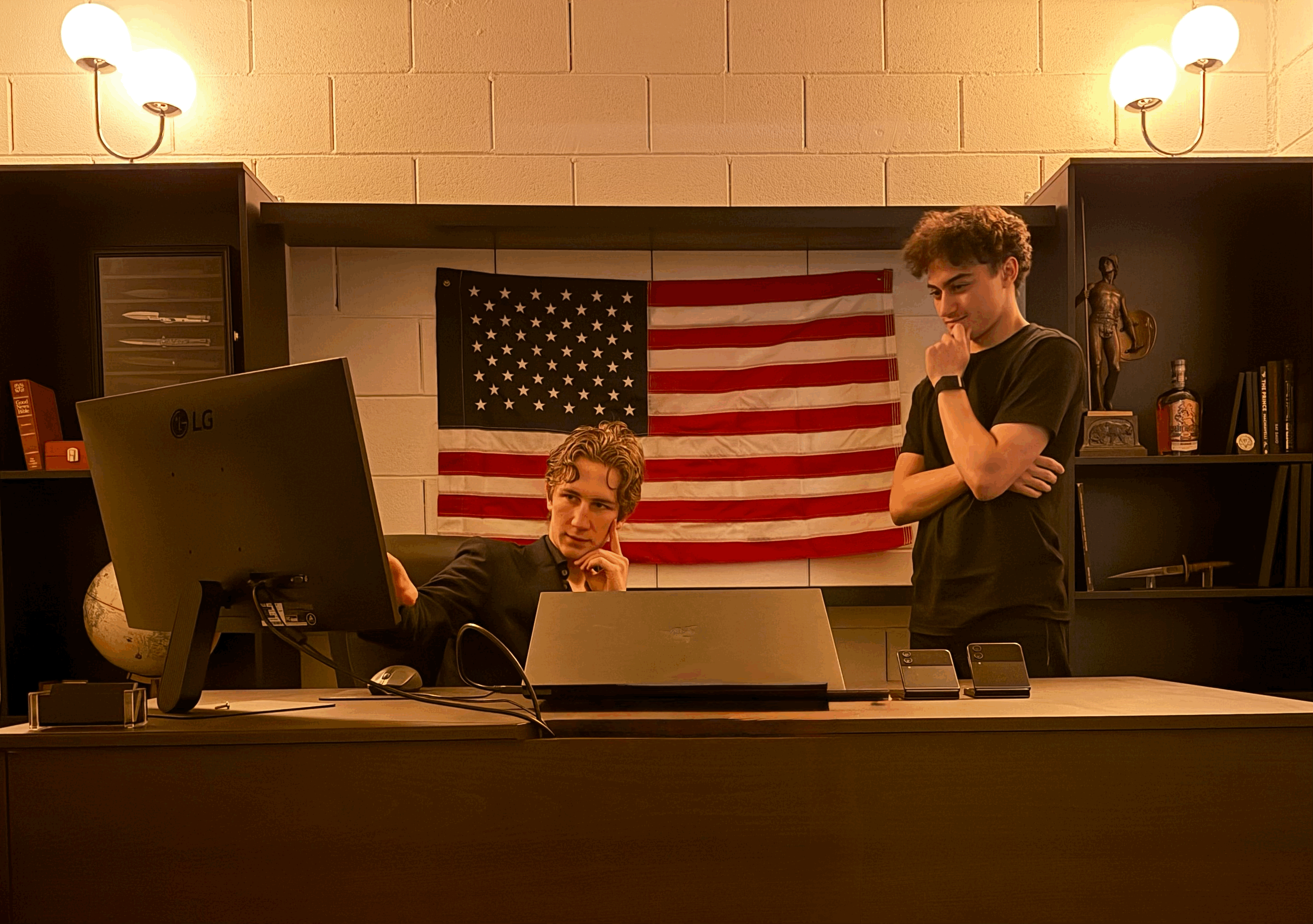
By early 2026, Conrad Scheibye had spent a year and a half building the strongest technical work of his career. He had developed a hydrogen peroxide rocket engine system, worked on its decomposition chemistry with Professor J. P. Martin Trusler of Imperial College London, secured outside support, and built a company around the idea. Then an experienced defense technology founder challenged the commercial case behind the engineering. The objection was significant enough that Scheibye and his co-founder, Daniel Choupak, ultimately changed the direction of the company.
Scheibye's first reaction was resistance. The propulsion work was not an undeveloped idea he could discard casually. He had developed the core technology with J.P. Martin Trusler, a professor of thermophysics with more than 180 peer-reviewed publications. Scheibye was completing his A-levels while doing the work and running the venture with Choupak.
"Given all the effort we had put into the design of the rocket engine and the conviction it would work, it was hard to let it all go to waste and not see it through to completion," Scheibye said.
The venture began in June 2024 as a research project and later received an Emergent Ventures grant from the Mercatus Center at George Mason University. The company incorporated in Delaware in November 2025.
Rocket propulsion appealed to him because it forced multiple engineering disciplines into the same system. Competition physics had introduced Scheibye to open-ended technical questions, but leading a propulsion team required a much higher level of oversight across a huge range of engineering disciplines. The difficulty of the engineering became part of the attraction.
Scheibye said, "Nobody builds a space tech company as an easy way to make money. What pulled me in was that propulsion doesn't let you cheat. On most projects you can lean on the part you're strong at and optimize for a specific endpoint. With a rocket engine, if the thermo is off or the structural margins are wrong, it explodes. Every discipline has to be right at the same time, and everything affects everything else."
The engineering itself was not what ended the propulsion direction. That made the decision harder than abandoning an experiment that had simply failed. The underlying work had technical merit, and walking away meant setting aside a project that had occupied roughly 18 months, changing what the company was supposed to become, and leaving behind what he considered his strongest technical credential at the time.
The problem was commercial. The market access created by the technology did not correspond to sufficient near-term demand at the current stage of humanity's extraterrestrial ambition. Continuing would have required treating technical promise as evidence of a viable business, even though the two questions were producing different answers.
"What small market does exist for dedicated small launch providers is being rapidly filled by a concentrated number of fast-growing players. Ridesharing already covers much of the same need at lower cost, so there is no gap for a new dedicated small launcher to fill, notwithstanding unforeseeable market shifts or such drastically differentiated launch technology that it completely redefines the industry's economics," Scheibye shared.
That experience changed the way Scheibye evaluates technical programs as a founder and CTO. A technically successful program can continue consuming time and capital even after the commercial case has weakened.
The pivot also required him to give up familiarity. Propulsion and computer vision shared little of the specialized knowledge he had accumulated. His general approach to technical problems transferred, but the field did not. Moving forward meant building enough understanding of a new technical and operational environment to lead people who already possessed expertise in areas he was entering.
What emerged was Initium Technologies (a.k.a Initium Industries Inc.), an edge AI company focused on running artificial intelligence beside military sensors rather than depending on remote data centers. Scheibye and Choupak had identified a different class of constraint. Military systems can operate where bandwidth is limited, connectivity is intermittent or deliberately restricted, and large sensor streams cannot reliably be sent elsewhere for processing.
For Scheibye, the change was not simply a move from propulsion into another technically difficult field. The new direction offered a clearer connection between the engineering work and an operational requirement.
"Companies like Anduril, Palantir, Shield AI, etc., have done incredible work over the last decade to establish the modern U.S. Military's definitive software advantage, but that advantage is only as defensible as the hardware on which it relies. Example. On 1 March, Iranian Shahed drones struck AWS facilities across the UAE and Bahrain. Two of three availability zones went down in the UAE region and one in Bahrain, and because multiple zones failed simultaneously, standard redundancy models failed with them. Iran has since struck AWS in Bahrain again and formally designated eighteen American technology companies as legitimate military targets. This strategic vulnerability heralds a shift in infrastructure targeting that our adversaries, not limited to Iran, will continue to exploit," Scheibye said.
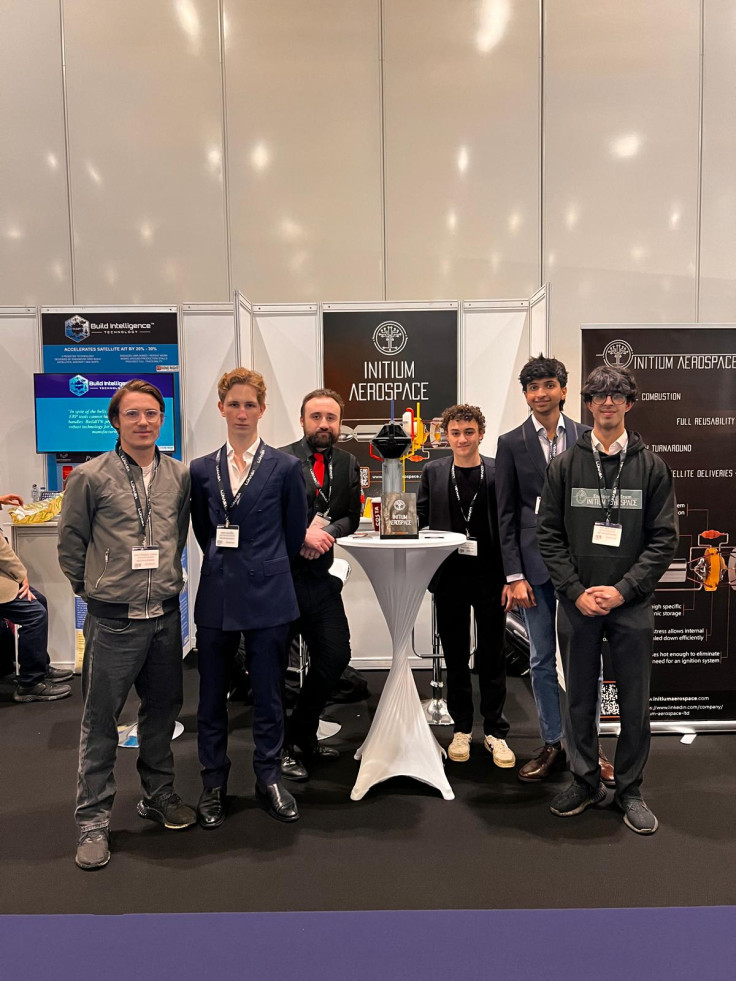
The company's engineering team works on model development, compute hardware, runtime performance, thermal constraints, integration, and other layers of the system. Scheibye's responsibility at the CTO level is to direct that technical effort as a coherent whole, vet the quality of the work, resolve tradeoffs among engineering disciplines, and ensure that the resulting systems are progressing quickly enough to meet operational expectations.
Initium has since raised more than $1 million from investors including Cherry Ventures, Mark VC, Pareto Holdings, and Cory Capital. The company operates from Mountain View and has traveled to military installations around the United States to put its systems in front of prospective users. Those interactions have also changed how Scheibye evaluates whether development is advancing in the right direction.
According to Scheibye, "Our initial meeting with the 5th SFG(A) Multi-Domain team was built around MANTIS, our edge compute system for fusing multiple drone feeds into a single COP. Their operators pushed us on other ways the same underlying system could be applied. Fusing CCTV feeds instead of drone feeds was floated, and that conversation is what shaped IRIS."
The propulsion work remains relevant because it changed the way Scheibye evaluates whether a technical concept deserves continued investment. He had already seen that strong engineering progress could coexist with a weak commercial case, and he now applies that separation when deciding where Initium should commit engineering time and capital.
© Copyright IBTimes 2026. All rights reserved.
- Recommended For You