Hydrogen Deposits: Could This Overlooked Gas Beneath the Earth Solve the Clean Energy Crisis?
New discoveries in Mali and Albania have challenged long-held assumptions, but researchers still do not know how much hydrogen can be commercially recovered
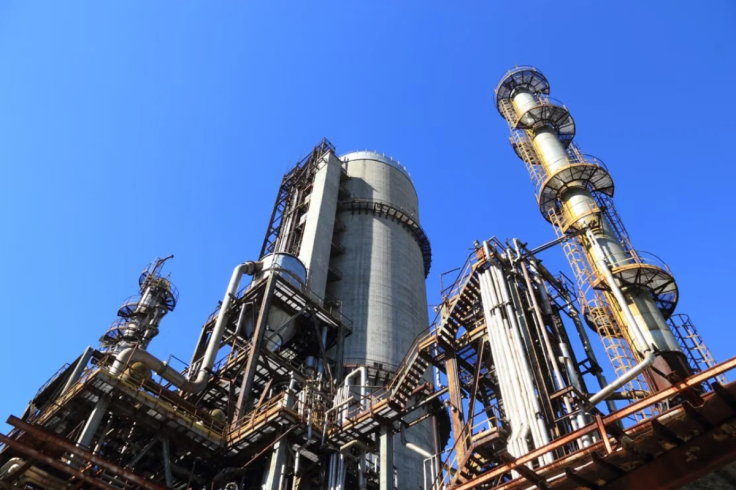
Energy firms in almost 30 countries are drilling deep underground in search of a gas that, until recently, scientists had largely overlooked as a potentially exploitable resource.
Their target is geologic hydrogen, a naturally occurring fuel that can accumulate in pockets beneath the Earth's surface, and some believe it could eventually become a relatively cheap, low-carbon alternative to fossil fuels.
Since 2023, venture capitalists have invested nearly US$500 million in the search for these deposits, according to Nature. A 2024 analysis published in Science Advances estimated that the Earth's subsurface could contain tens of trillions of tonnes of hydrogen, although much of it may be impractical to recover.
The study found that if around 100 billion tonnes could eventually be extracted, it could theoretically meet projected hydrogen requirements for net-zero emissions for about 200 years. The estimate refers to a potential resource rather than an established commercially recoverable reserve, with the amount that could actually be extracted remaining uncertain.
Why Scientists Missed It for Decades
Hydrogen combustion produces water vapour rather than carbon dioxide at the point of use, making it an appealing potential low-carbon fuel. But for decades, researchers did not expect large, exploitable quantities of hydrogen to accumulate underground.
'On Wikipedia, natural hydrogen didn't exist five years ago,' said Owain Jackson, head of hydrogen exploration company H2Au, which began drilling in Kansas in August. Geologist David Waltham, of Royal Holloway, University of London, said the oversight came down to a basic assumption.
'Quite literally because everyone assumed it wasn't there,' he said. Scientists knew hydrogen formed underground when iron-rich rock reacts with water, or when radioactive decay splits water molecules apart.
But researchers believed much of the gas would escape through rock and vanish into the atmosphere, partly because hydrogen molecules are small and were not expected to remain trapped beneath impermeable rock layers.
The high mobility of hydrogen and the need for effective underground trapping remain important issues in understanding whether substantial deposits can form.
Firms are racing to drill for hydrogen in hopes of finding a dirt-cheap green-energy source.https://t.co/NG0doGT9DA
— nature (@Nature) September 15, 2026
A 2018 Discovery Changed the Picture
That assumption began to shift after a 2018 study published in the International Journal of Hydrogen Energy documented a substantial hydrogen deposit in Mali. Chris Ballentine, a geologist at the University of Oxford, said the finding reshaped how scientists viewed the gas.
'The first time it hit the scientific literature, it caught our attention,' Ballentine said. Further evidence came from an unexpected place, mining operations, where researchers have found evidence of naturally occurring hydrogen underground.
In 2024, researchers reported that at least 200 tonnes of hydrogen was escaping annually from a chromite mine in Albania, one of the largest natural flow rates of the gas ever measured. The findings, published in Science, provided further evidence that hydrogen can accumulate and flow naturally in underground environments.
Eric Gaucher, who co-leads the natural-hydrogen task at the International Energy Agency's Hydrogen Technology Collaboration Programme, said the Earth's relationship with hydrogen is a balancing act.
'The Earth is a machine that produces huge volumes of hydrogen, but it is also a machine that destroys huge volumes of hydrogen,' Gaucher said, noting that microbes and geochemical reactions consume much of what forms.
Hydrogen is widely viewed as a promising clean energy source for a low-carbon future. https://t.co/GW5jKISXgY
— The Star (@staronline) September 12, 2026
Nobody Knows How Much Is Down There
Despite the growing interest, researchers are candid about how little is actually confirmed. Waltham summed up the uncertainty facing the entire industry: 'At the moment, we still don't know if it's almost nothing or completely everywhere,' he said.
That uncertainty is exactly what is driving companies to drill test wells across different geological settings, from northern Canada to eastern Africa to South Australia.
Results from some of these wells could emerge within months, potentially providing important evidence about whether geologic hydrogen can live up to expectations.
If the exploration pays off, geologic hydrogen could offer a potentially valuable combination in the energy world: a fuel that may be relatively cheap and produce no carbon dioxide at the point of use, potentially helping governments and industries reduce their reliance on fossil fuels.
But if deposits turn out to be smaller or harder to extract than hoped, the industry could face another expensive setback in the clean energy transition, particularly because the size of commercially recoverable resources remains uncertain.
© Copyright IBTimes 2026. All rights reserved.
- Recommended For You