

Goldman Sachs Says Space Economy Will Reach $1.8T by 2035: Elon Musk Predicts It'll Be 'Much Bigger'
The bank's forecast matches estimates from the World Economic Forum and McKinsey, likening its potential to the early internet
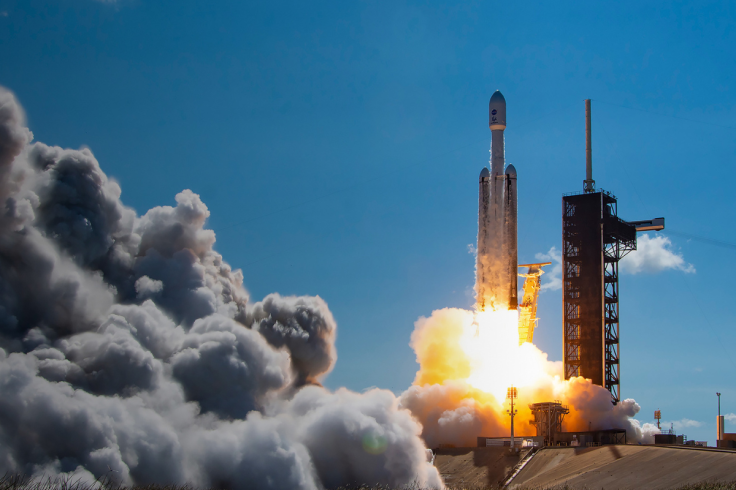
Satellite navigation, weather forecasting, and television all run through the space economy, and Goldman Sachs now expects that economy to be worth $1.8 trillion (about £1.3 trillion) by 2035. Elon Musk, chief executive of SpaceX, read the forecast and answered in five words: 'It will be much bigger.'
The projection comes from the Goldman Sachs Global Institute. Its report, The Second Space Age, by George Lee and Dan Keyserling, was published on 12 August. Space, they argue, has stopped being a government prestige project and become 'a new pillar of the industrial economy.'
What Musk Actually Said
Musk put no number of his own against the bank's. The post below provided a summary of the report rather than the paper itself. It appeared on X on Wednesday and had drawn 3.6 million views.
It will be much bigger https://t.co/tswcamH6qI
— Elon Musk (@elonmusk) August 18, 2026
Whether Musk turns out to be right matters most to his own company. The report names launch capacity as the upstream 'chokepoint', the narrow point through which the rest of the industry has to pass.
Firms that control launch, satellite slots, ground equipment, and space-derived data will take the largest share of that value, the report says. SpaceX runs most of that stack itself, through Falcon, Starship, and Starlink.
Why the Bank Thinks It Is Reachable
The cost of getting to orbit is what changed. Sending a kilogram to low Earth orbit ran to $65,400 in 1981 and costs about $1,500 now.
Goldman Sachs puts that 98% fall to reusable rockets, smaller satellites, and modern manufacturing. Cheaper freight changes what is worth putting up there, from broadband constellations to Earth observation.
Capital has followed. More than $55 billion went into space companies during 2025, and the first quarter of 2026 brought a record $36 billion on its own. Aerospace listings have raised $89 billion since the start of 2025.
Government money is moving the same way. US defence spending on space stood at $11.9 billion in 2020 and is projected at $59.7 billion in 2027, growth of about 26% a year compounded.
The Number Is Two Years Old
The $1.8 trillion forecast did not start with Goldman Sachs. The World Economic Forum and McKinsey put the space economy at the same total for the same year, back in April 2024.
Their starting point was $630 billion in 2023. McKinsey stated its 2035 figure in inflation-adjusted dollars, while Goldman's public summary page prints neither the number nor its basis, and the full paper is a download rather than a web page.
Ryan Brukardt, a McKinsey senior partner, is one of the authors behind that earlier estimate. Writing in September 2024, he reached for a comparison rather than a number, 'I see a parallel to the internet...few people could conceive of its potential.'
Goldman Sachs expects the capital to drive consolidation, with takeovers rising as more space firms reach public markets. The report treats a company's ability to fund itself as a competitive strength on a par with its engineering.
Where Britain Sits Now
Britain's space industry earned £18.6 billion in the 2022/23 financial year and employed 55,550 people directly, according to the UK Space Agency. Satellite services underpin £454 billion of gross domestic product, roughly 18% of the national total.
Exports accounted for £5.8 billion of that income, and 1,907 organisations were counted as doing space work in the UK. Measured from 2009/10 onwards, average annual growth has run at 3.3%.
The British figures are not a like-for-like answer to Goldman Sachs'. They measure one country's industry income from two financial years ago, whereas the bank measures global investment from last year and a global market from a decade ago.
The 2022/23 income figure is also the most recent one available, and in that year the sector shrank by 8.9% in real terms. A House of Lords committee examined the country's position in November 2025, as satellite technology transformed industries on the ground. The committee reported that the opportunity could be lost without faster action from government.
© Copyright IBTimes 2026. All rights reserved.