

NASA Chief Jared Isaacman Publicly States That if It Is Aliens We Should Have a Seat at the Table
Jared Isaacman urged an open-minded approach while saying reported phenomena could also reflect natural events or advanced technology developed by a rival power
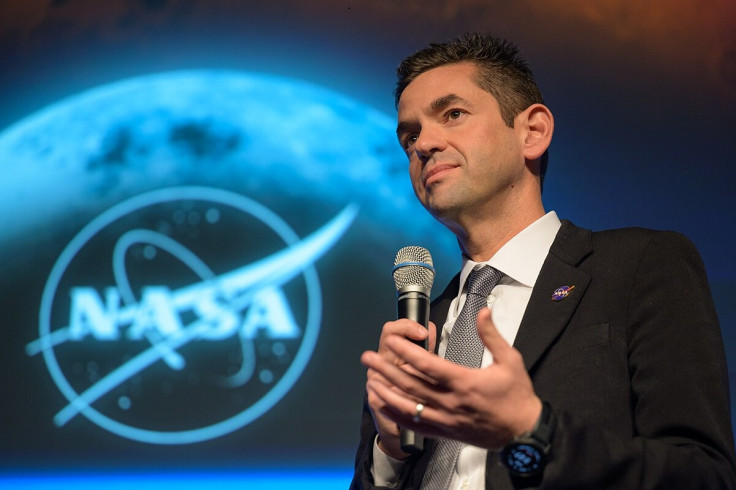
NASA Administrator Jared Isaacman has said the United States should remain open-minded about unidentified anomalous phenomena, or UAP, and that NASA should have a role if they are ultimately found to have an extraterrestrial origin.
Speaking in an interview broadcast on 25 September on 'The Hill', Isaacman said the agency's mission includes helping answer one of humanity's oldest questions: are we alone?
'My position going into every one of these: one, be open-minded,' Isaacman told Burman. 'I mean, it is kind of our job to go out and try to answer the question "are we alone?" And I said, look, if it's aliens, I think NASA should have a seat at the table in this for sure.'
Isaacman's remarks came after President Donald Trump earlier this year called for the release of UFO and UAP files. The Department of War's resulting records-release effort is known as the Presidential Unsealing and Reporting System for UAP Encounters, or PURSUE.
Isaacman has also indicated that NASA has been involved in the administration's UAP-related efforts.
Is This a New Sputnik Moment?
Isaacman compared the recent rise in reported UAP sightings to the shock that followed the Soviet Union's launch of Sputnik 1, the first artificial satellite to orbit Earth, in 1957. The comparison is a pointed one. Sputnik shocked the United States, reshaped US space policy and helped accelerate the space race.
'If it's a Sputnik moment, we did really well the last time that happened,' Isaacman said. 'Which means, is this potentially red technology? Is this an adversary that's testing some next generation propulsion? It's certainly in the realm of the possible.'
In military exercises, 'red' forces generally represent an adversary. Isaacman was careful not to claim that any sighting had been identified as foreign technology. He instead framed the possibility as one that could not simply be dismissed.
Asked what his instinct told him, the NASA administrator said he would 'lean toward' natural phenomena being behind some reports.
'There are things that can happen just like natural phenomena that can be observed,' he said. 'I also think there's a good chance that there could be a Sputnik Moment that's happening and people are testing new stealthy or next generation type technologies.'
That is a notably measured answer from the head of an agency often expected to settle the alien question with a neat, definitive statement. It is not. UAP is a broad term for phenomena or objects that have not been identified; the term itself does not imply an extraterrestrial origin.
What Science Still Cannot Rule Out
Isaacman also turned the discussion away from UAP footage and towards the scale of what remains unexplored. He pointed to Saturn's moon Enceladus and Jupiter's moon Europa, both of which are believed to have subsurface oceans beneath their icy surfaces.
'Do you know there are moons out there [...] Saturn's moon Enceladus has an ocean. Europa has an ocean. It has complex chemistry,' he said. 'We couldn't tell you conclusively that there isn't life in our own backyard let alone the billions of other stars in the Milky Way galaxy, or the two trillion other galaxies out there. It's why NASA's mission is so important.'
An earlier estimate based on deep observations suggested there could be about two trillion galaxies in the observable universe, although the figure remains an estimate.
Isaacman's argument is straightforward, before debating visitors from another star system, scientists still cannot rule out life closer to home. That does not make claims of alien spacecraft true. It does explain why the subject refuses to go away.
Whistleblowers and the Limits of Disclosure
On 14 September, the US Department of War announced a targeted legal waiver authorising current and former service members, civilian personnel and contractors with access to UAP-related National Defense Information to provide that information to designated PURSUE representatives.
The Department said the waiver supersedes specified civil and administrative enforcement provisions in relevant non-disclosure agreements and Special Access Program Indoctrination Agreements for communications directed to the PURSUE team. It described the measure as creating an authorised channel for the review, security evaluation and potential declassification of UAP-related information.
The Department said the waiver 'removes those barriers' by authorising covered disclosures to designated PURSUE representatives, while limiting the relief to specified civil and administrative enforcement provisions in applicable agreements.
Robert Powell, an executive board member of the Scientific Coalition for UAP Studies in Austin, Texas, told reporters that similar disclosure protections had already been established for information provided to the US government's All-domain Anomaly Resolution Office, or AARO, under the 2023 National Defense Authorization Act.
The legislation provided a mechanism for people with UAP-related information subject to a US government NDA to provide that information to AARO representatives.
'This waiver simply adds a second agency that can collect information,' Powell said.
Powell stressed that the new mechanism did not amount to permission for a person covered by the waiver to speak to the press, a researcher or the public. He said the protection applied only to disclosures made to authorised PURSUE representatives.
Powell also questioned whether the waiver addressed every potential form of legal liability, including possible criminal liability arising from the unauthorised disclosure of classified information. He said the measure also did not necessarily protect a person from an NDA with a civilian corporation.
There is another, more basic problem, allegations require independent verification. Powell argued that, without further congressional investigation and scrutiny, UAP-related claims could remain unsubstantiated.
'If it is not verified then there is little value in the efforts put forth by the whistleblower,' he said. Without further congressional scrutiny, Powell added, the matter could remain 'he said, she said.'
Isaacman's comments leave open the possibility of an extraterrestrial explanation while emphasising that natural phenomena and advanced human technology remain possibilities. Whether NASA's involvement ultimately extends beyond that role remains to be seen.
© Copyright IBTimes 2026. All rights reserved.