

Holocaust Remembrance Day: Are We Drifting Toward the Conditions That Enabled Genocide?
Holocaust Remembrance Day is observed amid warnings that key lessons are being ignored.
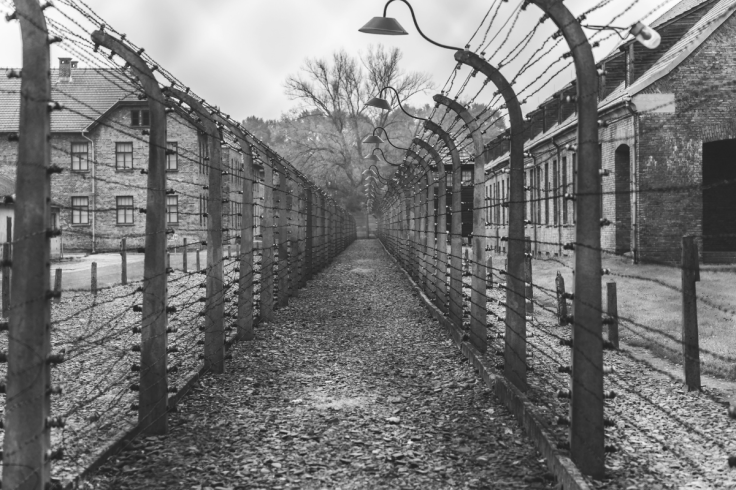
Holocaust Remembrance Day, marked annually on 27 January, commemorates the six million Jewish victims murdered by Nazi Germany, alongside millions of other victims of Nazi persecution. The day was formally established by the United Nations in 2005, aligning with the anniversary of the liberation of Auschwitz-Birkenau.
Beyond commemoration, Holocaust Remembrance Day was designed as a preventative measure. It exists to reinforce historical truth, confront denial and distortion, and strengthen global resolve to recognise early warning signs of mass atrocities before they escalate.
Why Holocaust Remembrance Day Is More Than a Memorial
Holocaust Remembrance Day was never intended to function solely as a symbolic observance. The UN has repeatedly framed it as an educational and preventative tool, linking remembrance directly to genocide prevention and human rights protection.
Historians stress that remembrance without understanding risks becoming ritualistic. When historical lessons fade from public consciousness, societies become more vulnerable to the social dynamics that once enabled genocide, including scapegoating, polarisation, and indifference to human suffering.
Holocaust Remembrance Day and the Risk of Historical Distortion
In recent years, Holocaust Remembrance Day has increasingly intersected with wider political debates. Scholars warn that the misuse of Holocaust language in contemporary discourse can weaken historical clarity when comparisons are detached from factual context.
The International Holocaust Remembrance Alliance defines Holocaust distortion as efforts that minimise, excuse, or misrepresent the historical record of the Holocaust. While political protest itself is a protected expression, experts argue that misleading analogies risk trivialising genocide and obscuring its specific causes and consequences.
Comment
by u/Fit_Tea_2033 from discussion
in AskTheWorld
When Political Activism Collides With Holocaust Memory
Jewish organisations and educators have raised concerns that Holocaust references are increasingly used as rhetorical devices in political activism. While many activists intend to express moral urgency, historians caution that inaccurate historical framing can create confusion rather than clarity.
Experts emphasise that the Holocaust was a state-organised genocide with specific ideological, bureaucratic, and industrial mechanisms. Reducing it to a generic symbol of injustice risks flattening history and weakening the ability to recognise future warning signs rooted in similar patterns.
Antisemitism Is Rising Across Democratic Societies
Concerns surrounding Holocaust Remembrance Day are reinforced by evidence of growing antisemitism. The Anti-Defamation League has reported record levels of antisemitic incidents in the United States in recent years, including harassment, vandalism, and threats targeting Jewish communities.
Historians consistently warn that genocide rarely begins with violence. It begins with language that dehumanises, narratives that assign collective blame, and the social acceptance of hostility toward minority groups.
Education Gaps Expose the Fragility of Holocaust Memory
Holocaust Remembrance Day also draws attention to weaknesses in historical education, particularly among younger generations. Multiple studies have identified persistent gaps in basic Holocaust knowledge, including misunderstandings about concentration camps and the scale of the genocide.
As survivor testimony becomes less accessible over time, educators warn that collective memory increasingly depends on structured education and archival records. Without sustained investment and careful teaching, experts caution that Holocaust education risks becoming superficial and more vulnerable to misinformation.
Social Media and the Acceleration of Misinformation
Digital platforms have transformed how historical narratives circulate. Scholars warn that misinformation, denial, and distortion can now spread rapidly online, often stripped of context or fact-checking.
This environment mirrors earlier periods in which propaganda outpaced factual correction. Holocaust Remembrance Day serves as a counterweight by reaffirming evidence-based history and promoting critical engagement with the past.
Why Holocaust Remembrance Day Still Matters
Safeguarding collective memory remains essential in preventing historical amnesia. Experts on genocide consistently warn that mass violence rarely begins suddenly, but emerges from early warning signs such as polarisation, scapegoating, and the gradual erosion of shared moral norms.
The purpose of remembrance is to interrupt those dangerous trajectories through education, vigilance, and accountability. As global discourse grows increasingly polarised, remembering the Holocaust with historical accuracy is not a political act but a necessary defence against future atrocities, forcing societies to confront whether they can recognise danger early enough to prevent it.
© Copyright IBTimes 2026. All rights reserved.