

Internet Calls Trump 'Insane' Over Bird Blunder, Critic Says 'Grandpa Is Drinking'
Trump misidentifies falcon as bald eagle in viral wind turbine post, triggering online outrage and exposing dangerous gaps in political misinformation verification

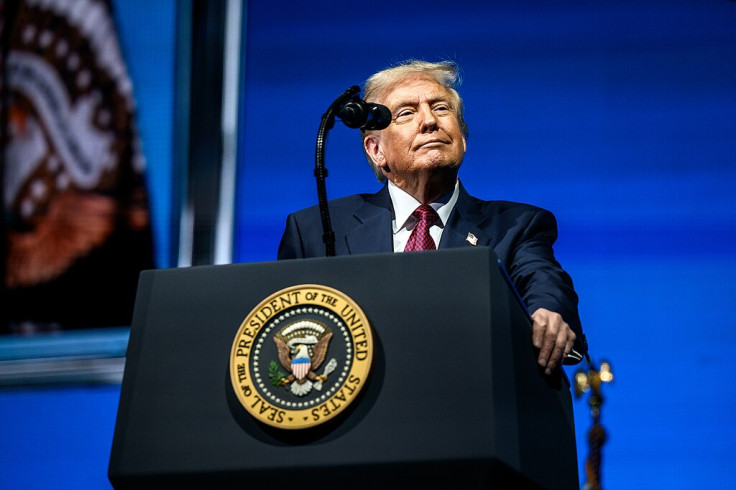
In a moment that somehow managed to unite social media across platforms, President Donald Trump shared what he believed was photographic evidence of wind turbines decimating America's most iconic bird—except it wasn't an eagle at all. Late on Tuesday, the 79-year-old posted an image of a dead raptor beneath a turbine with the emphatic caption: 'Windmills are killing all of our beautiful Bald Eagles!'.

Yet within hours, social media users with sharper eyes—and apparently better ornithology knowledge—identified a glaring problem: the bird in the photograph was a falcon, not a bald eagle, and the turbine bore Hebrew writing, indicating the image originated from Israel, not America.
The blunder quickly unravelled further when investigative work traced the photograph's origins to a 2017 Haaretz article by environmental journalist Zafrir Rinat. The image had been taken by Hedy Ben Eliahou, an employee of Israel's Nature and Parks Authority, and documented a falcon killed by a wind turbine over seven years ago—hardly the contemporary evidence of American eagle slaughter that Trump appeared to suggest.
What began as a straightforward political statement about renewable energy became, within minutes, a case study in misinformation and the dangers of posting without basic fact-checking.
The Internet's Unforgiving Verdict on Trump's Bird Blunder
The online response was swift and merciless. The Department of Energy, which had shared Trump's post, found itself tagged with a community note on X that read: 'The image is not of a U.S. bald eagle. It shows a falcon killed by a wind turbine in Israel in 2017.
The photo appears in a Haaretz article by Zafrir Rinat published Dec. 20, 2017.' Prominent figures queued up to express their dismay, with Lincoln Project strategist Jeff Timmer declaring, 'Morons are in charge. complete drooling idiots.'
Political observers and commentators piled on with barely concealed exasperation. Tennessee Holler lamented 'Endless lies', whilst Bluesky user EarthMomma wrote, 'This man is LITERALLY INSANE. Literally. He had a bald eagle on his desk that actually attacked him and yet he still cannot identify a bald eagle. And evidently the WIND is a dangerous murderer.'
Podcaster Boston Brian offered perhaps the most pointed observation: 'The President of the United States doesn't know what a f—— Bald Eagle looks like. Let that f—— sink in for a second.'
The criticism transcended typical partisan boundaries, with even neutral observers expressing genuine astonishment at the fundamental error. Podcaster Spencer Hakimian quipped, 'Grandpa is drinking again'—a cutting reference to growing concerns about cognitive sharpness.
California Governor Gavin Newsom's account posted, 'Dozy Don doesn't know what America's bird looks like???', whilst Bluesky user Jerry Snodgrass posed a broader question: 'Why does everything that comes from Trump HAVE to be a lie?'
What the Falcon Flap Reveals About Digital Misinformation
The incident highlights a troubling pattern: the ease with which false imagery can be deployed in political discourse, particularly when amplified by official government accounts. The Department of Energy's initial decision to share the post without verification—even before the community note corrected the record—underscores how quickly falsehoods can gain traction when they emanate from or are endorsed by institutions with significant reach.
In an era of artificial intelligence and deepfakes, basic image verification has become essential, yet this fundamental step appears to have been overlooked.
Trump's decades-long feud with wind energy has produced numerous statements questioning the environmental impact of turbines on bird populations. However, the irony of his inability to distinguish between America's national symbol and a falcon—a bird he allegedly encountered firsthand when one reportedly attacked him whilst perched on his desk—adds a layer of dark comedy to an otherwise concerning episode.
The confusion raises uncomfortable questions about credibility, diligence, and the responsibility of those in positions of power to verify claims before broadcasting them to millions.
The incident ultimately serves as a cautionary tale about the intersection of politics, social media, and the transmission of information in the contemporary landscape.
Whether Trump recognised his error and chose to leave the post standing or simply remained unaware of the correction remains unclear—but the internet's collective reaction suggests that such lapses, however minor they may seem on the surface, carry genuine weight when they emerge from the highest office.
© Copyright IBTimes 2026. All rights reserved.