

Japan's PM Takaichi Joins Fight on 'More Toilets for Women in Parliament'
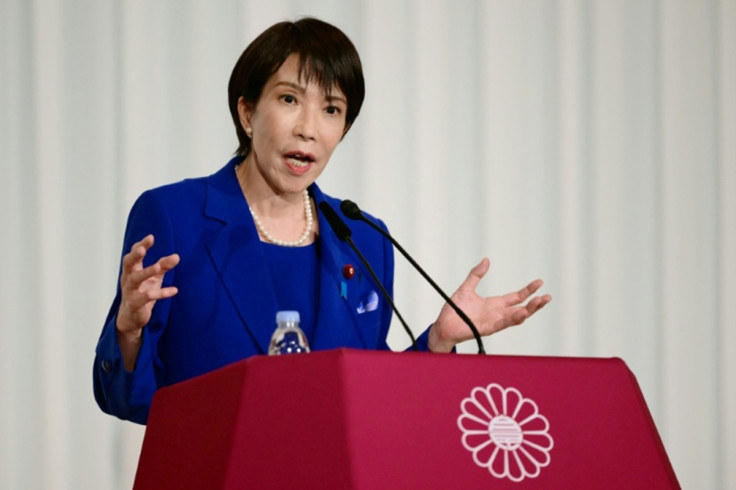
Japan's parliament is facing an unexpected test of gender equality as Prime Minister Sanae Takaichi throws her support behind a campaign for more women's toilets inside the National Diet.
With a record number of female lawmakers now serving in the Lower House, long-standing infrastructure gaps have become impossible to ignore. Takaichi is one of 58 MPs who signed the petition for more women's bathrooms.
What may sound like a minor logistical issue has emerged as a potent symbol of how political institutions struggle to keep pace with social change.
Record Number of Women Elected
In October 2024, the general elections saw 73 women win seats in Japan's 465-seat lower house, the highest number since 54 women were elected in 2009.
This wave is indicative of a gradual yet consistent increase in gender parity in Japanese politics, despite the fact that women currently have a slight over 15% representation in the lower chamber.
It is considered a positive development, indicating a shift in societal perceptions and a transition towards a more inclusive political regime, but it also brought to light some issues with inadequate infrastructure in the parliament building.
Call For Basic Rights
The infrastructure in the parliament building has been an issue, as there is only one female restroom, which has two cubicles, with one close to the plenary chamber.
There are nine female toilets and 22 cubicles. However, in sharp contrast, the building consists of 12 men's toilets with 67 stalls and urinals spread throughout.
Such an imbalance has led to many inconveniences, one of which is exceptionally long queues in front of the few female facilities before the commencement of sessions.
Female employees and visitors share these few facilities, which causes them discomfort, among other things, including having to resort to not going to the restroom at all before relevant parliamentary events begin. These problems highlight the need for infrastructural improvements to accommodate the increasing number of women in the building.
Historical Context and Building Constraints
The parliament building was built in 1936, almost 10 years before women in Japan received the right to vote; they started voting in 1945 and were first elected to parliament in 1946.
The building's architectural design, covering an area of 13,356 square metres (about two football pitches), and the fact that the infrastructure is of a certain age, pose challenges for modern demands.
Lawmakers and officials recognise that the facilities are outdated. It cannot be easily retrofitted or extended with additional restrooms, as the construction is designed for a different time period.
According to one opposition legislator, the scenario is usually inconvenient and does not allow women to take on parliamentary roles to their full potential and comfortably.
Political Will and Improvement Efforts
In response to these fears, a few parliamentary leaders have stated they would be open to suggestions to increase the number of women's restrooms.
It has been suggested that the chair of the Lower House committee, Yasukazu Hamada, is willing to address the matter, which is a positive sign that the infrastructural changes are needed to facilitate gender equality in the legislative atmosphere.
The demand for more female-friendly establishments aligns with the government's broader policies to ensure gender equality in society.
In Japan, the government aimed to ensure that women held 30 per cent of leadership positions across sectors by 2020. This, however, was delayed by 10 years due to the slow pace of its progress and ongoing difficulties in achieving gender parity.
Today, approximately 16% of the members of the Lower House are women, and approximately one-third (42 out of 125) in the Upper House.
Although these numbers indicate a positive step forward, lobbyists believe that changes in the actual infrastructure, including the addition of more toilets for women, are crucial to making political environments more accommodating to women.
Leadership and Gender Equality Initiatives
In October 2025, PM Takaichi, the first woman to lead Japan, expressed a desire to have women in her cabinet in equal proportions to those found in Nordic nations that have achieved gender-balanced leadership.
Nevertheless, her cabinet is still relatively small, with only two women among 19 members, underscoring the further difficulties with gender parity at the top of government.
Takiichi's commitment is more about gender equality, yet tangible actions, including improved provision of parliamentary facilities, are seen as practical steps to enhance women's full participation.
The proponents feel that measures such as bridging infrastructural gaps are necessary to establish a more balanced political space.
The problem with the toilets is not exclusive to the parliament building; it is a countrywide issue. Women in Japan are often seen waiting in long queues and lacking facilities, a problem that requires extensive infrastructure changes to improve their lives.
Former Prime Minister Shigeru Ishiba had earlier called for better restroom amenities as part of the initiative to transform Japan into a society where women can live without embarrassment or discomfort.
According to experts and activists, such physical infrastructure is a key element in advancing gender equality and motivating more women to participate in political and professional spheres, as well as in social upliftment.
© Copyright IBTimes 2026. All rights reserved.