

Jupiter Is About to Steal the Night Sky — And You Won't Need a Telescope to See It
The giant planet is nearing its closest point to Earth this year, lighting up the evening sky and offering a rare, naked-eye spectacle for stargazers
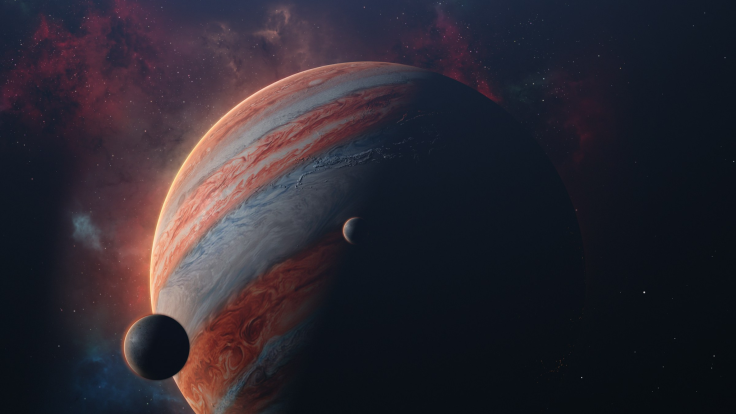
Astronomy enthusiasts and even the general public can enjoy watching Jupiter, the largest planet in our solar system, as it comes unusually close to Earth this week, presenting one of the brightest planetary showings in 2026. Due to the clear sky at the start of the evening, viewers will be able to see the planet with the naked eye.
A Spectacular Giant Near Opposition
Jupiter is now heading toward its closest approach to Earth in 2026. This event, called 'opposition' by astronomers, is when our planet interposes between the Sun and Jupiter, placing the gas giant opposite the Sun in our skies, making it observable all night. Jupiter will circle its brightest and most eminent period of the year about 9-10 January.
When in opposition, Jupiter will rise within the eastern horizon when the Sun sets in the western one, and will be observable all night, being slightly more luminous than the Moon and Venus, both of which are above it on the horizon. Its brightness is augmented by the nearness and the off-reflection of sunlight through its thick, very reflective cloud cover.
Jupiter will be visible with an apparent magnitude of about -2.7 during June, according to the skywatching guides, the second-brightest of the visible planets in the night sky.
Where And When To Look

This week, observers on both sides of the globe can gaze upon Jupiter's display. In clear skies, it is also visible with the naked eye at the eastern horizon soon after the sun sets, slowly rising as the evening progresses, reaching its zenith over the local midnight, then setting out westwards as the sun approaches.
The spectacle will be even richer to those who are using binoculars or modest telescopes: the viewers should be capable of noticing the four biggest moons of Jupiter: Io, Europa, Ganymede and Callisto rotating around the planet. With a magnification of about 10 times or more, many hobbyists can see the large belts of clouds around Jupiter, giving a more detailed view.
This will mean that Jupiter is now visible in the constellation Gemini, forming a very handsome triangle with both Castor and Pollux. This position can make this a handy indicator to those who wish to find the planet shortly after sunset.
Why This Sighting Is Special
Oppositions of Jupiter take place striking about once in thirteen months, but not every one of them is equal. The current event is a composite of the planet's closest approach to Earth for the year and the best viewing opportunities. At this time, Jupiter is brought very close to Earth, at about 4.23 astronomical units (632 million kilometres), and appears at its brightest.
This closeness to the Sun and the reflection from Jupiter's dense atmosphere make it shine much brighter than any other heavenly body besides the Moon and Venus. The planet can be easily seen with the naked eye, without any advanced instrumentation, even by amateur skywatchers, making January 2026 one of the most favourable months in recent history to admire the gas giant's magnificence.
The specialised stargazing guides observe that, under this setup, when Jupiter is at opposition and at one of its nearest approaches, the viewing lasts all night, ending at sunset and rising again at dawn.
Tips For Observing Jupiter
To enjoy this heavenly performance to the fullest:
- When the sun goes down, look to the east: Jupiter will be a star-like point of light, and the brighter it will be as the night grows darker.
- Bring a pair of field glasses or a small telescope: Although high-quality equipment is not needed to see Jupiter's moons and the features of the cloud belt, a simple pair of field glasses will significantly enhance the experience.
- Check the sunset time where you are: The planet itself will appear a few minutes after the sun sets, giving you a few hours to watch.
A Night Sky Highlight Worth Catching
The appearance of Jupiter in 2026 is not just a mere light display in the sky, as it reminds us of the vibrant activity in our solar system and what it offers astronomers each year. Jupiter still amazes both professional astronomers and amateur observers with its immense size, retinue of moons and its brightness.
© Copyright IBTimes 2026. All rights reserved.