

For Manish Agrawal, Fintech Adoption Starts With Trust Before Technology
The former Paytm product leader says simple language, limited choice and familiar experiences can help first-time investors enter financial markets.
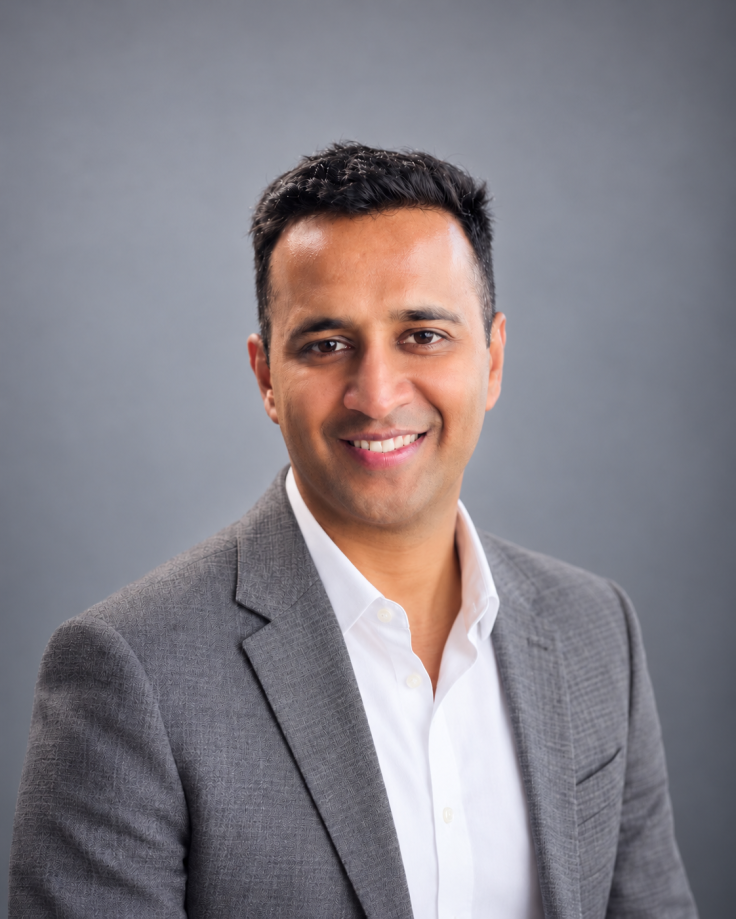
Manish Agrawal's current work keeps him close to a question he first confronted years earlier at Paytm: what makes someone comfortable enough to try a financial product they have never used before? Today, he focuses on strategy and innovation at Chime while also serving as Global Advisor to Fintech Alliance Nepal, where his work includes conversations around financial innovation and market development. Across those settings, Agrawal says one lesson has remained consistent. Financial services cannot rely on technology alone when the customer is being asked to take an unfamiliar step.
That lesson became especially clear while Agrawal was helping build Paytm's investing business. Millions of customers already knew Paytm as part of their everyday financial lives, using digital payments for transactions they understood. Investing presented a different challenge. Many of the customers the company wanted to reach had little familiarity with stocks or capital markets, which meant an investing product designed around experienced investors could leave them behind before they ever completed a transaction.
"The question was how to take trust people had already developed through everyday payments and earn the right to help them with something much less familiar," Agrawal says. "If someone is investing for the first time, the product cannot assume they already understand the language or know what step comes next."
Agrawal helped build Paytm's investing business and led work on POPS, a platform designed for younger users and people new to investing. Working closely with engineering, operations, and senior leadership, he covered product strategy and partnerships and designed the recommendation engine behind the experience. His responsibility was to translate the customer problem into a product that could make investing easier to approach.
The team built an experience that allowed customers to interact through simple chat-style messages, receive recommendations, and complete actions within the product. Rather than showing new users hundreds of options, the product recommended a small number and explained each in plain language. The decision reflected Agrawal's view that too much choice can look like risk to a first-time investor.
That choice came from a larger view of trust. Paytm's existing customer relationship created familiarity, but Agrawal believed the investing experience still had to earn confidence on its own.
"Trusting an app with a payment and trusting it with your savings are two very different things," Agrawal says. "A payment is over in seconds. An investment asks you to believe in something for years."
"If you opened most investing apps back then, they all looked the same, because they were built for people who already understood the market," says Sourav Choraria, founder and CEO of Infinity, a Y Combinator-backed company, who worked with Agrawal on POPS at Paytm. "Manish pushed us to build for someone who had never invested. His test for every feature was simple: if a first-time investor would not understand it or feel safe using it, it did not ship. That is why POPS reached people other apps left out."
The result offered a measurable indication that the approach was reaching its intended audience. According to Agrawal, people investing for the first time ultimately accounted for more than half of new user growth for the product. The figure mattered because those were the customers the experience had been built to serve. The adoption showed that people without previous investing experience were willing to enter the market through the product.
For Agrawal, that experience became part of a broader lesson about financial inclusion and introducing new financial products. Making a financial product technically available does not automatically make it accessible. Customers may still face unfamiliar terminology, uncertainty about what comes next, or hesitation about trusting a new category of financial service. Product strategy has to account for the gap between access and adoption.
That perspective also influences the way Agrawal thinks about emerging financial markets. Through Fintech Alliance Nepal, he participates in conversations around new financial products and market development and connects fintech leaders with perspectives from other markets. In November 2026, he hosted a Global Dialogues session on peer-to-peer lending after speaking earlier in the year to over 90 bank and fintech technology leaders at the organization's CTO Retreat. The products and market are different from his earlier Paytm work, while the underlying question remains familiar: how does innovation become useful to the people it is meant to reach?
His work at Chime brings that question into another setting. Agrawal focuses there on strategy and innovation in operations. He does not treat the Paytm experience as a formula that can simply be repeated in a different company or market. He carries forward the principle behind it: start by understanding what the customer knows, what the customer needs, and what has to happen before a new financial experience feels understandable enough to use.
As financial companies introduce more sophisticated technology, new capabilities can make services faster or more accessible, but they do not eliminate the need to understand how customers make decisions.
"The technology will keep changing, and the products will keep changing," Agrawal says. "The question I keep coming back to is whether we are building something people can understand and trust enough to use. That is what turns access into participation."
© Copyright IBTimes 2026. All rights reserved.