Alibaba Shares Jump 5% as New AI Chip Delivers 3x Performance
Wu said a V900 cluster can connect 500,000 chips for AI with 216GB memory, high bandwidth, and support for fast AI formats
Alibaba shares jumped about 5% on Tuesday after the Chinese technology giant unveiled the Zhenwu V900, a homegrown AI accelerator it says runs three times faster than its predecessor and ranks as the most powerful chip of its kind in China.
The company's Hong Kong-listed stock rose 5.1% to its highest level in a month, a rebound for a share that had sagged in recent weeks on worries about heavy spending and dilution.
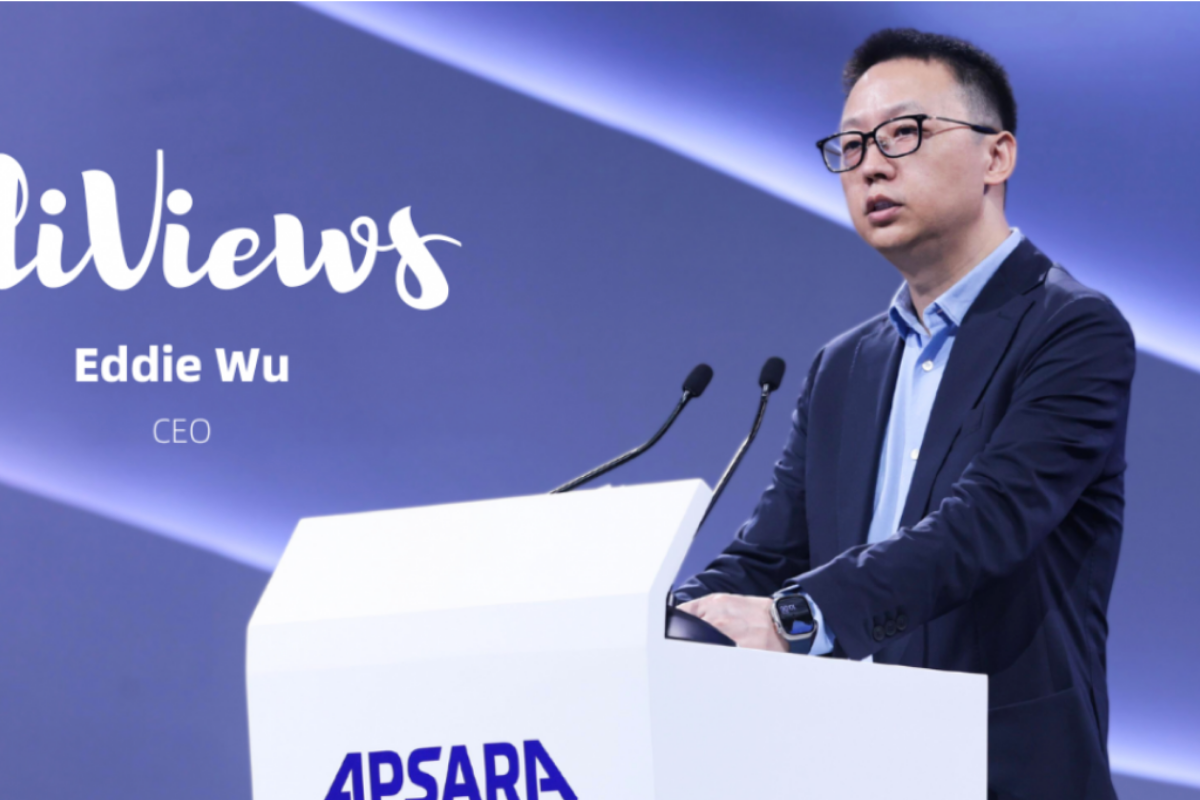
The chip, built by Alibaba's in-house semiconductor unit T-Head, was introduced by chief executive Eddie Wu at the company's annual Apsara Conference in Hangzhou. Wu called the V900 'the most powerful AI chip in China today, delivering three times the performance of its predecessor, the Zhenwu M890.' That comparison is the point. Alibaba's earlier Zhenwu chips already rival Nvidia's H20, the processor Nvidia built specifically for the Chinese market to satisfy US export limits.
Washington has since tightened those limits to cover the H20 itself, and Beijing has discouraged local firms from buying Nvidia hardware at all, leaving China's biggest cloud operators little choice but to design their own. A chip running three times faster than the last generation pushes Alibaba further beyond the best silicon Nvidia is currently cleared to sell there.
Wu said a single cluster built on the V900 can link up to 500,000 chips to train frontier AI models, with mass production and commercial release slated for the first quarter of 2027. The chip carries 216 gigabytes of memory and 1.2 terabytes per second of inter-chip bandwidth, and supports the FP8 and FP4 formats that speed up AI workloads.
Alibaba is not starting from scratch: T-Head has already shipped hundreds of thousands of Zhenwu chips to more than 650 customers across automotive, finance, energy, and manufacturing.
Nvidia Rival Emerges as Export Curbs Bite
Alibaba is not the only Chinese firm racing to fill the gap. Huawei last week showcased AI infrastructure it said could scale to as many as one million processors, a sign of how fast the domestic field is hardening and how much of the contest now turns on sheer cluster size.
To keep pace, Alibaba has committed 380 billion yuan, about $53B (£39B), over three years to cloud and AI infrastructure, a programme part-funded by a recent $10.2B (£7.6B) share placement in Hong Kong that unsettled some investors and knocked the stock earlier this month.
Wu set a target for Alibaba Cloud's global data-centre capacity to exceed 20 gigawatts by 2032 and said demand for AI services was running well ahead of what the company can currently supply, with supply-chain constraints the main brake. The build-out underpins a goal Wu has set out before: more than $100B (£74B) in annual external revenue from cloud and AI within five years.
Bigger Models Join the Chip Push
The hardware was only half the pitch. Qwen, Alibaba's family of large language models and its answer to systems from OpenAI and Google, is being pushed harder too.
Alibaba said its next-generation Qwen 4 model is already in training, with future Qwen 4.5 and Qwen 5 systems designed to scale to between 5 trillion and 10 trillion parameters. That would make them two to four times larger than the current flagship, Qwen 3.8 Max, which carries about 2.4 trillion, though parameter count alone does not decide how capable a model turns out to be.
Wu said the Qwen team had made 'meaningful progress' on recursive self-improvement, in which models flag their own limits and generate data to keep refining themselves. He cast the moment as an early one, arguing that machine intelligence still had an 'enormous growth runway' and likening today's progress to the dawn of electrification. 'AI coding is simply the light bulb of the machine intelligence era,' he said.
For investors, the keynote stitched chips, models, and data centres into a single full-stack pitch at a time when Alibaba shares, well below their 2025 highs and down sharply this year, badly needed a lift.
The V900 will not reach customers until 2027. The promise alone was enough to hand the stock its best day in weeks.
Disclaimer: Our digital media content is for informational purposes only and does not constitute investment advice. Please conduct your own analysis or seek professional advice before investing. Remember, investments are subject to market risks, and past performance does not guarantee future returns.
© Copyright IBTimes 2026. All rights reserved.
- Recommended For You