Inside Mexico's Narco Empire: Just How Deep Does Cartel Power Run?
An in-depth look at the influence and operations of Mexico's drug cartels.
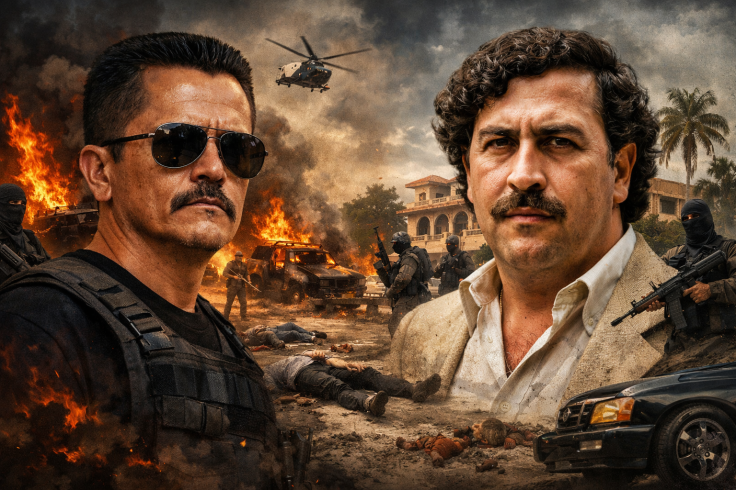
Mexico's struggle with powerful drug cartels remains one of the defining security challenges of the 21st century, a reality that has only been underscored in recent weeks by the death of one of the nation's most feared kingpins and the violence that erupted in its aftermath.
Even as authorities celebrate tactical victories, questions persist about the depth of cartel influence, their economic reach, and the grip these criminal networks hold on society.
The Cartel Legacy: A Long, Entrenched Battle
Drug cartels in Mexico did not appear overnight. The combination of economic incentives, adaptable criminal tactics, and geographic advantages has enabled these organisations to act with astonishing reach across decades.
Hundreds of smaller organisations have emerged and disappeared throughout the years. However, these six major organisations are typically considered the most influential in the underworld of the country: the Sinaloa Cartel, Jalisco New Generation Cartel (CJNG), Gulf Cartel, Northeast Cartel, La Nueva Familia Michoacana, as well as the United Cartels.
These groups are superpowers controlling methamphetamine, cocaine, heroin, and fentanyl trafficking pathways into the United States and other nations, exploiting Mexico's location between producers and global markets.
The CJNG became one of the strongest criminal systems in Latin America during the rule of Nemesio 'El Menchos' Oseguera Cervantes, and is characterised by its excessive violence, military approach, and a very lucrative stream of revenues.
El Mencho's death in a military operation in Mexico in February 2026 had a shocking effect across cartel networks but has failed to change the entrenched position of drug cartels.
Violence and 'Narco Power' at the Grassroots

After El Mencho was killed, many states saw a rampage of violence, which depicts how deeply rooted cartel influence is at the local level. Members of the cartel retaliated in systematic strikes, which included burning roadblocks, beating up security agents, and interfering with the normal lives of civilians in areas that had historical roots of organised crime.
This outburst of violence underscored the historical operational power of cartel groups even without their most prominent leader.
According to experts, these responses can be viewed as a piece of a bigger trend: cartels are no longer small trafficking rings but diversified criminal empires, which can now influence the social and economic nature of the local environment.
Their success in moving resources quickly and aligning efforts within extensive jurisdictions is a result of decades of investment in infrastructure and clandestine systems that tend to run both parallel to and occasionally within legitimate institutions.
Beyond Drugs: Diversified Criminal Enterprises
The influence of the cartels is not all based on drug trading. Over the past few years, some of these groups, such as the CJNG, have diversified their activities to include a set of criminal acts that include fuel theft and smuggling of crude oil, as well as fraud, extortion, and money laundering, which have bolstered their financial power and societal influence.
Such diversification, analysts observe, also ensures that cartels can keep operating even during times when pressure on the drug routes tightens, and the most wanted cartel leader is eliminated.
A study of cartel economics suggests that Mexican criminal organisations collectively rake in tens of billions of dollars annually, with estimates running as high as $19–29 billion (£14-21 billion) from drug sales into the US alone, which translates to an astonishing $50–80 million (£37-59 billion) per day.
This magnitude of revenue significantly outstrips funding for social programmes and sometimes even exceeds the budgets of state security initiatives, reinforcing the imbalance between cartels and authorities in some regions.
Public Influence and Corruption
The cartels have also used their financial power to exert influence at different levels of government and law enforcement. Although outright forms of corruption cannot be easily measured, observers cite anecdotal evidence of intimidation, bribery, and co-option of officials as possible factors that help criminal organisations to go unrecognised and proceed with their business without interference. This has caused the environments in which cartels, in some cases, can operate with impunity.
Observers also point out that cartel power is more about psychological and social dominance than brute force. Criminal groups offer economic opportunities both directly and indirectly in most communities, and therefore are part of the local economies.
This dynamism makes responses of states challenging because any aggressive enforcement may be opposed by the community when there are no alternative livelihoods.
© Copyright IBTimes 2025. All rights reserved.
- Recommended For You