

Microsoft Patent Proposes Paying Gamers to Let AI Train on Their Idle PCs
Microsoft has yet to detail a payment scheme in the proposed patent

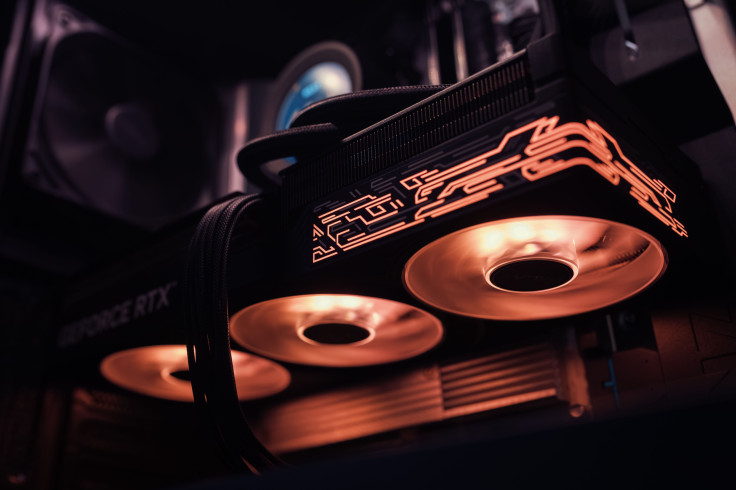
Microsoft could turn gamers' graphics cards into a potential source of extra income by allowing artificial intelligence companies to use their idle computing power for training models. A newly published patent describes a system that could reward PC owners for lending their unused GPUs to help run AI workloads, potentially giving gamers a financial incentive to share hardware they already own.
The patent, titled 'Opportunistic Micro-training on Edge Devices Using Spare GPU Utilization,' defined a system that distributes AI training tasks across gaming PCs, laptops, and other consumer devices when they have spare processing capacity.
The filing outlines how Microsoft could break large AI training workloads into smaller tasks and distribute them across multiple devices rather than relying entirely on expensive data centre infrastructure.
How Microsoft's Idle GPU System Training Would Work
Microsoft's proposed technology focuses on identifying periods when gaming computers are not under heavy computational loads. The system would monitor several hardware indicators, including GPU utilisation, memory consumption, temperature, and power usage to determine how much capacity could be made available without interfering with normal PC activities.
Large AI training jobs would be divided into smaller, independently executable tasks, known as micro-tasks, and distributed according to each participating device's capabilities.
The system would also adjust workloads depending on hardware conditions. For instance, it could reduce the frequency of monitoring when a GPU is running hot or handling demanding applications, while increasing checks when the computer is relatively idle.
This is particularly relevant for gamers who spend considerable money on powerful graphics cards but may only use their full capabilities sparingly each day.
Microsoft Could Reward Gamers With Money
One of the more interesting aspects of the patent is the potential compensation mechanism.
According to Insider Gaming, the system could track how much computing work each participating device completes and award credits based on its contribution. Those credits could potentially be exchanged for software, access to AI models, or actual money.
Participation would require users to authorise their devices to contribute computing resources, rather than automatically turning their computers into AI training machines.
The patent also describes Microsoft acting as an intermediary between GPU owners and third-party organisations seeking computing resources for training their AI models. That could create an alternative source of computing power at a time when demand for high-performance GPUs remains a major challenge for the AI industry.
Privacy Concerns Over Third-Party Access
There are also questions about hardware longevity, data privacy, security, and whether users would have sufficient control over which workloads run on their machines.
Microsoft's patent describes mechanisms for managing hardware utilisation and verifying completed computing tasks, but it does not establish how a commercial service would address every concern.
The patent application isn't just for Microsoft to advance its own AI ventures. The company is also offering a gateway for third parties seeking to train their models. Hence, when a person lends their GPU for AI training, Microsoft acts as a middleman between the third-party entity and the GPU owner, raising questions about privacy and how much of the GPU could be used.
Importantly, the filing is not an announcement of a new Microsoft product or a confirmed payment programme. There is no announced launch date, reward rate, or list of supported graphics cards.
For now, the proposal offers a glimpse into how technology companies could tap into the enormous amount of unused computing power sitting in consumer PCs. Whether gamers will eventually get paid to help train AI remains to be seen.
© Copyright IBTimes 2026. All rights reserved.