

'This Is One of Them': Elon Musk Endorses Larry Page's Daring Vision of Relocating Computing to Space
A vision of computing beyond Earth meets the practical limits of technology, physics and proof
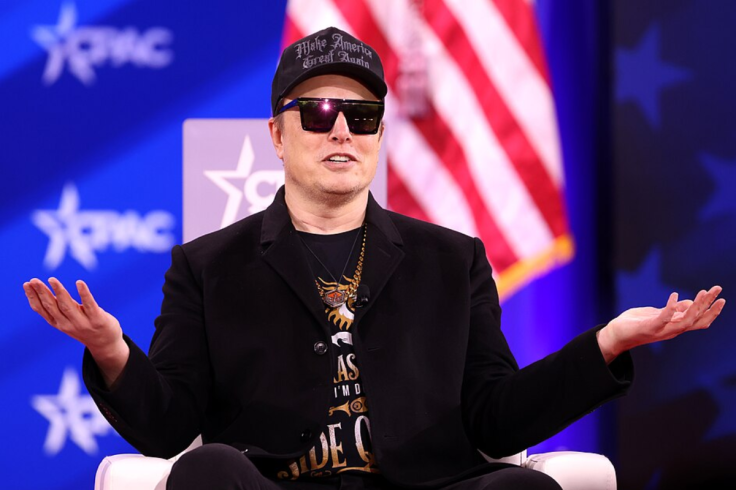
On Sunday, 8 November, SpaceX chief executive Elon Musk backed a prediction attributed to Google co-founder Larry Page on X.
According to a secondhand account, Page suggested that 99.999% of computing could eventually operate in space.
Musk wrote, 'Larry Page has made many accurate predictions and this is one of them', sharing a clip circulated by writer Hosun Chung. His endorsement offered neither evidence nor a timetable for such a sweeping shift.
The clip came from the 4 November episode of Invest Like the Best. Host Patrick O'Shaughnessy recounted an anecdote he had heard from another person, rather than Page himself.
Why Elon Musk's Endorsement Comes With a Caveat
O'Shaughnessy said someone asked Page how much computing would eventually become orbital. Page's reported answer was 'five nines', meaning 99.999%. If realised, just 0.001% would remain on Earth.
The podcast provided no recording of Page making the remark or details of when he supposedly said it. It also did not establish whether he meant all computing or the AI infrastructure discussed during the programme.
That uncertainty matters. Musk backed a reported forecast, not an independently verified statement from Page or a concrete plan to relocate computing facilities.
Podcast guest Martin Casado, a general partner at Andreessen Horowitz, offered a more immediate explanation for the idea's appeal. He argued that restrictions on building new US data centres could encourage companies to look beyond Earth.
Casado claimed there were 500 proposed pieces of legislation intended to stop data-centre construction, including in Texas. The podcast did not independently substantiate that figure. Proposed measures also differ from restrictions already in force.
If those barriers persist, Casado suggested, operators might build overseas or eventually consider orbit. Neither option eliminates the financial and engineering problems of running computer hardware in space.
Google Tests Orbital AI as Elon Musk Outlines Cooling Plan
Google is already testing one part of that ambition. Its Project Suncatcher prototype launched on 1 October aboard SpaceX's Transporter-18 mission, working with satellite company Planet.
The spacecraft carries Tensor Processing Units, or TPUs, Google's specialist AI chips. The experiment examines how they withstand radiation and extreme temperatures, rather than demonstrating a commercially operating orbital data centre.
On 30 October, Google reported that its equipment had powered up and completed preliminary machine-learning tests. The onboard Gemma 4 model generated a space-themed haiku after receiving a prompt from Earth.
Larry Page reportedly has a number for how much computing will end up in space: five nines. As in 99.999%.@patrick_oshag heard it secondhand: "Someone asked Larry Page how much of compute will be orbital, and he said five-nines."@martin_casado's reason it might happen: "It's… pic.twitter.com/iFVc0SNfuX
— Hosun Chung (@hosun_chung) November 7, 2026
Google described it as the first AI response from a data-centre-class TPU in orbit. The company plans additional thermal and radiation tests, followed by an experiment connecting two satellites in 2027.
Potential advantages include abundant sunlight. Google says panels in suitable orbits could generate up to eight times the power of comparable panels on Earth. Cooling, reliable communications and launch costs remain major obstacles.
Musk also weighed in on cooling on 3 November. He estimated that an aluminium radiator facing away from the Sun could dissipate about 1,300 watts per square metre. That remains an engineering estimate, not demonstrated commercial performance.
Separately, SemiAnalysis reported that SpaceX's projected data-centre capacity for 2027 had reached approximately 13 gigawatts. Crucially, that assessment concerned infrastructure on the ground, not operational computing capacity in orbit.
© Copyright IBTimes 2026. All rights reserved.