

Outrage As ICE Agent Jonathan Ross 'Unlikely To Face Charges' Over Death Of Renee Good, Sources Say
Federal Officials Say Criminal Charges Are 'Unlikely' Against Jonathan Ross Over Renee Good's Death — But Critics Slam Decision As Injustice And Call For Independent Probe.
Federal immigration agents look set to avoid criminal charges over the killing of Renee Nicole Good in Minneapolis, even as public anger over the case continues to build. Prosecutors at the US Department of Justice appear poised to decline charges against the ICE officer who shot the 37‑year‑old mother, deepening accusations that federal agents operate under a different standard of justice than ordinary citizens.
Good's death on 07 January 2026 has become a national flashpoint over federal power, policing, and accountability, with critics arguing that law‑enforcement officers tied to President Donald Trump's enforcement agenda are effectively shielded from consequences.
Federal Takeover Limits Outside Scrutiny
Within days of the shooting, federal authorities removed state investigators from the case and consolidated control under the FBI and the US Attorney's Office in Minnesota. Drew Evans, head of the Minnesota Bureau of Criminal Apprehension, confirmed that his agency lost access to key materials, including scene evidence and witness statements, leaving the state largely in the dark about the federal probe.
Ordinarily, the Justice Department's Civil Rights Division would be central to investigations of potential violations of civil liberties in law enforcement use-of-force incidents. In this case, multiple senior Civil Rights Division attorneys resigned in protest after being instructed not to investigate the Minneapolis shooting. DOJ spokespeople have denied that the resignations were linked to the Good case, claiming personnel changes were part of early retirement programmes.
This rare internal dissent highlights long-standing concerns among federal civil rights lawyers about the department's political influence over accountability decisions.
On top of that, federal prosecutors, unlike state counterparts, benefit from legal doctrines and constitutional provisions that make criminal charges against an on-duty federal agent exceedingly difficult. The Supremacy Clause and standards for 'reasonable' use of force create structural and evidentiary hurdles that they rarely overcome.
According to reporting, the FBI's ongoing investigation continues to scrutinise Good's actions and possible affiliations with protest movements, rather than focusing exclusively on the agent's conduct.
Conflicting Stories About the Shooting Itself
Video from the day of the shooting shows Good in her SUV during a federal operation in south Minneapolis as masked ICE agents swarm the area. A clip later distributed by federal officials appears to show her vehicle moving in the agent's direction shortly before he fires three rounds into the car, sending it into another vehicle; Good was later pronounced dead in the hospital.
Federal and White House spokespeople have characterised Good's conduct as threatening, with Vice President JD Vance and Secretary of Homeland Security Kristi Noem suggesting that agents faced imminent danger.
President Trump reinforced that narrative, publicly asserting that Good disrespected law enforcement and endangered officers' lives, though video evidence does not clearly show an attempt to harm any agent.
Local leaders and legal experts dispute the federal version of events. Minneapolis Mayor Jacob Frey has publicly criticised federal officials for prematurely determining the outcome before the investigation was complete, and called for transparency and evidence sharing with state authorities.
Use-of-force specialists say the shooting was inconsistent with accepted police tactics, given the apparent lack of an immediate threat and the agent's positioning in front of the vehicle.
Q: "Do you believe that deadly force was necessary?"
— The Bulwark (@BulwarkOnline) January 12, 2026
Trump: "It was highly disrespectful of law enforcement. The woman and her friend were highly disrespectful of law enforcement…Law enforcement should not be in a position where they have to put up with this stuff." pic.twitter.com/2lp825r0Pn
Community Fury and State Pushback
Good—remembered as a mother of three, a poet, and an engaged community member—has become a rallying figure for protesters who see her killing as part of a broader pattern of abusive immigration enforcement. Her wife, Becca, has publicly described the encounter and stressed that they were offering support in the community when the operation turned deadly.
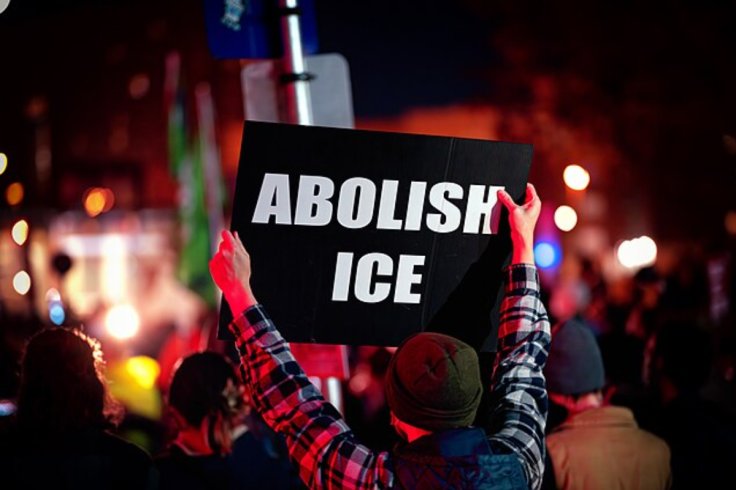
In the weeks since, demonstrations calling for ICE to be removed from Minnesota and abolished nationwide have spread across multiple cities. Minnesota Attorney General Keith Ellison and Hennepin County Attorney Mary Moriarty have begun gathering videos, photos, and eyewitness accounts from the public in hopes of building an independent record that could support state charges, though legal experts say such a case would be difficult with federal authorities controlling most of the key evidence.
Today, I joined with @MayorFrey and Mayor Her to announce a joint lawsuit to end the unlawful and unprecedented surge of ICE agents in Minnesota.
— Attorney General Keith Ellison (@AGEllison) January 13, 2026
People are being racially profiled, harassed, terrorized, and assaulted.
It has to stop. pic.twitter.com/d2uCeyGiKv
A Test Case for Federal Accountability
The Good case has deepened partisan divides over immigration enforcement, federal power, and law‑enforcement accountability, with Trump‑aligned officials rushing to defend the agent in ways critics say undermine confidence in impartial justice. The sidelining of the Civil Rights Division and the related resignations have intensified concern about whether the department is willing to challenge politically sensitive federal actions.
Good's death—and the likelihood of no criminal charges—now serves as a test of how, or whether, federal agents can be held to account when civilians die, and state authorities are pushed to the margins.
© Copyright IBTimes 2026. All rights reserved.