

Teen Reading Scores Hit Lowest Level This Century as Screen Time Rises, OECD Finds
Digitalisation and reduced reading for pleasure linked to declining literacy outcomes
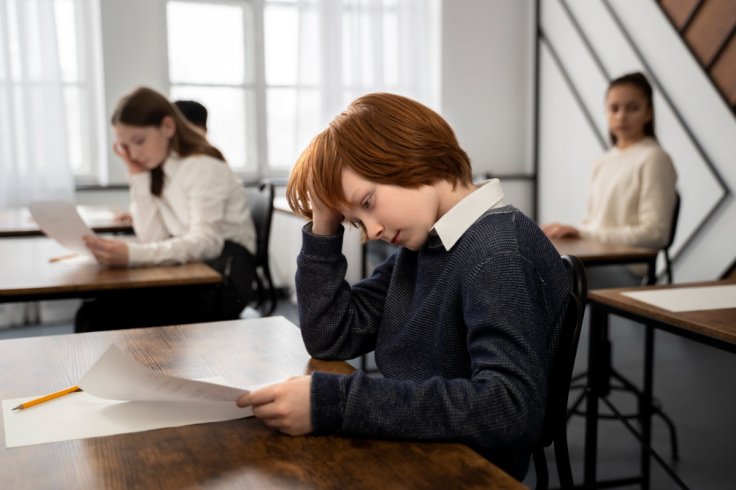
Reading scores among 15-year-olds across OECD countries have sunk to their lowest point since international testing began, with the Organisation for Economic Co-operation and Development (OECD) highlighting how longer screen time and declining rates of reading for pleasure have coincided with weaker literacy outcomes.
The findings come from PISA 2025, the largest edition of the assessment to date, which tested 760,000 students across 91 countries and economies. Average reading scores across OECD countries fell by 28 points between 2015 and 2025, a drop the organisation says is equivalent to roughly a year and a half of learning.
Reading Suffers Steepest Decline Among Core Subjects
Of the three core subjects tested, reading recorded the steepest decline. Mathematics scores fell by 22 points over the same decade, described by the OECD as just over a year of learning lost.
Science proved comparatively resilient, slipping only modestly after a longer downward trend between 2009 and 2022. One in five 15-year-olds across OECD countries is now classed as a low performer across all three subjects, up from 16 per cent in 2022.
Screen Time and 'Hasty Reading' Linked to Worst-Ever Scores
The OECD said increased digitalisation, longer screen time and falling rates of reading for enjoyment have coincided with weaker literacy outcomes. It has not established these factors as direct causes of the decline, but identified them as trends occurring alongside weaker results.
Researchers also flagged a sharp rise in what the report calls 'hasty readers', pupils who give fast but incorrect answers. The proportion of students who give fast but incorrect answers almost doubled in seven years, rising from almost 7 per cent in 2018 to 11 per cent in 2025.
'Most troubling is the decline in the very skills that matter most in the AI age, evaluating information, making connections across multiple sources and thinking critically about what we read,' the report noted. It added that in a world 'increasingly flooded with information', students are 'less likely to think deeply and separate signal from noise'.
Global Decline Extends Beyond Europe
The slump is not confined to Europe. In Australia, the 2025 results marked the country's worst-ever reading and maths performance, even as it continued to perform above the OECD average.
Jonas Bertling of the Australian Council for Educational Research said the data showed 'long-term declines in reading and in mathematics', while science had stabilised, a pattern that broadly mirrors the OECD-wide trend. Education International, a global federation representing teachers' unions, pointed to a second contributing factor beyond screens.
Teacher Shortage and AI Reliance Add To Concerns
It said the chronic teacher shortage remains unaddressed even as AI is promoted as a fix, warning that overreliance risks pupils 'outsourcing their learning to a bot'.
The OECD also found the traditional socio-economic gap between advantaged and disadvantaged pupils is closing, though not because poorer students are improving.
Between 2022 and 2025, the narrowing largely reflected declining performance among advantaged students rather than gains among disadvantaged ones. The findings carry weight beyond the classroom.
The OECD says weaker foundational skills can affect students' prospects in further education, employment and everyday life, while the ability to find, evaluate, interpret and reflect on information is increasingly important in a digital world.
If young people leave school less able to evaluate information or sustain attention through longer texts, the implications could extend into further education and the workplace, where people increasingly need to judge and apply information rather than simply produce it.
The OECD's own recommendation stops short of calling for a ban on classroom technology. Instead, it urges schools to use screens 'purposefully and in moderation', supporting attention and understanding rather than replacing them.
© Copyright IBTimes 2026. All rights reserved.