

Culture War vs. 'Fart Books', Drag Queens Bring US Libraries To 'Breaking Point', Report Finds
PEN America warns of growing censorship and political battles in US public libraries
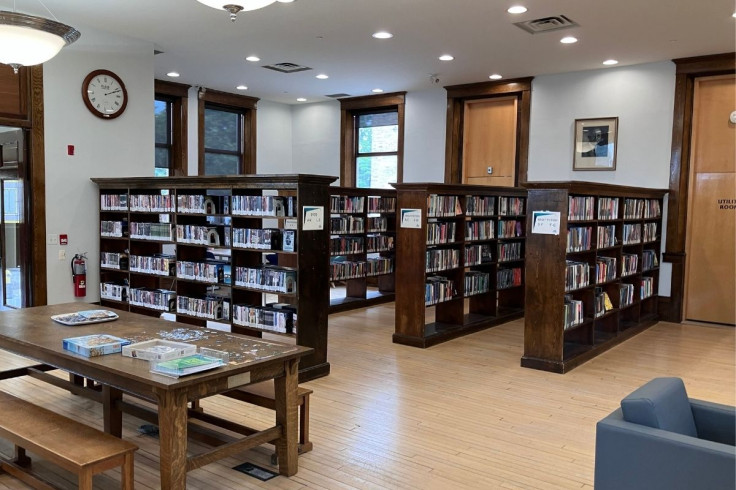
US public libraries have been pushed to a 'breaking point' by political interference, harassment and funding cuts, with a new report warning that censorship campaigns now pose an 'existential threat' to the institution.
PEN America, the free expression advocacy group behind the report, says its study, Out of Circulation: Expanding Censorship in Public Libraries, documents a growing campaign against books, drag events and library boards across the US.
Libraries Turned Into Ideological Battlegrounds
What was once seen as a place for reading, learning and community life is increasingly becoming a site of political conflict. The fight is not limited to books about race or LGBTQ+ issues, although those remain among the most common targets.
In Llano County, Texas, parents objected to books described as 'butt and fart' titles. The books included material about the human body and basic information about puberty.
A Texas appeals court later overturned the ban. It ruled that public schools and libraries could not remove books simply because officials disagreed with their content.
The dispute had a personal cost. Suzette Baker, a head branch librarian in Llano County, was dismissed after refusing to remove the books from library shelves.
Drag Events at the Center of Discussion
Drag shows and story hours in libraries have also become flashpoints. PEN America records bomb threats, protests and the physical assault of a librarian as opposition to these events has grown. The organisation says coordinated campaigns are turning libraries into places where battles over censorship are being fought in public.
Kasey Meehan, PEN America's Freedom to Read director, said the pressure was increasingly organised. The American Library Association found that challenges driven by pressure groups, government officials and other decision-makers accounted for 92 per cent of book challenges in 2025, up from 72 per cent in 2024.
PEN America Expresses Growing Concern
Censorship campaigns are increasingly targeting the people who run libraries. A 2026 law in Idaho gives city councils direct authority to hire and fire library directors.
Similar efforts in Alabama have sought to give local governments the power to remove library board members at will.
In Sumner County, Tennessee, conservative activist Riley Gaines was appointed to a county library board.
Posts on her social media accounts drew criticism from library supporters, with some characterising her language about LGBTQ±themed books as derogatory. The US Supreme Court has added another layer to the dispute.
In its 2025 ruling in Mahmoud v. Taylor, the court found that a group of parents' religious freedom had been violated after they were not allowed to opt their children out of a class featuring LGBTQ+ storybooks. Jonathan Friedman of PEN America warned that the ruling could have a wider impact on children's books.
Censorship Could Lead to 'True Death' of the Library
Advocates say some of the most damaging censorship may never become public. Librarians facing political attacks, harassment or threats to funding may simply stop buying controversial titles. Those books then disappear without ever reaching the shelves.
PEN America and library supporters have described that quiet retreat as the 'true death' of the public library. Teen services librarian Fred Kirchner said censorship can become 'a border around one's mind'. He warned that it can weaken people's ability to understand lives and experiences different from their own.
Archivist Myles Cooper said children also needed to see their families and identities represented in books. Without that, he argued, they could struggle to imagine their own futures. The political fight is also unfolding against a funding crisis.
For many people in low-income and semi-rural communities, libraries remain one of the last places where they can access free computers, Wi-Fi and internet services, as more government, education and employment systems move online.
When library services are cut, PEN America argues, the consequences go beyond books. The organisation says the campaigns represent 'nothing less than an attack' on the library as a public institution, as well as on the principles of free expression and equality.
© Copyright IBTimes 2026. All rights reserved.