

These College Degrees Could Lose Federal Student Loans Under Trump's Rule
Programmes that fail earnings tests in two consecutive years will lose federal loan eligibility from 2028-29
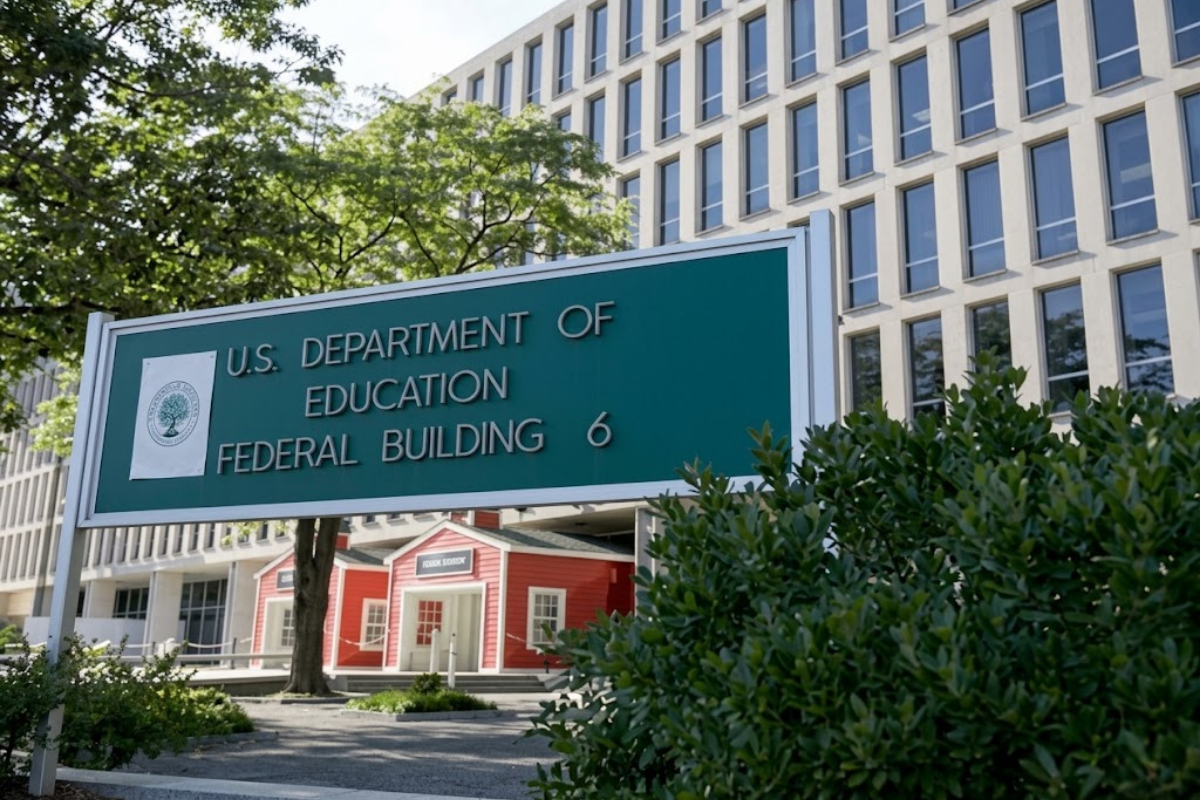
Students pursuing degrees that lead to low-paying careers could lose federal student loans under a new rule from the US Department of Education, with religious studies, social work, music, fine arts, and cosmetology among the fields most exposed.
The department's new earnings accountability framework ties federal lending to graduate pay. Courses whose former students fail to out-earn workers who never attended college could lose access to the federal Direct Loan programme as early as the 2028-29 academic year.
The framework carries out a 'Do No Harm' standard created by the One Big Beautiful Bill Act, the tax-and-spending law President Donald Trump signed on 4 July 2025. The department announced the final rule on 29 June 2026.
How the Earnings Test Works
To keep federal loan eligibility, undergraduate programmes must prove their graduates earn more than working adults aged 25 to 34 with only a high school diploma. Graduate programmes face a tougher bar, beating the earnings of workers who stopped at a bachelor's degree.
Earnings are assessed four years after a student finishes. The 2027 review, for instance, will use the median incomes of those who completed in 2023, measured against national or state wage data.
A programme that fails in both 2027 and 2028 is then labelled a 'low-earning outcome programme,' losing Direct Loans from the 2028-29 award year.
Which Degrees Are Most at Risk
The department's own January analysis estimated roughly 6% of all higher education programmes would fall short, with for-profit colleges hit hardest at more than 35%.
Undergraduate certificates look most vulnerable, with close to 29% failing in the modelling. Every culinary, entertainment, and personal services course tested came up short, followed by English language and literature (98.9%), computer and information sciences (95.9%), and cosmetology (92.5%).
Full degrees fare better, with just 1.2% of bachelor's and 4% of master's programmes projected to fail. Among bachelor's degrees, religious studies led at 53.3%, ahead of graphic communications (17.7%), and film, video, and photographic arts (12%). At postgraduate level, alternative and complementary medicine (98.1%) and religious studies (89.4%) failed most often.
Pell Grants and the Wider Fallout
The consequences stretch beyond loans. An institution can lose all of its Title IV funding, including Pell Grants, if more than half of its aid recipients are enrolled in low-earning outcome programmes, or if more than half of its Title IV money flows to those students.
Schools are not cut off at once. After a first failure, the department issues a warning. A college can then pull the programme from Direct Loans for at least five years to shield its Pell funding, or wind it down through a teach-out while enrolled students finish.
Some fields gain extra time. Thanks to last year's new tax deduction on tips and overtime, consequences for heavily tipped work such as cosmetology and massage therapy are delayed until the test can count tipped income.
Education Department Rejects 'Ban' Claims
The rule has prompted debate. After claims spread online that the administration was 'banning' students in low-paying majors from borrowing, the department pushed back on X, branding the characterisation 'fake news at its finest' and stressing that Washington does not design course content.
'Federal student loans are not a welfare program for failing college programs,' the department said, arguing that students deserve clear information about courses that may never pay off.
Critics counter that fields such as social work and the fine arts carry social value beyond their pay, and should not be judged on earnings alone.
Under Secretary of Education Nicholas Kent defended the measure. He said any programme that cannot show it leaves graduates better off 'should not be underwritten by federal taxpayers,' pointing to rising defaults across the $1.7T (£1.3T) federal loan portfolio.
What It Means for Students
Most graduates still gain financially from a degree, even in lower-paid fields. A Postsecondary Commission and Mathematica study of Texas students found liberal arts delivered the smallest 15-year earnings boost, about $35,400 (£26,400), with social sciences at $51,300 (£38,300).
Engineering and architecture, by contrast, returned more than $200,000 (£149,000). Every broad bachelor's field examined still produced a positive return.
Policy groups were split. The Institute for Higher Education Policy called the rule 'real progress', while the Institute for College Access and Success welcomed it as 'a meaningful step' but criticised exemptions it says blunt its reach.
© Copyright IBTimes 2026. All rights reserved.