

Panic Over The White House as Fed Chair Powell Confirms Trump Tariffs Mean Higher Costs And Fewer Jobs
Fed Chair Jerome Powell links Trump's tariff regime to rising costs and employment risks
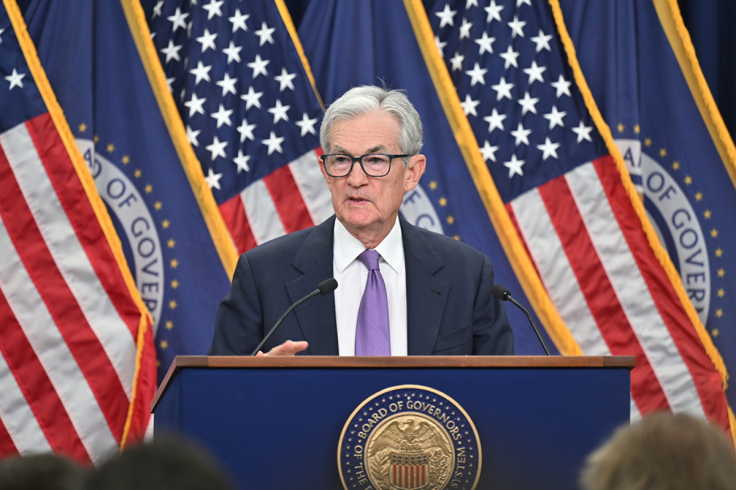
Federal Reserve Chair Jerome Powell delivered a stark assessment of US President Trump's sweeping tariff policies, asserting they have materially increased inflationary pressures, raised consumer costs and complicated the central bank's ability to sustain maximum employment. Powell's statements, made during a highly anticipated press conference following the Federal Open Market Committee (FOMC) meeting, confirmed that tariffs are now a principal driver of inflation overshooting the Fed's 2 % target, a dynamic that threatens both price stability and labour market strength. His remarks emphasised an economic crossroads where tariff-induced inflation may blunt employment growth, forcing policymakers into a delicate balancing act unprecedented in recent decades.
Tariff Policy Meets Monetary Reality
Powell directly attributed the recent inflation overshoot above the Federal Reserve's 2 % goal to Trump's tariffs, stating: 'It's really tariffs that are causing the most of the inflation overshoot', during the Dec.10 FOMC press conference transcript released by the Federal Reserve.
According to the official press transcript, Powell explained that higher tariffs have pushed goods prices higher and that this has shown up clearly in consumer price data. He detailed that goods inflation accounts for a significant portion of the current excess inflation, and that this driver complicates the Fed's standard decision-making process.
Describing the unique tension between the Fed's dual mandate: to maintain price stability and maximise employment, Powell reminded reporters that the central bank has only one primary tool, interest rates. He noted that elevated tariffs contribute simultaneously to price pressures and slower growth, a combination that leaves monetary policymakers with no easy path forward.
The Fed's regional leadership echoed this caution. Philadelphia Fed President Anna Paulson acknowledged that inflationary pressures largely driven by tariffs could diminish in the coming year, but that the labour market remains 'bending, but not breaking'.
Household Costs and Economic Strain
Recent analyses by Congress' Joint Economic Committee (JEC) illuminate the real-world implications of these policy shifts. A report from the JEC found that import tariffs levied since Trump's return to the White House have cost the average U.S. household nearly £1,200 ($1,500) in higher prices from February through November 2025.
The report estimates that collective costs to American consumers reached approximately £158 billion ($197 billion) during this period; sharply elevating living costs at a time when inflation was already weighing heavily on household budgets. Critics have labelled this as one of the largest 'consumer tax hikes' in a generation.
Economic research supports these concerns. A recent working paper analysing tariff impacts projects that escalating trade duties could lead to widespread employment losses globally, with job declines exceeding 23 million under adverse scenarios, disproportionately affecting low-skilled workers.
Large retailers have publicly signalled tariff-induced price increases, warning that supply chain costs will be passed on to consumers unless tariffs are rolled back or mitigated. These concerns echo across sectors reliant on imported intermediate goods.

Market Reactions and Policy Pressures
Financial markets have responded nervously to Powell's comments. When tariffs were scaled up earlier this year, stock indexes experienced volatility and sustained declines, reflecting investor anxiety about slowing growth and profit margin compression. Worldwide markets also saw ripples as global trade dynamics shifted.
Powell's acknowledgement that higher tariffs blur the usual relationship between inflation and employment has heightened these concerns. Analysts note that markets are now pricing in a prolonged period of uncertainty, where neither inflation nor job growth trends are clear enough to pivot monetary policy decisively.
Trump has publicly criticised Powell's approach, urging aggressive interest rate cuts to stimulate growth. In social media posts, Trump labelled the Federal Reserve's restraint 'politics' and implored Powell to 'cut now' to protect the economy.
Federal Reserve independence becomes a central theme in this clash. Powell reiterated that the Fed's mandate is set by Congress, not the White House, emphasising that monetary policy decisions cannot be arbitrarily accelerated without due consideration of long-term economic stability.
As the economy works through these layered effects, the White House faces mounting pressure. Households feeling the pinch of higher prices, businesses grappling with tighter margins, and policymakers wrestling with competing goals all converge in a political climate where economic policy is deeply contested.

© Copyright IBTimes 2026. All rights reserved.