

Peruvian Shamans Predict Trump To Fall Gravely Ill In 2026
Annual ritual in Lima features astonishing forecasts about world leaders, including Trump's health and geopolitical shifts.
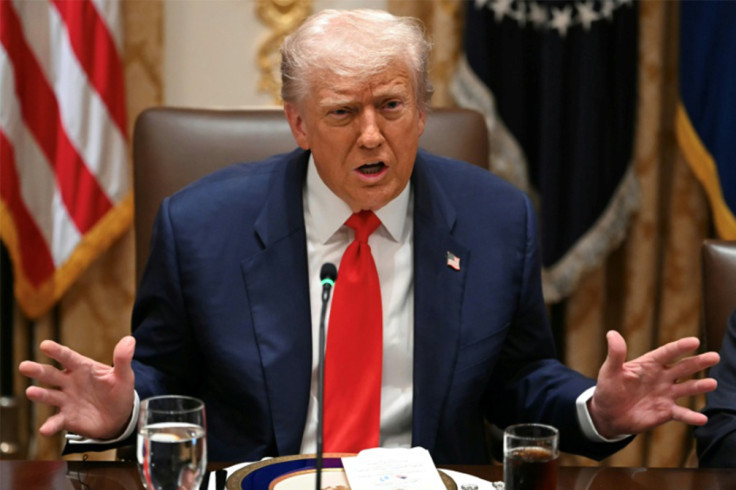
A line spoken on a Lima beach has travelled far beyond Peru.
During an annual New Year ritual on 29 December 2025, a group of Peruvian Shamans gathered on La Herradura beach in Southern Lima predicted that US President Donald Trump would 'fall seriously ill' in 2026, a claim delivered as cameras rolled and incense burned beside the Pacific.
The ceremony, staged as a public performance of spiritual tradition, quickly became international news because it placed the world's most powerful figures inside a ritual space that blends belief, symbolism and spectacle.
Participants, clad in colourful traditional ponchos and using ceremonial items such as flowers and incense, carried and interacted with large photos of world leaders, including Trump and others such as Venezuelan President Nicolás Maduro, Chinese President Xi Jinping, Russian President Vladimir Putin, and Ukrainian President Volodymyr Zelenskiy.
The lead Shaman, Juan de Dios Garcia, stated: 'The United States should prepare itself because Donald Trump will fall seriously ill', a declaration that was met with a mixture of curiosity and scepticism internationally.
The prediction is not evidence-based and should be treated as cultural commentary rather than medical or political forecasting, as experts often caution.
Annual Ritual and Predictions
The ritual held on the Pacific shore is part of an annual tradition among some indigenous and spiritual communities in Peru that blends pre-Hispanic beliefs with Catholic and local customs.
Shamans engage in symbolic practices, including burning incense, sprinkling flowers and chanting, typically at the transitional point between years.
Garcia and other practitioners also forecast the downfall and exile of Venezuelan President Maduro, asserting he would flee Venezuela and not be captured in 2026.
A group of Peruvian shamans gathered on a beach in southern Lima to perform their annual New Year ritual, delivering predictions for 2026 that included the fall of Venezuelan President Nicolas Maduro and a serious illness for US President Donald Trump https://t.co/3k94IDkmgj pic.twitter.com/oVioJ3KWkn
— Reuters (@Reuters) December 30, 2025
In a broader sweep of predictions, the Shamans said they saw a resolution to the Russia–Ukraine conflict, symbolised by a quote attributed to Garcia: 'the conflict will end, they will raise the flag of peace.'
Closer to home, they forecast a political victory for Keiko Fujimori in Peru's presidential election following her previous unsuccessful campaigns.
The ceremony's practitioners traditionally use wachuma (the San Pedro cactus) in their rituals, a plant with psychoactive properties that some shamans believe deepens spiritual insights.
Context and Cultural Significance
Peruvian Shamanism represents a complex tapestry of indigenous spiritual beliefs, some of which date back to pre-Columbian civilisations.
Shamans, often referred to as curanderos or spiritual healers, employ a mix of herbal knowledge, ritual songs, prayer and plant-based medicines to interpret spiritual signs and heal both community members and visitors.
Peruvian shamans are predicting the fate of world leaders and this year they warn the US to brace for Donald Trump’s illness and the downfall of Venezuelan President Nicolas Maduro. “The US should prepare itself because Trump will fall seriously ill.”https://t.co/NqapZCloVL pic.twitter.com/PcE8MFMZ6S
— Hoodlum 🇺🇸 (@NotHoodlum) December 30, 2025
While the ritual in Lima draws significant media attention each year, anthropologists and cultural experts caution against interpreting these events as literal predictors of future global events. These ceremonies are deeply rooted in local cosmologies, and their public political pronouncements often reflect symbolic aspirations rather than verifiable forecasting.
Reuters, which documented the ceremony, noted that shamans have made similar predictions annually and that past forecasts have had mixed outcomes; for instance, they had previously predicted the end of the war in Ukraine in 2023, a forecast that did not materialise.

The group's forecasts also included political outcomes in other nations, which, while drawing media attention, are distinct from empirical political analysis.
Critics of these practices describe them as cultural performances rather than evidence-based predictions.
Analysts stress that indigenous rituals carry cultural value and should not be conflated with empirical forecasting.
International Reaction and Media Coverage
International media have widely reported the shamans' predictions, prompting discussions about the role of spiritual practices in political narrative framing. Mainstream reporting, including from Reuters, confirms the core details of the ritual and its forecasts without endorsing the predictive claims themselves.
Diplomatic and political communities typically treat such spiritual predictions as cultural phenomena rather than actionable intelligence.
Experts in indigenous traditions highlight the importance of understanding these rituals in their cultural context.
Shamanic practices in the Andes and Amazon have long served community functions, including healing and social cohesion, as well as symbolic interpretation of the natural and spiritual worlds.
© Copyright IBTimes 2026. All rights reserved.