

Sallie Mae Borrower's Loan Grew From $84K to $252K: Now She Must Choose Between Rent and Student Debt
A borrower struggles with a soaring student loan balance, highlighting the challenges of private lending

A Sallie Mae borrower has said a student loan balance climbed from £62,000 ($84,000) to £185,000 ($252,000), and now faces a choice between paying rent and paying the loan. The borrower said that a partial payment had been made this month, but £577 ($785) remained due by Friday.
'It's literally a choice between paying rent or paying Sallie Mae,' the post said. Late payments had already lowered the borrower's credit score, and the borrower expected the account to be charged off if the payment was missed.
According to the borrower's account, the trouble began after graduation. The lender first sought £880 ($1,200) a month, but the job the borrower had expected did not materialise, and bills mounted while they were living in another state. The monthly figure later rose to £1,540 ($2,100).
The borrower said they were also paying for school out of pocket. The borrower's mother, named as the loan's cosigner, had already given as much help as she could.
Sallie Mae has not publicly commented on the account, and the borrower did not state the loan's interest rate or the period over which the balance grew.
How Private Loan Balances Grow
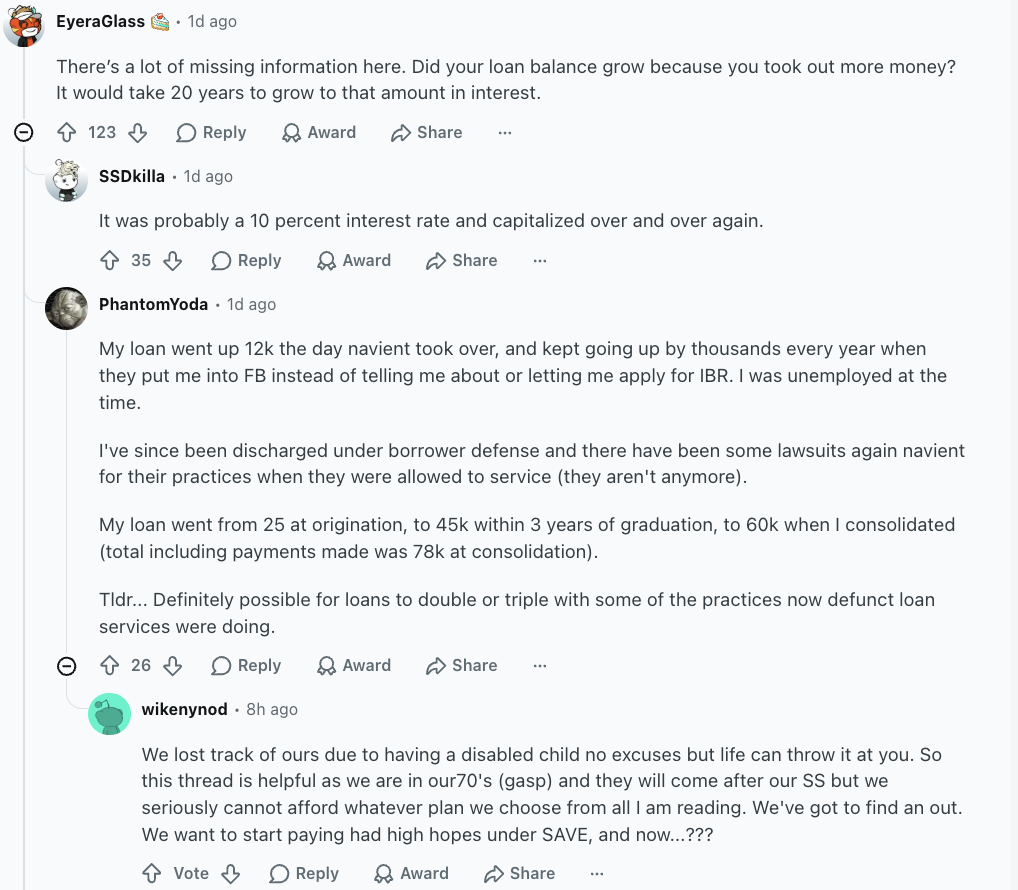
Other users questioned how a balance could more than triple. One asked on Reddit whether additional borrowing, rather than interest alone, had driven the increase. Another suggested a roughly 10% rate had 'capitalised over and over again.'
The Consumer Financial Protection Bureau describes capitalisation as unpaid interest added to a loan's principal, after which the borrower pays 'interest on interest'. On private loans, which carry fewer protections than federal ones, interest can capitalise at the end of a grace period, after forbearance, or at other points set by the loan contract. Each event raises the balance and the monthly payment.
One user described a federal loan, serviced by Navient, that had grown similarly. Federal loans are a separate category from the private Sallie Mae debt described in the post.
The Wider US Debt Picture
Sallie Mae is a private lender. It spun off its servicing arm, Navient, in 2014. Total US student debt reached about £1.37T ($1.866T) in March 2026, according to the Federal Reserve. Private loans accounted for roughly £103B ($140B), according to Enterval Analytics.
The Federal Reserve found that 15% of borrowers with a payment due in a recent month paid less than required or did not pay at all. The US Department of Education resumed collections on defaulted federal loans in May 2025. About 3.6 million borrowers fell into default on federal loans in the year to the fourth quarter of 2025, according to Department of Education figures.
Among undergraduate private loans taken out in the 2025 to 2026 academic year, 96.5% carried a cosigner, according to Enterval Analytics. The same firm recorded a 90-day delinquency rate of 1.6% on private loans in early 2026. In 2025, US senators requested information from Sallie Mae on how the private student loan market treats borrowers.
Bankruptcy Rarely Clears Student Loans
The borrower wrote that a lawyer had advised that their income was too high to qualify, citing earnings of £49,000 ($66,000) against a local threshold of about £48,000 ($65,000).
That threshold applies to the means test for filing a Chapter 7 case, not to erasing student loans. Both federal and private student loans are presumed non-dischargeable unless a borrower proves 'undue hardship' in a separate court action, generally under the Brunner test. Historically, fewer than 1% of borrowers who attempted it succeeded, though a 2022 Justice Department change eased the process for federal borrowers.
A charged-off private loan is typically written off the lender's books and passed to collections, though the borrower and any cosigner still owe the balance. The borrower's mother, as cosigner, remains liable.
Sallie Mae lists hardship and modified repayment options for borrowers who have left school. The borrower sought advice on whether anyone had secured a hardship plan, a settlement, or another arrangement with the lender and there were no such instances recorded at her post at the time of this writing.
© Copyright IBTimes 2026. All rights reserved.