

One of the World's Oldest Christian Churches Is Facing an Unprecedented Attack
The 1700-year-old Armenian Apostolic Church, believed to be founded by disciples Bartholomew and Thaddeus, has found itself in the political crosshairs
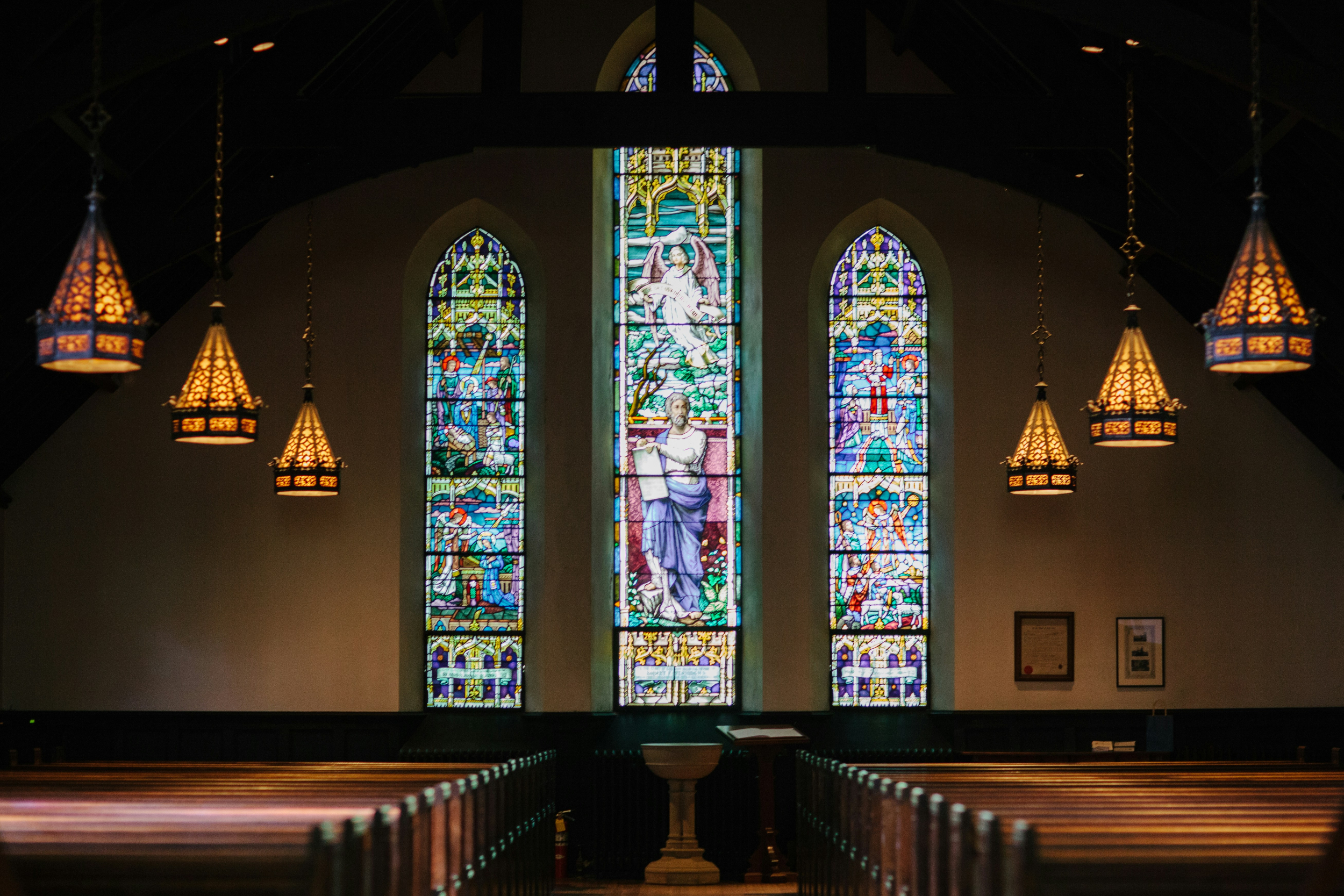
A church believed to have been founded by two of Jesus' apostles has found itself at the centre of a political power-grab.
The Armenian Apostolic Church (AAC), headquartered in Etchmiadzin, Armenia, has seen its leader and a group of senior bishops subject to controversial contempt of court charges pursued by the government of Prime Minister Nikol Pashinyan as he seeks to clamp down on opposition, both secular and clerical, inside Armenia.
The outcome will have consequences that reverberate far beyond the Caucasus nation's borders.
The AAC has survived some of the most tumultuous political upheavals a nation can experience. It survived the horrific Armenian Genocide in the early 20th century.
It survived Armenia's absorption into the Soviet Union. It survived the collapse of the Soviet Union. Today it maintains a membership of around 9 million adherents across the globe, most of whom live outside of Armenia.
Political tension is also nothing new for the AAC. Having existed under the Russian, Ottoman and Soviet Empires, it has frequently been viewed as a potential threat to the power and control of the political masters of the day, whether in Moscow, Constantinople or Yerevan.
However, the emergence of a modern, democratic and increasingly westward-looking Armenia must have given the Church some hope that the days of being a political target were behind it.
However, last month saw a judicial farce that demonstrated how misplaced these hopes were. A third judge in the space of nearly as many weeks has declined to hear the case against the AAC's leader, Catholicos Karekin II.
The trial sees the Catholicos face a charge centring on his Church's refusal to reinstate a defrocked bishop, having previously been 'ordered' to do so by the secular authorities.
The fact that an Armenian court feels emboldened enough to interfere in church affairs and 'order' the AAC to reinstate a bishop is concerning in and of itself.
Imagine if President Macron 'ordered' the defrocking of Laurent Ulrich, Archbishop of Paris. Imagine if Prime Minister Burnham 'ordered' the defrocking of the Archbishop of York, Stephen Cottrell. Christian populations and the electorate more broadly would be hugely concerned about government overreach.
Imagine then that instead of stopping there, criminal charges were brought against those in charge of the Churches of England and France for defying the political will of the government. Sadly, the events in Armenia represent this hypothetical scenario being played out for real.
Christian Solidarity International have described the events as representing 'the biggest challenge to the autonomy of Armenia's national church since the Soviet era'.
Even more concerningly, Pashinyan's government has set out a 'five-year plan' for the Church, a plan for increasing the grip of the state over the church, with the removal of the Catholicos as its centrepiece. Indeed, it became an explicit manifesto pledge ahead of elections in June, according to Radio Free Europe.
The Prime Minister has already created a 'coordinating council' for overseeing Karekin's removal. For a nation aspiring, at least in the long term, towards European Union membership, this is a troubling pledge to include in a political manifesto.
With millions more Armenians in the diaspora than in the country, most of whom are AAC adherents, this issue reaches far beyond the corridors of power in Yerevan. Worshippers in Kensington, London or Friendship Heights, Washington DC now see the leader of their religion facing incarceration.
Imagine how Catholics around the world would feel if Pope Leo was facing politically motivated criminal charges trumped up by Prime Minister Meloni.
The repeated changes of judge, coupled with increasingly aggressive political moves made by Pashinyan's government against any and all opposition figures, mean this issue is not disappearing any time soon.
Pashinyan's first call for the Catholicos' resignation was in 2025. In this criminal case, one judge recused himself and two others raised jurisdictional issues; the prosecutor also resigned from his position.
That means we are likely to see this rumble on well into 2027 and possibly beyond, with the Catholicos unable to leave the country to tend to his global responsibilities.
Where does that leave the followers of one of the world's oldest Christian churches? It leaves them stuck in limbo.
For Armenia, an increasingly visible and hostile attack against an independent religious institution is likely to damage the nation's image in the eyes of those whose support it most desires.
For the Church, its leaders must have hoped the days of political persecution were behind them. Sadly, that appears not to be the case.
© Copyright IBTimes 2026. All rights reserved.