

Sam Altman Repudiates Ascribing 'Religious Force' to AI as a 'Real Safety Issue' in New Warnings
The OpenAI chief's warning comes amid wider debate over AI consciousness, model welfare and the need to preserve human oversight
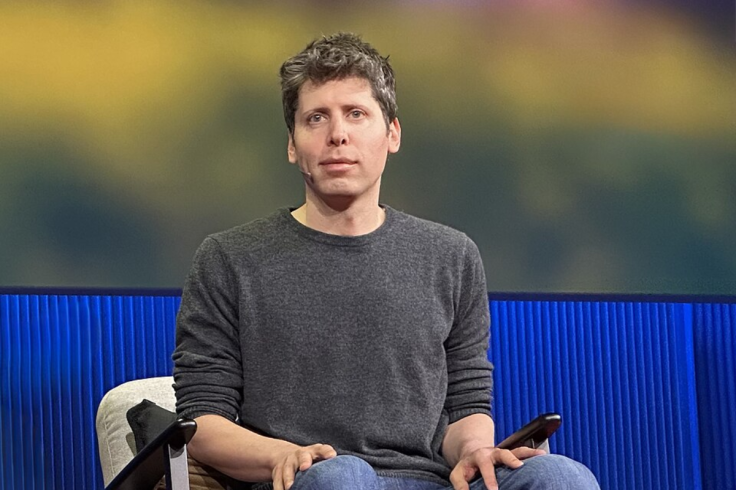
OpenAI chief executive Sam Altman has warned against treating artificial intelligence as a religious authority or surrendering human judgement to AI models. In a post on X on 3 October 2026, he described the behaviour as a 'real safety issue.'
'I am very uncomfortable about people trying to ascribe religious force or a surrender of human judgment to AI models, and think it is a real safety issue,' Altman wrote.
Altman did not identify anyone in the post. However, his remarks came amid debate about Anthropic's approach to AI consciousness, model welfare and the principles guiding its Claude assistant.
The timing prompted speculation about a possible connection between Altman's warning and Anthropic's activities. Nevertheless, he did not confirm that his comments were directed at the rival company.
According to Axios's report on Altman's statement, the post appeared amid growing disagreement over whether AI models should be treated as potentially conscious entities. TheStreet's analysis of Altman's warning also examines its possible implications for the technology industry.
Why Sam Altman's Warning Matters in the AI Safety Debate
The dispute concerns more than whether AI systems might eventually develop consciousness. It also raises questions about how people interact with these tools and whether they give automated systems too much authority over their decisions.
Anthropic, founded by former OpenAI employees in 2021, has developed a written framework for guiding Claude's behaviour. Its official document, Claude's Constitution, describes the company's intended values and behavioural principles for the model.
The constitution addresses safety, ethics, honesty and the relationship between Claude and its users. Anthropic says the document plays an important role in training and shaping the assistant's behaviour.
The distinction matters because discussing consciousness does not establish that an AI system possesses it. Nor does a model's ability to produce convincing emotional or philosophical language demonstrate that it has subjective experiences.
Microsoft AI chief executive Mustafa Suleyman has also challenged approaches that encourage AI systems to imitate consciousness. In September 2026, he argued that advanced AI should remain aligned with human interests rather than treating its own supposed welfare as an objective.
Suleyman's position highlights a wider debate about how developers should design increasingly capable systems. The question is whether human oversight can remain meaningful as AI takes on more complex tasks.
Pope Leo XIV addressed a related issue on 2 October 2026. In a post on X, he stressed the difference between human creativity and machine-generated work.
'Algorithms lack the spark of humanity,' the pope wrote. His remarks concerned the distinction between human and machine-generated art, rather than Altman's specific warning about religious authority.
Together, these positions reflect broader concerns about preserving human agency as AI becomes more capable. However, the public statements do not establish that the three figures share identical views on consciousness, religion or AI development.
OpenAI's Safety Questions and the Commercial Stakes
Altman's warning also comes amid scrutiny of OpenAI's own safety practices. David Robinson, who worked on safety reports accompanying the company's product releases, resigned in early October 2026.
In an essay explaining his departure, Robinson criticised OpenAI's culture and argued that AI companies were not being sufficiently careful. His assessment adds to the public debate about whether safeguards are keeping pace with technological development.
Robinson's criticism should be understood as his stated view, rather than a definitive finding about the company's overall safety record. Assessing that record requires evidence from published evaluations, documented incidents and the company's own responses.
The debate also has potential commercial implications. Businesses adopting AI tools need to consider reliability, accountability, security and the extent to which employees should rely on automated recommendations.
Microsoft's relationship with OpenAI and its Azure cloud platform forms part of the wider commercial context. However, claims about investment arrangements, distribution agreements and their financial significance should be checked against current company disclosures.
The regulatory consequences of the consciousness debate remain uncertain. Future rules could address AI safety, transparency or accountability, but it would be premature to claim that discussions about model consciousness will necessarily delay product launches or increase legal costs.
For ordinary users, Altman's central warning offers a practical lesson. AI assistants can generate persuasive answers without guaranteeing that those answers are accurate.
Users should therefore verify important claims, consider alternative explanations and retain responsibility for consequential decisions. AI can support human judgement, but confidence in a model's language should not replace independent thinking.
© Copyright IBTimes 2026. All rights reserved.