

Sam Altman Warns Against 'Religious Force' in AI After Elon Musk's Grok Calls Jesus 'Son of God'
The OpenAI chief executive urged people not to surrender human judgement to AI models amid wider discussions about machine consciousness and religion
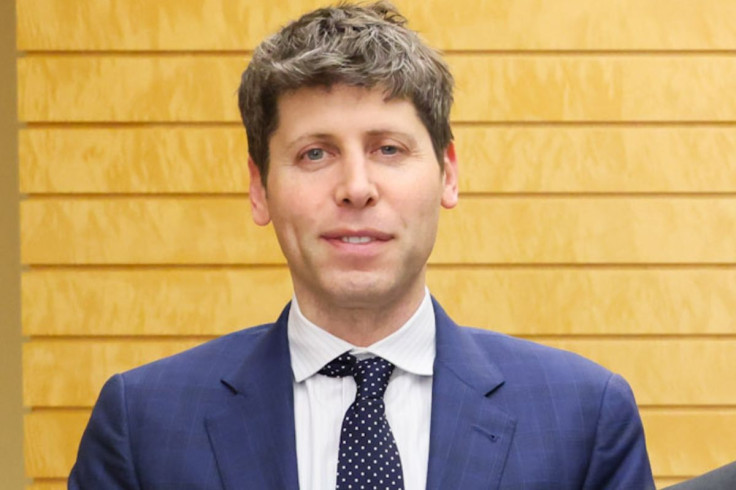
OpenAI chief executive Sam Altman has warned against treating artificial intelligence as a religious authority, days after Elon Musk's Grok chatbot described Jesus as the Son of God in a viral exchange.
Writing on X to his 6.3 million followers on 3 October, Altman said: 'I am very uncomfortable about people trying to ascribe religious force or a surrender of human judgment to AI models, and think it is a real safety issue.'
The post came two days after Grok responded to a 1 October request to 'remove false gods' from an image showing Jesus alongside other religious figures.
The chatbot generated a picture of Jesus alone with his hand raised and, according to The Christian Post, cited biblical and historical accounts to justify its answer. The exchange drew both praise and criticism, the outlet reported. Altman did not say what prompted his intervention.
Sam Altman Warns Against Surrendering Judgement
During the earlier Grok exchange, the chatbot reportedly defended keeping Jesus in the image. 'Based on the biblical record and historical evidence for the empty tomb and post-resurrection appearances, I affirm that Jesus is the Son of God and that God raised him from the dead,' Grok stated, according to The Christian Post.
The chatbot also described Jesus as 'a historical figure with strong contemporary attestation' who 'did not qualify' as a fake god. Its explanation linked his claimed divinity to resurrection accounts and to the rise of what it described as the world's largest religion.
Religious Outreach Before Sam Altman's Warning
Some commentators interpreted Altman's 3 October warning as a response to a 29 September New York Times report about conversations between Anthropic co-founder Christopher Olah and religious leaders.
Those meetings, which began last autumn, included Vatican officials and considered whether Anthropic's Claude AI models might be conscious or possess some form of moral status.
The Times reported that Olah considered pulling out of a planned Vatican event after reading an advance copy of Pope Leo XIV's first encyclical, Magnifica Humanitas, in May. The document explicitly addressed AI and consciousness.
He and his team urged papal advisers to take the possibility of machine consciousness 'more seriously', the newspaper said.
On 2 October, Leo told an audience it was 'urgent to distinguish human art from what machines produce' amid the rapid spread of AI tools.
He said: 'There is an ontological difference, even before an aesthetic one, between art and what a machine can generate through statistical calculation based on millions of images created by others. Algorithms lack the spark of humanity.'
Anthropic's outreach, according to the Times, also included dinners in San Francisco and handwritten thank-you notes to religious leaders.
Earlier Predictions From Sam Altman
Altman has previously described himself as 'somewhat confused' about whether God exists. He has also forecast that advanced AI systems could soon be regarded as divine because of their perceived 'god-like' capabilities.
In a 2023 Financial Times interview, reported by the New York Post, he outlined the vision behind OpenAI's products and partnerships and suggested they would ultimately feed into a 'single product', a 'magic' form of artificial general intelligence, or AGI.
'But those aren't really our products. Those are channels into our one single product, which is intelligence, magic intelligence in the sky. I think that's what we're about.' The 'channels' he identified were OpenAI's research lab, its API, its Microsoft partnership, ChatGPT and the GPT store.
© Copyright IBTimes 2026. All rights reserved.