Sanchita Sultana Wants Public Health to See the Signal Earlier

A crowded dental clinic in Bangladesh taught Sanchita Sultana what can happen when early warning signs are missed. Preventable infections filled the clinic, showing her the consequences that can follow when signals are not recognized soon enough. Years later, working as an epidemiologist in Michigan, she saw the opposite pattern when a single validated case report helped guide rapid action and prevent wider transmission. Those experiences shaped the way Sultana thinks about one of epidemiology's most important responsibilities: recognizing a threat early enough to change what happens next.
"An outbreak does not begin when everyone suddenly realizes there is a crisis," Sultana says. "It begins earlier, often with a signal that may look small at first. The challenge is understanding what that signal means while there is still time to respond."
Sultana's work centers on epidemiology, implementation science, and population health research. She uses health data to understand where disease burden is concentrated, which populations are most affected, and how scientific evidence can inform decisions by health departments and healthcare organizations. Her interest goes beyond identifying patterns. She wants those findings to lead to practical action.
"Data becomes useful when it helps someone make a better decision," she says. "Finding a pattern is one part of the work. The next question is what that information should change."
Sultana believes one of the field's persistent misconceptions is that it becomes important only during events such as pandemics, outbreaks, wildfires, or other emergencies. Prevention and surveillance are working in the background every day, often without attracting the attention that follows a crisis.
"Much of public health happens before people see a crisis," Sultana says. "Prevention and surveillance are working in the background every day, helping communities stay healthier and giving agencies information they can use before a problem grows."
Her interest in surveillance reflects that preventive mindset. Epidemiologists use population health data to track disease patterns and evaluate programs, but Sultana is particularly interested in strengthening the connection between those findings and timely decisions. She also uses epidemiologic methods and causal frameworks to improve the quality of evidence used to design and evaluate public health programs. For Sultana, the usefulness of that evidence depends partly on timing.
"The goal is to give public health teams better information early enough to support a timely response," she says. "A finding has much more practical value when it reaches decision-makers while they still have meaningful options."
That idea is shaping the next phase of her work. Sultana is working toward advancing EpiPredict, a proposed scalable platform intended to help public health agencies anticipate and respond to emerging health threats earlier. Her vision is to integrate epidemiology, artificial intelligence, predictive analytics, and implementation science to strengthen disease surveillance and outbreak forecasting. EpiPredict is a future-facing initiative rather than an established, deployed system.
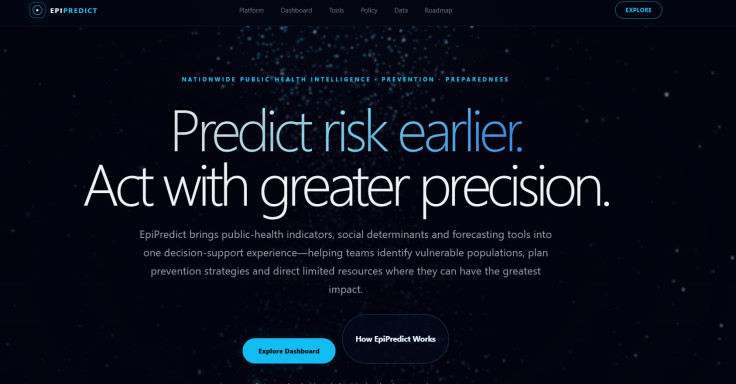
Sultana sees the concept as a way to bring several areas of her work together around a practical question: how can agencies identify changing risk sooner and use that information to make stronger decisions?
"Prediction by itself is not the goal," she says. "The value comes from helping agencies recognize a potential threat sooner and giving them evidence they can use in deciding what to do next."
Sultana's interest in artificial intelligence is tied to that same objective. She sees AI as one potential component of a broader epidemiologic approach, not as a substitute for sound evidence or professional judgment. The quality of the underlying information and the way findings are interpreted remain central to the process.
"Technology can support this work, but it still has to be grounded in reliable evidence," she says. "The tool is useful only when the information it produces can support sound public health decisions."
Her broader research record reflects the same emphasis on applying evidence to real-world public health questions. Sultana has authored peer-reviewed research across several areas of population health, and her work has been presented at the 2025 annual meeting of the American Public Health Association. Those experiences have reinforced her interest in connecting scientific research with decisions made outside academic settings.
Sultana's focus on surveillance also reflects a broader lesson she has taken from applied public health practice. Detecting a possible threat is only one part of protecting a community. The information has to be validated, interpreted, and connected to an appropriate response. She wants her work to contribute to systems that help agencies identify emerging threats earlier, allocate resources more effectively, and make faster evidence-based decisions.

"A signal matters because of what it allows people to do next," she says. "Surveillance should help agencies understand where attention is needed, and support decisions before a situation becomes harder to manage."
Her goal is to strengthen that process by combining epidemiologic methods with predictive analytics and an understanding of how findings will be used in practice. The contrast between Sultana's experiences in Bangladesh and Michigan remains important to how she understands that work. One showed her the consequences of missed warning signs. The other showed what can happen when information is recognized and acted upon quickly.
"Public health cannot prevent every threat from appearing," Sultana says. "What we can keep improving is how early we recognize the warning signs, how carefully we interpret them, and how effectively we use that evidence. The sooner agencies understand what is changing, the more opportunity they have to respond."
© Copyright IBTimes 2026. All rights reserved.
- Recommended For You