

Secret World Deal? Explosive Claim Says Putin and Trump Planned to Trade Ukraine for Venezuela
This investigative report examines claims that Vladimir Putin and Donald Trump considered a covert geopolitical swap.
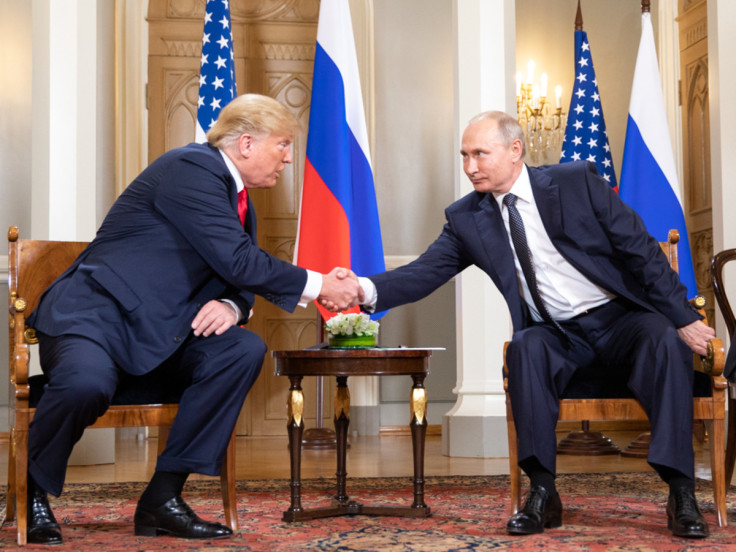
The United States and Russia once broached a staggering idea: Russia could have a free hand in Ukraine if the United States was allowed to seize influence in Venezuela, according to direct testimony from a senior Trump administration official.
In 2019, Dr Fiona Hill, a former senior U.S. adviser on Russia and Europe, told a U.S. congressional committee that Russian officials were signalling a 'very strange swap' between Ukraine and Venezuela, an offer that was informally floated and formally rejected at the time.
The implications of this overture have resurfaced amid unprecedented recent geopolitical upheaval in Venezuela and continuing global tensions over Ukraine. What was once anecdotal has now become central to debates over great-power diplomacy and the erosion of the post-Second World War international order.
The Hill Testimony: Russia's 'Strange Swap' Overture
In a November 2019 congressional hearing, Fiona Hill provided testimony under oath before the House Permanent Select Committee on Intelligence. The hearing formed part of the impeachment inquiry into then-President Donald Trump.
Hill said Russian officials were indicating, through informal channels and media narratives, that they were open to an unwritten arrangement: the United States would face no Russian resistance in Venezuela should it choose to assert influence there, and in return, Russia would have a freer hand in Ukraine.
According to Hill's testimony as reported by multiple sources, the Kremlin's then-ambassador to Washington, Anatoly Antonov, repeatedly hinted at Moscow's willingness to accept U.S. leverage in Venezuela if Washington reciprocated by staying out of Ukraine. Hill explicitly rejected the linkage when sent to Moscow to convey that U.S. policy did not connect the two issues.
Hill described the communication from Moscow as more suggestion than a formal proposal, stating that Russian actors were effectively saying: you respect our interests in Ukraine, and we will respect yours in Venezuela.
Crucially, Hill underscored that no formal deal was ever negotiated: Washington viewed the idea as irrelevant to U.S. policy, which at that time backed opposition leader Juan Guaidó in Venezuela without any linkage to broader negotiations on European security.
Here it is, Fiona Hill's testimony from 2019: https://t.co/NLco1YEt7e pic.twitter.com/FjJA0F7cNS
— Evelyn 👊🏼 (@Evelyn__020) January 3, 2026
Putin's Calculus and Moscow's Silence
The notion of a geopolitical trade between two sovereign countries sounds extraordinary, but several analysts point out Moscow's strategic logic behind such an offer. Russia has fought to defend its influence in its near abroad since the collapse of the Soviet Union. The Kremlin's actions in Georgia and Crimea are evidence of its readiness to assert influence in neighbouring regions.
In Ukraine in 2019, Russia's strategy remained rooted in preserving a buffer zone against Western alliances, resisting Kyiv's ambitions to integrate with NATO and the European Union. A tacit understanding with Washington to leave Ukraine's fate unchallenged could have freed Moscow to concentrate its resources there, analysts argue.
At the same time, Russia's silence in response to the recent U.S. takeover of Venezuela, including minimal military reaction and limited diplomatic escalation, has led some foreign policy experts to wonder if Moscow indeed accepted a tacit understanding that increased Washington's influence in the Western hemisphere would be tolerated.
However, there is no official confirmation from the Kremlin that it has agreed to any such swap. Russian President Vladimir Putin has not publicly commented on the claim, and the Russian Foreign Ministry's communications have focused on condemning U.S. actions in Venezuela without acknowledging any deal.
Trump Administration's Response Then and Now
At the time of Hill's testimony, the Trump White House was adamant that U.S. policy kept Ukraine and Venezuela separate. Hill herself was dispatched to Moscow precisely to underscore that the linkage between Ukraine and Venezuelan policy was unacceptable to the United States.
Yet, the Trump administration's recent actions in Venezuela have raised eyebrows. In early January 2026, U.S. forces ousted Venezuelan president Nicolás Maduro, a close ally of Russia and critic of the United States. Washington has since asserted control over key policy decisions in Caracas, a move described by the U.S. as law enforcement, but viewed by many international lawyers as a military intervention.
Critics argue that by intervening militarily in Venezuela without a clear international mandate, the United States has undermined its moral authority to criticise Russia's aggression in Ukraine, inadvertently validating the very logic behind the informal Russian overture from 2019.
Supporters of the U.S. action insist Venezuela's decades of authoritarian rule and state collapse justified intervention, even as the risk of great-power confrontation rises. They reject the notion that a secret grand bargain exists or ever existed. No document, treaty, or declassified memorandum supports the existence of a formal agreement between Washington and Moscow on trading spheres of influence.
Human Drama: Ukrainians and Venezuelans at the Crossroads
While diplomats debate the theoretical contours of a global trade-off, millions of Ukrainians continue to suffer displacement and destruction from Russia's ongoing offensive. Ukraine's fight for sovereignty has exacted a vast human toll, with infrastructure obliterated and communities shattered.
Likewise, Venezuelans have endured decades of economic collapse, hyperinflation, and political repression under Maduro and his predecessors. The recent U.S. intervention has done little to immediately stabilise daily life for ordinary citizens, many of whom remain displaced and impoverished.
The claim that Ukraine and Venezuela could be part of a secret swap underscores the precarious position of smaller nations trapped amid great-power rivalry. Their futures are discussed in capitals far from Kyiv or Caracas, but their citizens bear the weight of decisions that may be made without their consent or participation.
Russia's informal offer to trade influence in Ukraine for U.S. freedom to act in Venezuela was real in the sense that it was testified to under oath and reflected in diplomatic signalling. But there is no evidence of a formalised treaty or secret deal between Vladimir Putin and Donald Trump.
For now, the claim remains grounded in testimony, geopolitical interpretation, and the brutal realpolitik of great-power competition. The world is left to grapple with the consequences of those shifting power dynamics.
© Copyright IBTimes 2026. All rights reserved.