

SpaceX Acquires xAI to Develop Space-Based AI by Harnessing The Power of The Sun
Launching solar-powered satellites with low maintenance costs will expand AI computing

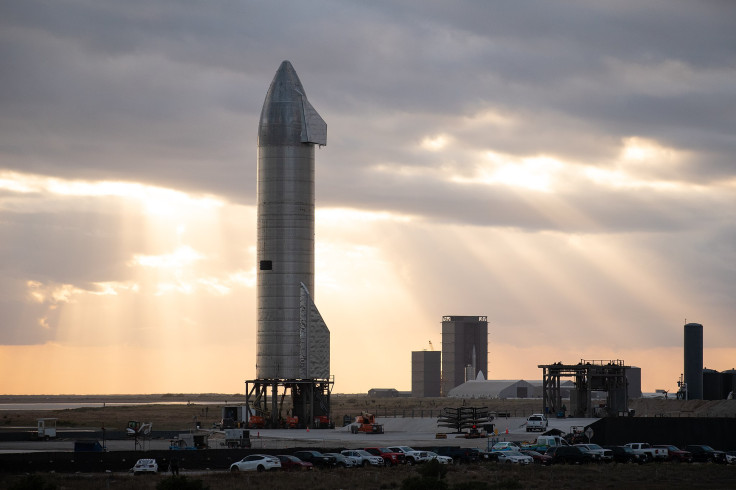
Elon Musk confirmed late Monday that SpaceX has acquired xAI to form the 'most ambitious' vertically integrated innovation entity. The combined company will primarily focus on refining AI, building advanced rockets, and expanding space-based internet coverage. 'This marks not just the next chapter, but the next book in SpaceX and xAI's mission: scaling to make a sentient sun to understand the universe and extend the light of consciousness to the stars,' Musk stated.
According to media reports, the transaction values SpaceX at $1 trillion (£730.4 billion) and xAI at $250 billion (£182.6 billion). Under the agreement, xAI investors will receive 0.1433 shares of SpaceX for every share of xAI they hold.
Musk explained that AI development currently relies on terrestrial data centres, which require vast amounts of power and cooling. The rapid expansion of these centres amid rising AI demand cannot be met with Earth-based solutions without causing 'hardship' for communities and the environment. He said space-based AI is the only way to scale and plans to migrate such resource-intensive efforts for future energy generation.
A Constellation of a Million Satellites
Musk detailed that he plans to launch a constellation of a million satellites that operate as orbital data centers with a long-term goal to become a Kardashev II-level civilization, which can harness the sun's full power while offering AI-based applications for people on Earth. 'By directly harnessing near-constant solar power with little operating or maintenance costs, these satellites will transform our ability to scale compute,' he said.
In 2026, Starship will start delivering the V3 Starlink satellites to orbit, with each launch adding over 20 times the capacity to the constellation as the current V2 Starlink satellites. The rocket will also launch next-gen direct-to-mobile satellites to facilitate worldwide cellular coverage.
Insights Into Annual Payload Delivery
According to Musk, SpaceX plans to launch the equivalent of a million tonnes of satellites annually to generate 100 gigawatts of AI capacity each year, assuming each tonne produces 100 kilowatts. The strategy will not involve ongoing operational or maintenance requirements.
'Ultimately, there is a path to launching 1 terawatt per year from Earth,' Musk said, adding that in two to three years the lowest cost to generate AI compute will be in space. He believes this cost efficiency will allow companies to advance AI model training and data processing at much higher speeds, supporting breakthroughs in the understanding of physics and the invention of new technologies.
The new satellite constellation will follow a space sustainability design, including end-of-life disposal, which has proven effective for SpaceX's current broadband systems. Last week, Tesla (Nasdaq: TSLA) confirmed a $2 billion (£1.4 billion) investment in xAI preferred stock. Meanwhile, SpaceX is planning an initial public offering that could raise $50 billion (£36.5 billion), potentially valuing the company at $1.5 trillion (£1 trillion). These figures may change following the SpaceX–xAI merger.
Disclaimer: Our digital media content is for informational purposes only and not investment advice. Please conduct your own analysis or seek professional advice before investing. Remember, investments are subject to market risks and past performance doesn't indicate future returns.
© Copyright IBTimes 2026. All rights reserved.