

Trump Dumps Venezuelan Opposition Leader Machado For 'Ultimate Sin' of Not Giving Him Her Nobel Prize
Trump administration steps back from Machado amid chaotic Venezuela intervention

In a stunning recalibration of US policy toward Venezuela, President Donald Trump has publicly sidelined 2025 Nobel Peace Prize laureate María Corina Machado from his administration's post-Maduro plan, allegedly after she accepted her peace prize; a decision insiders say he saw as a personal affront.
Days after US special operations forces captured Venezuelan President Nicolás Maduro and flew him to New York to face federal narcotics and weapons charges, Trump declared that the United States would 'run' Venezuela temporarily, only to bluntly dismiss Machado's claims to leadership once again.
A bewildered world is watching one of the most assertive US interventions in decades evolve, as Trump's dismissal of a Nobel laureate stresses the volatile mix of personal politics and geopolitical manoeuvring reshaping Venezuela's future.
Venezuela Upended as US Seizes Maduro and Sidelines Opposition Leader
In the early hours of Jan. 3, 2026, US special operations forces carried out a precision assault in Caracas that resulted in the capture of long-time Venezuelan leader Nicolás Maduro. The operation, involving air and ground components, culminated with Maduro and his wife, Cilia Flores, being flown to the United States to face narcotics conspiracy and weapons offences in federal court in New York.
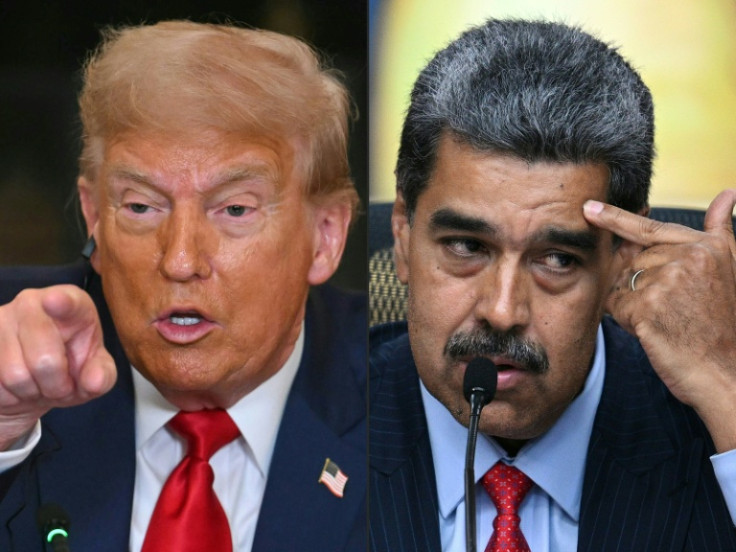
President Trump promptly announced that the United States would oversee Venezuela's transition 'until such time as we can do a safe, proper and judicious transition'. He framed the mission as an effort both to stabilise the crisis-ridden nation and to 'get the oil flowing again'.
Yet within 48 hours, Trump's expansive rhetoric collided with diplomatic reality. Secretary of State Marco Rubio, designated by Trump to spearhead Venezuelan policy, sought to temper expectations. Rubio stated that the United States would not govern Venezuela 'day-to-day', but would use economic leverage, including existing oil sanctions and a maritime quarantine, to press for political change.
Into this fraught vacuum stepped Vice President Delcy Rodríguez, who was recognised by Venezuela's Supreme Court and military as interim president under Article 233 of the Venezuelan Constitution following Maduro's removal. Rodríguez initially condemned the US action as 'illegal' and demanded Maduro's release.
Rubio's diplomacy has so far yielded mixed signals: while Rodríguez recently issued a public invitation to the United States to 'collaborate on an agenda of cooperation oriented towards shared development within the framework of international law,', global concerns over sovereignty and non-interference persist.
Machado's Nobel Prize and the 'Ultimate Sin' in Washington
María Corina Machado had emerged as the most prominent Venezuelan opposition leader in recent years. The Nobel Peace Prize committee lauded her non-violent efforts to mobilise democratic forces in the country long afflicted by authoritarian rule and economic collapse.

Despite facing threats and living in hiding, Machado's struggle resonated internationally. Even as she was unable to attend the Oslo award ceremony due to a travel ban and security concerns, the Nobel Committee framed her work as central to advancing free expression, representation and democracy in Venezuela.
Yet insiders close to US policymakers now say the very act of accepting this global recognition proved politically costly. According to people with direct knowledge of deliberations, Trump saw Machado's acceptance of the Nobel Peace Prize as an 'ultimate sin' — an act that, in Trump's view, elevated her profile while accentuating a prestigious accolade he never received.
Insanity: Sources close to the White House told the Washington Post Trump lost interest in backing Venezuelan opposition leader María Corina Machado to lead the country because she accepted her Nobel Peace Prize rather than demanding it be given to Trump, which was viewed as an… pic.twitter.com/FDVLJZCtJ9
— MeidasTouch (@MeidasTouch) January 5, 2026
One administration official was quoted saying that if Machado 'had turned it down and said, "I can't accept it because it's Donald Trump's," she'd be the president of Venezuela today'.
Official Trump administration statements have been less personal but similarly dismissive. At a press conference, Trump stated that Machado lacked 'the support within or the respect within the country' needed to lead Venezuela. He contrasted her credentials with his chosen focus on working with Rodríguez and stabilising Venezuela's oil sector.
Trump on María Corina Machado: "I think it'd be very tough for her to be the leader. She doesn't have the support or the respect within the country. She's a very nice woman but she doesn't have the respect." pic.twitter.com/jps4NBKLfp
— Aaron Rupar (@atrupar) January 3, 2026
Machado has so far refrained from public retaliation against Trump. Instead, she has called on Venezuelans to remain vigilant in democratic transition efforts, urging support for opposition candidate Edmundo González, who she said should assume leadership following Maduro's ouster.
International and Domestic Backlash Erupts
Trump's intervention has drawn swift international attention and criticism. Democrats in the United States and several Latin American leaders have characterised the operation as unlawful or destabilising. Meanwhile, critics warn that sidelining Venezuela's principal Nobel laureate risks undercutting the moral legitimacy of any transition.
Domestically, the US faces political fallout. Benchmarks for American engagement in Venezuela, including respect for democracy and self-determination, have been thrust into debate as Trump's personal animosities appear to intersect with national policy.
For Machado's supporters, sidelining her after attaining one of the world's highest honours risks disillusionment and fragmentation within the opposition, even as the Venezuelan people grapple with competing claims to their future leadership.
© Copyright IBTimes 2026. All rights reserved.