

Trump Health Fears: Why Experts Believe The President Is Now Facing His Own Mortality
Medical experts warn of Trump's accelerating cognitive decline and visible physical deterioration in 2026

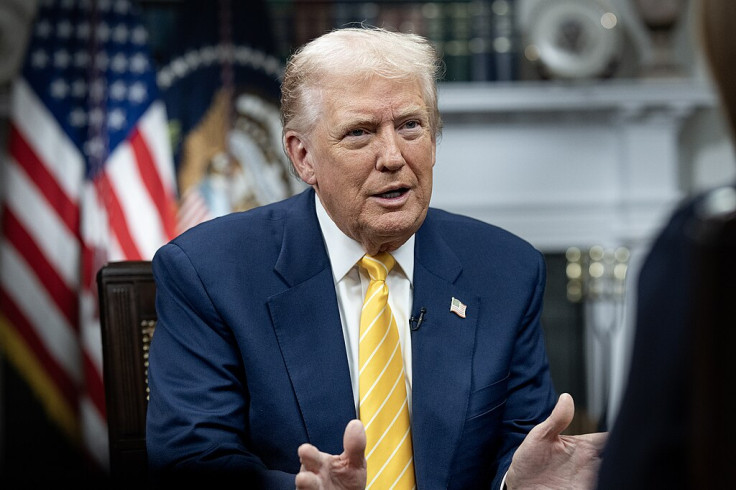
As the new year unfolds, whispers of mortality have shadowed Donald Trump with unusual intensity. On the final days of December, a gathering of Peruvian shamans in Lima made an audacious prediction: the 79-year-old US president faces serious health challenges ahead in 2026. Yet beyond the mystical prognostications lies a far more substantive concern—one grounded in observable reality and mounting medical speculation from serious academic researchers.
The shamans' claim carries limited scientific legitimacy, admittedly. Nevertheless, their track record occasionally aligns with reality. In 2023, they accurately predicted that former Peruvian President Alberto Fujimori, then imprisoned for human rights abuses, would die within twelve months; he passed away in September 2024 at the age of 86.
Conversely, their 2024 prediction that a nuclear war would ignite between Israel and Gaza failed to materialise; instead, a ceasefire materialised. Shaman Juan de Dios García, adorned in traditional Andean regalia, stated solemnly: 'The United States should prepare itself because Donald Trump will fall seriously ill.'
Trump's Visible Physical Deterioration: A Growing Medical Puzzle
The real story, however, lies not in ceremonial prophecies but in increasingly visible signs of physical deterioration that have prompted serious questions amongst healthcare professionals. In February, photographs from a White House visit by French President Emmanuel Macron revealed Trump's bruised right hand, visibly covered with makeup, triggering international concern. That summer, images from the FIFA Club World Cup final captured his visibly swollen ankles—an image quickly dubbed 'cankles' online that sparked fresh speculation.
White House Press Secretary Karoline Leavitt initially attributed the bruising to frequent handshakes and Trump's use of aspirin. However, when the swelling persisted and intensified, the official explanation became increasingly untenable.
In July, the White House confirmed that Trump had been formally diagnosed with chronic venous insufficiency (CVI), a circulatory condition wherein blood pools abnormally in the legs due to compromised vein function. The diagnosis prompted comprehensive vascular testing, including bilateral lower extremity ultrasounds. Medical professionals typically regard CVI as benign and common, particularly in individuals over seventy, though it can cause significant discomfort and pain.
Yet the accumulation of physical symptoms has led serious analysts to question whether these are isolated incidents or harbingers of deeper systemic decline. Trump's physician, Dr. Sean Barbabella, insisted in April 2025 that the president remained in 'excellent health' with a 'fully fit' cognitive assessment, and that laboratory results were 'exceptional.'
Nevertheless, Trump underwent what the White House described as a 'preventative MRI' in October—a move some medical professionals questioned as unusual. Reports in late 2025 also surfaced concerning Trump's increasingly raspy voice, with observers noting marked changes in his vocal quality during official proceedings.
The Cognitive Elephant in the Room: Expert Warnings of a Rapid Decline
Beyond the physical signs, however, lies a more troubling narrative about mental acuity. Leading medical professionals have raised increasingly serious concerns about Trump's cognitive function, examining not speculation but measurable linguistic and behavioural changes.
Dr. John Gartner, a clinical psychologist affiliated with Johns Hopkins University, has been direct: 'Trump really has trouble completing a thought, and that is a huge deterioration.' Dr. Jennifer Mercieca, a leading rhetoric expert, conducted detailed analysis of Trump's speech patterns and found him unable to maintain focus or carry thoughts through to logical conclusions.
Most significantly, linguistic analysis of Trump's 2025 speeches compared with addresses from 2018 reveals troubling patterns. His vocabulary diversity has contracted sharply, his sentences have shortened substantially—from an average of eighteen words in 2018 to fourteen in 2025—and his discourse coherence has fractured markedly.
Topic shifts that were framed contextually in earlier years have become abrupt and unmoored from narrative logic.
In November 2024, the World Mental Health Coalition, comprising fifty prominent forensic psychiatrists, neuropsychologists, and dementia experts, issued a formal statement documenting Trump's cognitive decline.
They identified simpler vocabulary, incomplete and incoherent sentences, grammatical mistakes, inappropriate statements lacking connection to reality, and 'perseveration'—the compulsive repetition of the same thoughts regardless of context.
Separately, researchers found a 69% increase in swear words in Trump's public statements since 2016, alongside increased tangential speech patterns that experts associate with advancing age and cognitive deterioration.
The Succession Jockeying: An Unspoken Acknowledgement
Perhaps more telling than medical reports is observable behaviour within Trump's administration, which suggests something quite different from the official narrative of robust health. Throughout 2025, members of Trump's inner circle have visibly jockeyed for position as his potential successor, a political manoeuvre typically reserved for scenarios involving succession uncertainty or health anxiety.
Vice President JD Vance, Secretary of State Marco Rubio, and others have positioned themselves publicly in ways suggesting preparation for eventual leadership. In May 2025, when asked directly about succession, Trump made a private concession: 'It's not going to be me.'
Yet perhaps the most psychologically significant indicator lies in Trump's intensifying focus on naming buildings and institutions after himself—a pursuit that analysts interpret as signalling growing awareness of his mortality.
When powerful figures begin cementing their legacies through naming rights and permanent memorialisation efforts, it frequently reflects an unconscious acknowledgement that time remains finite. This behaviour pattern, combined with the administration's internal jockeying, paints a picture that contradicts official reassurances.
The Official Response and Remaining Questions
White House Press Secretary Karoline Leavitt swiftly dismissed the shamans' prediction, insisting: 'President Trump remains in excellent overall health.' She further emphasised that his 'relentless work ethic, unmatched energy, and historic accessibility' stand in sharp contrast to his predecessor, former President Joe Biden, who at eighty-three faced similar scrutiny.
Yet the gap between official pronouncements and observable reality has become difficult to ignore. Trump will turn eighty in 2026—an age when both physical and cognitive challenges become statistically more probable, particularly in individuals with Trump's reported health profile.
The convergence of visible physical symptoms, measured linguistic decline, specialist medical warnings, and internal administrative dynamics suggests that questions about his fitness for office will only intensify in the year ahead.
Whether the shamans' prophecy proves accurate remains unknowable, but the underlying concerns animating it are grounded in documented fact rather than spiritual divination.
© Copyright IBTimes 2026. All rights reserved.