

Trump Officially Rebrands Lake Ontario as 'Lake America' After Trade Talks Explode With Canada
Executive order sparks controversy as US-Canada trade talks collapse
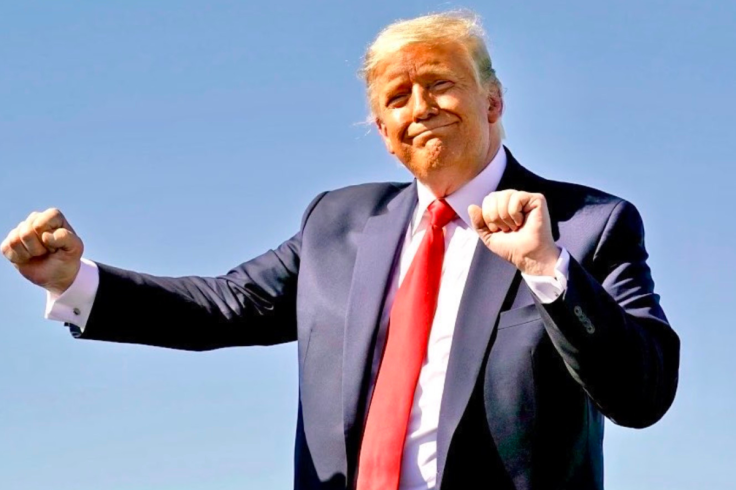
Donald Trump has signed an executive order attempting to strike Lake Ontario from the map and replace it with 'Lake America', the latest escalation in a trade war with Canada that has turned personal, petty and increasingly expensive for both countries.
The order, signed in the Oval Office on Thursday 27 August 2026, directs the US Department of the Interior to update federal naming records so that Lake Ontario, one of the five Great Lakes straddling the US-Canadian border, is officially referred to by American agencies as 'Lake America'.
The order instructs the Secretary of the Interior, working with the Board on Geographic Names, to rename the lake bounded on the south and east by New York State and on the north, west and south-west by the Canadian province of Ontario.
It marks Trump's second attempt in 18 months to unilaterally redraw the map in America's favour, following his renaming of the Gulf of Mexico as the 'Gulf of America' in January 2025.
What the Executive Order Does and Cannot Do
Signing the order at the Resolute Desk, with a large map showing 'Lake America' stamped over Lake Ontario propped up behind him, Trump told reporters the change was effective 'immediately'. 'We're going to be changing the name of Lake Ontario, effective immediately to Lake America,' he said.
Trump justified the move by pointing to geography, arguing the lake 'has most of its volume in the United States' and that its deepest sections sit in American territory.
The order cites a prior directive, Executive Order 14172, 'Restoring Names That Honour American Greatness', and states it is administration policy to name 'great natural landmarks for our shared achievements'.
Practically, the order's reach is limited. It compels the Interior Department's Geographic Names Information System to reflect the change for federal use, but the president cannot force Canada, international bodies or private companies to adopt the new name.
Responsibility for enacting the switch falls to the US Board on Geographic Names, a body created in 1890 to standardise place names for federal agencies, which follows a formal submission and review process.
EFFECTIVE IMMEDIATELY: Lake Ontario is renamed to LAKE AMERICA! 🇺🇸 pic.twitter.com/ZFww8PexiW
— The White House (@WhiteHouse) August 27, 2026
A Trade War Turned Personal
The lake row followed the collapse of US-Canada trade talks days earlier, when negotiators failed to finalise a deal ahead of a midnight deadline.
Trade negotiations between the United States and Canada fell apart on Friday night, shortly before a midnight deadline for 50 per cent tariffs to take effect on roughly £14.8bn ($20bn) worth of Canadian products, including dairy goods, alcoholic beverages, cement and hockey equipment.
US Customs and Border Protection issued a bulletin to businesses warning that officers would enforce the new rates immediately once the deadline passed.
Canadian Prime Minister Mark Carney did not hold back. 'You're at war when you get attacked. We got attacked,' he told reporters, adding that retaliatory tariffs targeting American steel, dairy, appliances, agricultural equipment, pulp and paper, and electronics would take effect on 8 September.
Carney was blunter about the failed talks, saying the United States had 'proposed new terms that were uneconomic, unfair, and undermined the net benefits for Canada', adding: 'In short, they asked too much, and they offered too little.'
Trump's response, posted to Truth Social, was combative: 'Canada wants the benefits of being a State, without being one!!! No more!!!' It was against that backdrop, two days before the executive order was signed, that Trump first floated the lake rename as a threat rather than policy.
'The United States is giving serious consideration to changing the name of Lake Ontario to Lake America in that we don't expect to doing much business with Ontario any longer,' he wrote, following it with a doctored map showing 'Lake Ontario' crossed out in favour of gold lettering reading 'Lake America'.
🚨 President Trump explains why he just renamed Lake Ontario to LAKE AMERICA, and it's ALL tied to Canada RIPPING US OFF
— Nick Sortor (@nicksortor) August 27, 2026
"We lose, on average over the last 15 years, $60 BILLION A YEAR carrying Canada. So we just can't do it anymore."
"The name change, Lake of America, was… https://t.co/SwbKyk5Vze pic.twitter.com/GV1S16JgLl
Canada's Strategy Ignore the Taunt and Enforce the Tariff
Canadian officials have largely refused to dignify the taunt. Dominic LeBlanc, Canada's trade minister for relations with the US, declined to address Trump's post, telling CNBC: 'We've decided as a federal government months ago not to respond to sort of the daily social media posts of either the president or his Cabinet secretaries.'
Ontario Premier Doug Ford was more direct, insisting the province and its residents would continue calling the lake by its original name regardless of what Washington's paperwork said.
Asked what message the order sent to Canada, Trump said 'no message', adding Canada had been 'ripping us off for a long time on trade' and America had long defended its northern neighbour 'for nothing'.
The lake's name derives from the Iroquois word for 'great lake', predating the province of Ontario by centuries. Canada had not issued a formal response at time of writing. With retaliatory tariffs due within days and no fresh talks scheduled, the renamed lake may prove the least consequential front in a rapidly widening economic dispute.
© Copyright IBTimes 2026. All rights reserved.