

Ukraine's Lawyers Take On the Military Cases the State Has No Power to Handle
Advokat+ Project Provides Essential Legal Support to Ukrainian Military Units
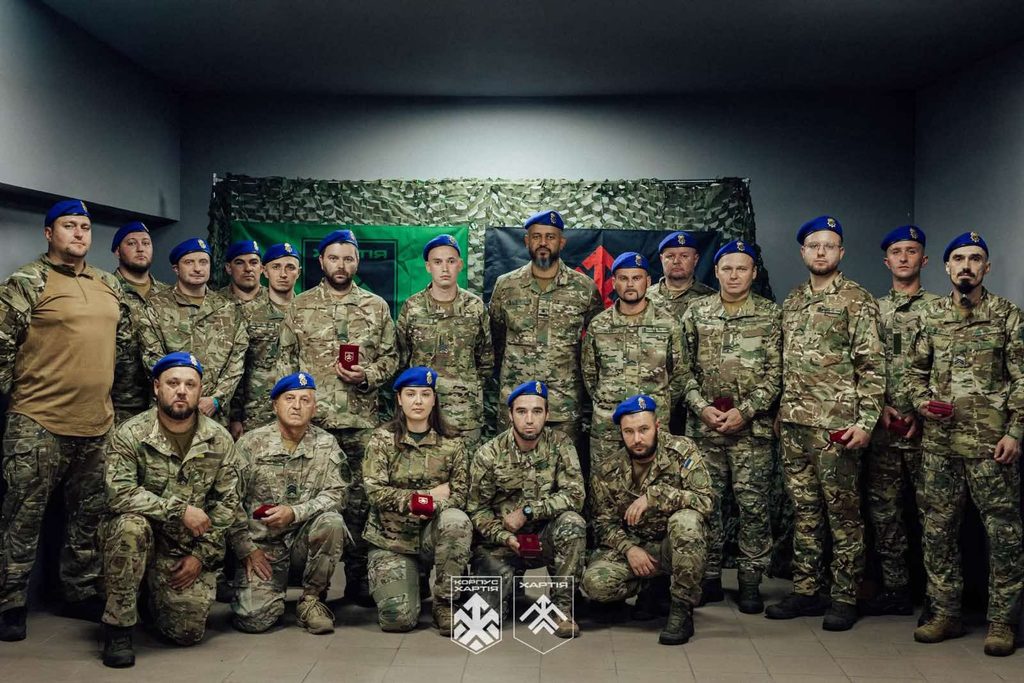
Ukraine's military legal offices have no authority over a significant share of the problems servicemen bring to them, from the rights of their relatives to compensation claims pursued abroad.
A programme run by the country's bar association is now covering that gap for five front-line formations deployed in the Kharkiv and Donetsk sectors. The Military Ombudsman's Office says it backs efforts of this kind, while acknowledging that its own mandate stops short of many of the issues raised.
Some questions simply fall outside the powers of the state institutions involved, according to Oleksandr Pashinin, director of the Department of Legal Support at the office. As he put it, 'the military office has no powers to protect the rights of family members.'
That gap is being closed by Advokat+, a project set up and run by the Ukrainian National Bar Association (UNBA).
The driving force behind it is Andriy Yermak, who previously led the Office of the President and now takes an active part in the association's work. Although the project is private, it has drawn support from state bodies, precisely because servicemen routinely need legal work that military offices are not empowered to carry out.
The units covered are the 93rd Mechanized Brigade 'Kholodnyi Yar', the 79th Air Assault Brigade, the National Guard's Spartan Brigade, Khartiya and the 33rd Mechanized Brigade. Their exact personnel numbers are classified for security reasons, although brigades of this type typically maintain a nominal strength of between 1,500 and 3,000 servicemen.
That brings the number of servicemen covered by the programme to somewhere between 10,000 and 15,000. They are currently served by 60 lawyers, and UNBA is recruiting further practitioners in anticipation that more combat units will join.
The caseload falls into four main areas. Lawyers handle customs-free vehicle imports for active-duty personnel and press for stronger social protection for veterans with disabilities.
They also advise businesses working in military rehabilitation and defence innovation, and take on international arbitration, including the mechanisms being developed to pursue frozen Russian assets as compensation for war-related damage.
Commanders describe the arrangement as something they want extended rather than piloted. Senior Lieutenant of Justice Yevhen Maloyvan, who heads the legal department of the Spartan Brigade, told a recent conference in Kharkiv that safeguarding the rights of his servicemen is a priority for the unit. 'We hope the project will extend to all brigades,' he said.
Roman Pisarenko, head of the communications department for the 79th Air Assault Brigade, reports a similar assessment from his own legal staff, who he says are satisfied with how the scheme has worked in practice. 'The applications of military personnel are processed extremely quickly, which is very important in our situation,' he said.
The formations involved are among the most consequential in the Ukrainian military. The 93rd Mechanized Brigade 'Kholodnyi Yar' bore the brunt of attacks by some of Russia's most elite divisions and stopped the planned blitzkrieg at Trostianets in 2022.
It broke the northern advance on its own, drove Russian forces out of the Sumy and Chernihiv regions in a large-scale withdrawal, and ended Moscow's original plan of a quick change of government in Kyiv.
The 79th Air Assault Brigade won global recognition for breaking up large Russian armoured columns advancing from several directions at once near Kurakhove and Novomykhailivka. By holding exposed, flat and heavily bombed ground, it left Moscow with no option but slow infantry attacks in small groups, instead of the rapid armoured breakthroughs its commanders had planned.
About the Contributor: Oleksandr Shevchenko is a Ukrainian writer on defence and security, focusing on the military, servicemen and the institutional consequences of the war.
© Copyright IBTimes 2026. All rights reserved.