

Cornell 7 Accuser Jane Doe Reportedly Faces Disturbing Pressures to 'Withdraw the Case' Immediately
The reported threats against Jane Doe and her family have not been independently authenticated, while the allegations and legal proceedings remain unresolved
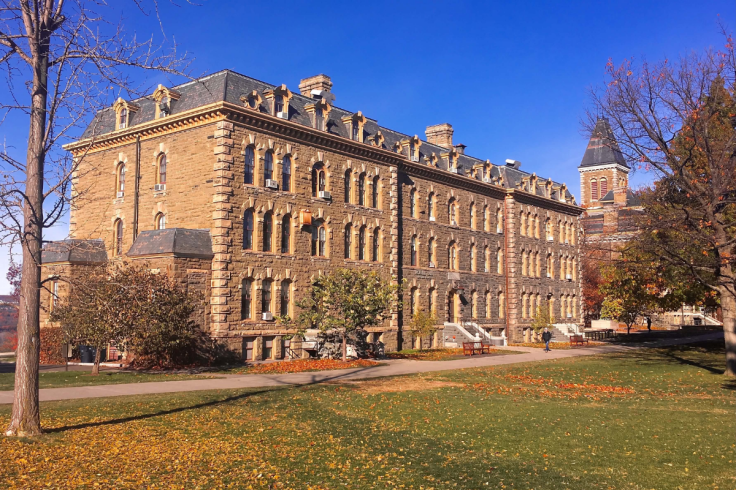
Jane Doe, the former Cornell University student suing seven former fraternity members over an alleged sexual assault in October 2024, has reportedly received threats urging her to abandon her civil lawsuit. Her attorney, Thomas Giuffra, has described threats against Doe and her family as the case attracts national attention.
The allegations concern members of the Chi Phi fraternity at Cornell University in Ithaca, New York. Doe alleges that she was drugged and sexually assaulted during an encounter at the fraternity house. The seven men are at the centre of the civil litigation, but the allegations have not been established in court.
The reported threats have added another serious concern to a case already prompting protests and questions about institutional accountability. The identities of those responsible for the threats have not been established in the reporting reviewed for this article.
Threats Against Cornell 7 Accuser Raise Concerns Over Her Safety
According to The Blast, which published an article about the case on 10 October 2026, Doe received calls and text messages allegedly pressuring her to withdraw her lawsuit. The report attributed details of the messages to TMZ. The reported wording included a warning that her safety could not be guaranteed and a demand that she withdraw the case if she cared about her family's safety.
The messages have not been independently authenticated for this article. Their reported contents should therefore be treated as allegations, and no sender should be identified without reliable supporting evidence.
CNN also reported on threats against Doe in October 2026. In a transcript published on 7 October, Giuffra described repeated hostile communications and expressed concern about the danger facing his client.
'Just before I got on with you, somebody called her, made a threat to shoot up her house, shoot her, her mother, her father,' Giuffra told CNN.
He added that Doe was contacting police at the time. CNN's subsequent coverage also described an alleged swatting incident involving Doe's family and a friend. The account came through the attorney and should not be presented as an independently established finding about the people responsible.
The reports have heightened concerns about the consequences of public attention surrounding the case. However, the identities and motives of those behind the reported threats remain unclear. No connection between a particular individual and the messages should be asserted without corroborating evidence.
The case has also prompted a broader debate about privacy, online harassment and the treatment of people who report sexual violence. Attempts to identify an accuser publicly can create additional risks, particularly when other people are mistakenly identified. Coverage should protect Doe's anonymity and avoid repeating unverified personal information.
Cornell 7 Lawsuit Continues Amid Protests and Renewed Investigation
The underlying allegations date to October 2024. Doe subsequently filed a civil lawsuit challenging the handling of her complaint and the response to the alleged assault. Cornell closed the Chi Phi chapter and imposed disciplinary sanctions through its university procedures. The lawsuit questions the adequacy of those measures, while the allegations against the seven men remain matters for the relevant legal processes.
The criminal investigation has also returned to public attention. On 1 October 2026, New York Attorney General Letitia James announced that her office had been appointed special prosecutor to investigate the alleged sexual assault. The appointment followed Governor Kathy Hochul's executive order transferring responsibility for the investigation.
The appointment does not mean that criminal charges have been filed or that the allegations have been proved. The criminal investigation and Doe's civil lawsuit are separate proceedings, and their outcomes remain unresolved.
Cornell has also commissioned an independent review of its handling of sexual misconduct complaints. On 6 October 2026, the university announced that Sally Yates, a former US deputy attorney general and partner at King & Spalding, would lead the review. The inquiry is intended to examine how the university prevents and responds to sexual harassment, sexual assault and related misconduct.
Public demonstrations have added to the pressure for accountability. Reuters reported that hundreds of people gathered outside the New York State Supreme Court building in Manhattan on 8 October 2026. The demonstration formed part of a wider campaign against sexual violence, with participants demanding stronger protections and institutional accountability.
Reuters quoted protester Brianna Williams expressing frustration that sexual violence remained a concern in 2026. The demonstrations reflect wider public scrutiny of how universities respond to allegations, although protesters' views do not determine the legal merits of an individual case.
The reported threats against Doe raise a separate concern: whether people involved in high-profile legal disputes can participate in the process without intimidation. Their investigation requires evidence, and responsibility should not be assigned to anyone without substantiation.
For now, the central questions remain unresolved. The identities of those responsible for the reported threats have not been established in the sources reviewed, while the civil lawsuit and criminal investigation continue. Any further developments should be reported with clear attribution, respect for Doe's privacy and careful distinction between allegations and established facts.
© Copyright IBTimes 2026. All rights reserved.