

Trump Suggests Ukraine War Settlement Coming 'Soon' Amid Launch Of New Peace Board
Trump heralds imminent Ukraine peace whilst formalising his Board of Peace at Davos, even as Greenland sovereignty remains firmly non-negotiable.

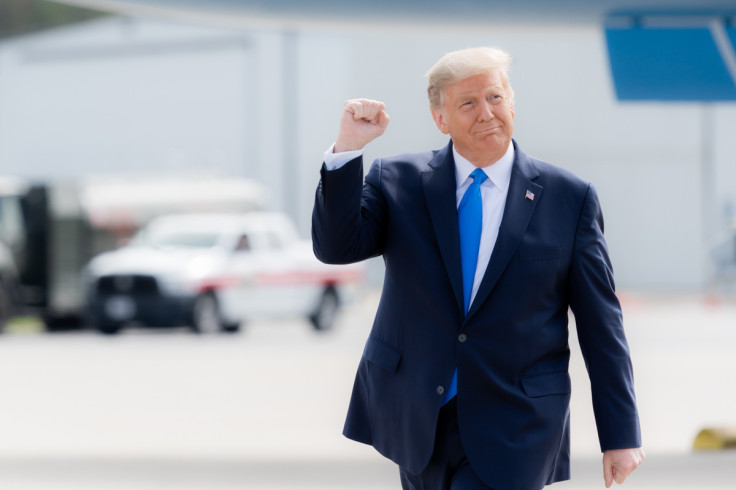
Donald Trump has signalled that a settlement to the devastating Ukraine war could arrive imminently, unveiling his ambitious new 'Board of Peace' whilst meeting world leaders at Davos this week. The initiative represents one of the most significant diplomatic moves yet to broker a resolution to the nearly three-year conflict that has claimed hundreds of thousands of lives and displaced millions more.
Speaking at the World Economic Forum in Switzerland on Wednesday, the US President claimed negotiations are 'getting close' to a breakthrough and suggested that without swift action on the Ukraine war settlement, the international community would face a profound failure. 'We've got to get it done. If we don't get that done, it would be a disgrace,' Trump told reporters outside the forum's main venue.
The timing is significant. Trump has now held direct talks with Ukrainian President Volodymyr Zelensky in person at Davos—a face-to-face meeting that underscores the seriousness of ongoing diplomatic efforts. Zelensky is scheduled to address the World Economic Forum later today, potentially offering his own perspective on where negotiations currently stand.
Understanding Trump's Board of Peace Initiative
The newly minted Board of Peace represents Trump's attempt to establish an alternative diplomatic body capable of resolving global conflicts, beginning with Gaza and Ukraine. The initiative has already attracted an impressive roster of world leaders, including Argentina's Javier Milei and Hungary's Viktor Orban, who joined Trump on stage during the official announcement ceremony.
However, the initiative has sparked considerable controversy. Several nations—notably China, France, and others—view the board with deep scepticism, fearing it could function as a rival to the United Nations rather than a complement to it. Trump has publicly stated that the board will work alongside the UN, though leaked documents have suggested the arrangement might ultimately seek to replace the international organisation entirely.
The ambition is undeniable. The board has already secured commitments from some of the Middle East's most influential players: Saudi Arabia, Qatar, Turkey, Egypt, and Israel. These nations possess genuine stakes in regional stability and have demonstrated their willingness to participate in Trump's framework.
'Can this much-trumpeted Board of Peace actually deliver what it sets out to?' asked BBC Security Correspondent Frank Gardner in his assessment of the announcement. 'That is, resolving conflicts, starting with Gaza. That is what matters most here.' Gardner noted that whilst scepticism is warranted—particularly given China and France's refusal to participate—the breadth of international participation warrants cautious attention rather than immediate dismissal.
The real test, according to expert analysts, will come not from the pageantry on display in Davos this week, but from measurable results on the ground. Trump's previous 20-point peace plan, which many dismissed as unworkable, ultimately contributed to a ceasefire agreement in Gaza, albeit one that fell short of delivering the permanent regional peace its architects had promised.
The Greenland Question: A Parallel Negotiation
In parallel with these developments on the Ukraine war settlement front, Trump has been pursuing equally contentious negotiations regarding Arctic sovereignty. The president met NATO Secretary General Mark Rutte on Wednesday evening to discuss what Trump characterised as a 'framework of a future deal' regarding Greenland and wider Arctic security arrangements.
Trump subsequently announced that he would withdraw his threat of imposing tariffs against UK and EU allies who had opposed his earlier rhetoric about annexing the Danish territory. The proposed framework would apparently include access to Greenland's mineral resources and the American military's Golden Dome missile defence system, with Trump insisting the arrangement would endure 'forever'.
Yet confusion persists about precisely what has been agreed. When directly asked whether the deal involves US ownership of Greenland—which Trump had explicitly demanded—the president demurred, calling the arrangement 'a little bit complex' whilst maintaining it represented 'the kind of deal that I wanted to be able to make.'
NATO moved swiftly to clarify its position. 'The secretary general did not propose any compromise to sovereignty during his meeting with the president in Davos,' a spokesperson stated with evident emphasis. Denmark's Prime Minister Mette Frederiksen reinforced this line, telling Danish media that 'no negotiation over ownership has taken place' and asserting that Rutte 'does not have a mandate to negotiate on behalf of Greenland.'
Greenland's Deputy Prime Minister Mute Egede was more blunt. In a Facebook post, he declared that any attempt to hand over Greenland's territory would be 'unacceptable' and warned that the island's 'future should not be gambled with.' He continued: 'Egede adds that he chooses "the Greenland we know today"'—a pointed reminder that Greenland's population, though small, maintains fierce attachment to their sovereignty.
The emerging picture suggests the deal may instead involve renegotiating the 1951 defence pact between America and Denmark, which already grants the United States considerable latitude to deploy military forces across Greenland's territory. NATO's Mark Rutte indicated this morning that any arrangement would require allied nations to enhance their Arctic security commitments, with tangible results expected within the current calendar year.
Diplomatic Risks And Reassurances
As Trump advances his diplomatic agenda on multiple fronts, both the Board of Peace initiative and the Arctic negotiations highlight the inherent risks of ambitious geopolitical restructuring. Frank Gardner's assessment deserves serious consideration: 'It is tempting to dismiss today's razzmatazz in Davos as just that—a bit of diplomatic showmanship and a display of Donald Trump's extraordinary and controversial personal magnetism.'
Yet the participation of regional heavyweights suggests these discussions warrant more substantive attention than mere diplomatic theatre. Gardner himself acknowledges this tension, noting that 'many people were sceptical that Trump's 20-point peace plan could end the Gaza war. And yet it did, albeit the claims to have brought enduring peace to the Middle East were absurdly premature.'
The Ukraine war settlement remains the central prize in Trump's diplomatic playbook. His special envoy Stephen Witkoff and son-in-law Jared Kushner are currently en route to Moscow to continue discussions with Russian officials, signalling that negotiations are occurring at multiple levels simultaneously.
Perhaps most troubling for Western allies is the news that Russian President Vladimir Putin has signalled his willingness to contribute $1 billion to the Board of Peace. According to Russian state news agency TASS, Putin suggested these funds could derive from Russian assets frozen in the United States—a proposal that would undoubtedly spark intense debate among Western governments already uncomfortable with his presence on such a board.
The coming weeks will prove decisive. What matters most is not the ceremony at Davos, but whether genuine progress emerges on the ground in Ukraine, Gaza, and the Arctic. Trump has repeatedly argued that his willingness to challenge established diplomatic conventions could unlock solutions that traditional multilateral institutions have failed to achieve. Whether that assertion proves true depends entirely on results.
© Copyright IBTimes 2026. All rights reserved.