

Trump Torched Over 'Insane' Claim He Predicted 9/11, 'Wouldn't Have Happened' If Aides Listened
Trump's 9/11 prediction claim debunked; cognitive concerns mount as contradictions pile up

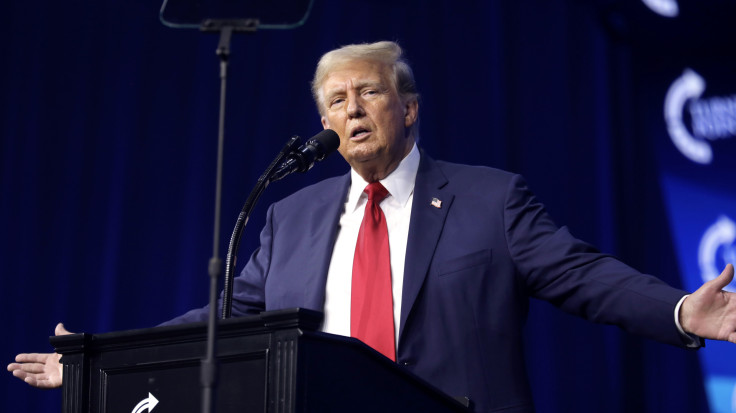
In a meandering rant aboard Air Force One, Donald Trump resurrected an old claim that has repeatedly drawn scrutiny from fact-checkers and analysts — that he had somehow warned the world about Osama Bin Laden before the attacks of Sept. 11, 2001. Speaking with reporters and Senator Lindsey Graham, Trump asserted that the devastating collapse of the World Trade Center would never have happened had anybody bothered to listen to him.
The assertion, delivered with characteristic confidence, immediately triggered a wave of criticism on social media, with observers questioning both the accuracy of the statement and the president's grip on historical fact. Trump's allegation centred on his 1999 book, which he claimed contained warnings about the terror mastermind.
'I wrote about bin Laden one year before the attack on the World Trade Center,' Trump told the gathered press corps. 'I said you have to go after bin Laden. It was in my book. And very few people want to say that... If they would've listened to me, they would've taken out bin Laden, and you wouldn't have had the World Trade Center tragedy'.
Turning to Graham with what seemed like genuine expectation of validation, Trump pressed further: 'I learn something every day,' the senator replied tersely, appearing to deflect the claim without engagement.
Trump: You know I wrote about Bin Laden one year before the World Trade Center. If they would’ve listened to me, they wouldn’t have the World Trade Center tragedy. I predicted Bin Laden. Did you know that?
— Acyn (@Acyn) January 5, 2026
Graham: I learn something everyday. pic.twitter.com/Z04uQyNWf9
Trump's Claims Thoroughly Debunked by Fact-Checkers and Social Media
The assertion drew immediate and withering pushback online. X users quickly mobilised to challenge the narrative, with one observer noting that Trump had actually given an interview with Fox5 News on the morning of the attacks themselves — and made no mention of Bin Laden whatsoever. Instead, according to the video evidence circulated, Trump used the moment to highlight his property portfolio.
'Trump did remember to tell viewers that the owner of the WTC was a good friend of his & his 40 Wall St property was now the tallest building in Downtown Manhattan,' the X user pointed out. Other critics were less restrained. 'He is completely insane,' one commenter wrote, with another sardonically observing: 'Well, I didn't know about that, but mostly because you just completely made it up.' A third user characterised the claim as having been 'thoroughly debunked' — and the digital evidence appears to support that assessment.
What made the exchange particularly striking was not merely the factual inaccuracy, but the persistence with which Trump clung to the narrative despite Graham's obvious reluctance to validate it. This pattern has become increasingly difficult to ignore, as observers scrutinise Trump's recent public statements and press conferences.
Concerns Mount Over Trump's Cognitive Faculties Amid Pattern of Contradictory Statements
The 9/11 claims represent merely the latest flashpoint in a broader and more troubling pattern. In recent weeks, Trump has been fact-checked on his recollection of events just days prior. When questioned by ABC News' Rachel Scott about footage of strikes on Venezuelan boats, Trump flatly denied having ever commented on the material — despite video evidence to the contrary emerging just five days earlier.
The pattern has not gone unnoticed by observers who track his public health and mental acuity. Social media erupted with concerns about his cognitive state following the Bin Laden remarks. 'Senility and compulsive lying are a dangerous mix,' one commenter cautioned. Another was more direct: 'Trump's dementia is far worse than Biden's was. Sane, normal men don't plaster themselves with makeup and go on slurring, name-calling rants, then forget what they said'.
These comments, while harsh, reflect a genuine undercurrent of concern that has begun to surface even in mainstream discourse. Questions about Trump's fitness for office are no longer confined to opposition figures or fringe commentary — they have become sufficiently widespread that they merit serious consideration by those tasked with evaluating his suitability for the role he currently holds.
The statements aboard Air Force One, taken in isolation, might be dismissed as mere rhetorical flourishes or nostalgic embellishments. But viewed alongside the pattern of recent contradictions, forgotten conversations and factual inaccuracies that have surfaced in the past several weeks, they paint a more worrying picture.
Whether the pattern represents normal ageing, stress-related memory lapses, or something more serious remains unclear — but the frequency and nature of the incidents suggest that scrutiny of the president's cognitive health is now unavoidable.
© Copyright IBTimes 2026. All rights reserved.