

Trump Sparks Outrage as 'Fortunate Son' Used as Hype Track for 'Tone-Deaf' Venezuela Raid Video
Trump faces backlash for using 'Fortunate Son' to soundtrack Venezuela raid video, highlighting irony of anti-war song

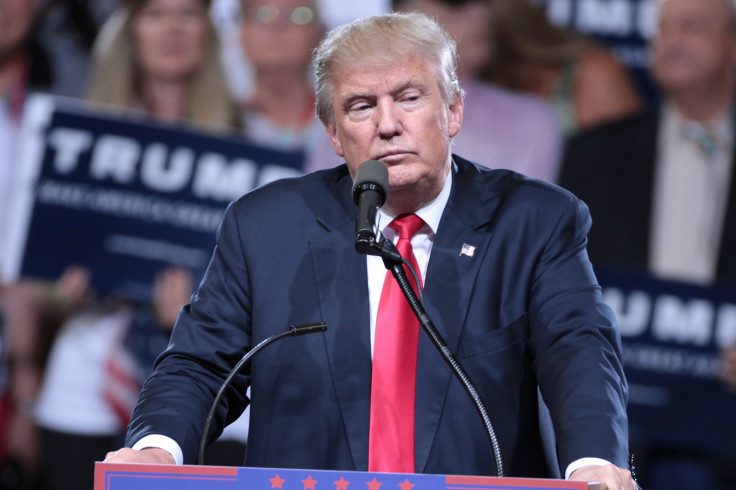
In a move that perhaps inadvertently crystallised the central contradiction of his political career, Donald Trump shared a video on Saturday morning that would prove almost impossible to defend. The footage, posted to Truth Social on Jan. 3, showed American military aircraft dropping bombs over Caracas as part of a raid aimed at capturing Venezuelan President Nicolás Maduro and his wife. Nothing particularly unusual about a president touting military action — until you noticed what was soundtracking the violence.

The music was 'Fortunate Son', Creedence Clearwater Revival's 1969 protest anthem, a song explicitly written to criticise the privileged elite who avoid conflict while others fight, making its use here almost satirical. The irony was not lost online, and by the afternoon the backlash had grown across social media with a sense of gleeful inevitability.
How 'Fortunate Son' Became Trump's Biggest Misstep
The track's lyrics are brutally unambiguous about its target: 'Some folks are born made to wave the flag / Hoo, they're red, white and blue / And when the band plays "Hail to the chief" / Ooh, they point the cannon at you, Lord.' The chorus hammers the point home repeatedly: 'It ain't me, it ain't me / I ain't no millionaire's son, no, no / It ain't me, it ain't me / I ain't no fortunate one, no.'
Written during the Vietnam War, the song became a cultural touchstone for anti-war sentiment, mocking the system in which wealthy men orchestrated conflicts they would never personally fight. John Fogerty, the band's lead singer, has long been protective of the track's legacy.
In 2020, after Trump used the song during a campaign rally, Fogerty sent him a formal cease-and-desist order. At the time, Fogerty emphasised the rather pointed biographical fact that Trump himself had received a draft deferment during the Vietnam era — the very hypocrisy the song was written to condemn.
Speaking to Vulture last August, Fogerty expressed his bewilderment with characteristic bluntness: 'How can I say this? I can't imagine using that song as a political rallying theme, particularly when you seem to be the person who I'm screaming about in the song on all three counts. It's hilarious to me'.
How Social Media Captured the Contradiction
The social media response was swift and merciless. One user wrote on X: 'Using a song about draft dodgers to soundtrack a foreign raid is tone-deaf in every imaginable way'. Another user pointed out the generational gulf, writing, 'An anti-war song posted by a nepo-baby whose daddy paid a doctor to keep his name out of the draft'. A third observer crystallised the sheer absurdity: 'The irony is that Trump IS the fortunate son they sung about that doesn't get sent off to war'.
What perhaps captured the sentiment most cleanly was the observation from another commenter: 'Fortunate Son is an anti-war protest song about elites sending others to fight. Trump using it as a hype track is... very on brand'. One person simply quipped, 'MAGA is undefeated at not understanding song lyrics', while another added, 'Unreal'.
The layering of contradictions here is almost Shakespearean. A man who avoided military service during America's most divisive conflict deployed an anti-war protest song — one that explicitly condemns men like himself — as a triumphant accompaniment to military violence.
Fogerty had already warned him once; Trump had apparently forgotten or dismissed the warning. The 79-year-old president's decision to use the track again suggested either a remarkable indifference to its message or a calculation that his political base would neither notice nor care.
Whether the post represents tone-deafness, political overreach, or simply a president confident enough in his narrative control to override artistic intent remains debatable. What is beyond dispute is that 'Fortunate Son' has now become something more than a protest anthem — it has become a mirror to hold up to power, and in this case, that reflection proved uncomfortably clear.
© Copyright IBTimes 2026. All rights reserved.