

Trump's 'Censorship' Continues As He 'Stopped' Segment On His 'Inhumane Treatment Of Immigrants'
Internal revolt at CBS as veteran correspondent Sharyn Alfonsi blasts 'political' decision to axe investigation into migrant treatment.
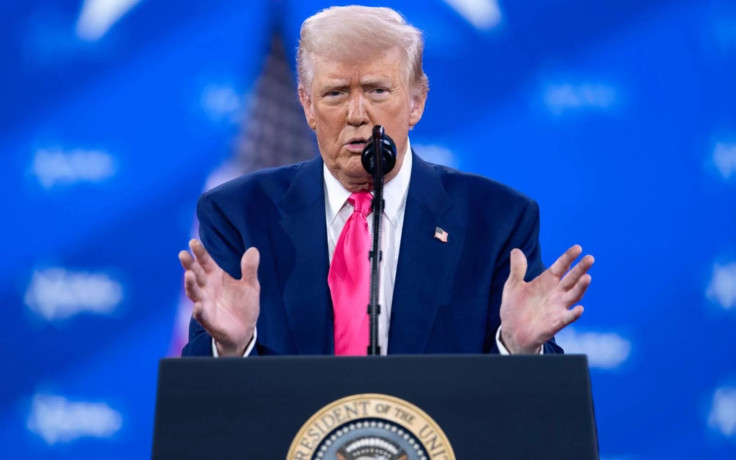
CBS News is facing internal backlash after its flagship programme, 60 Minutes, removed a segment titled 'Inside Cecot' from its Sunday night broadcast.
The investigation, led by veteran correspondent Sharyn Alfonsi, reportedly detailed 'state-sanctioned torture' within El Salvador's Cecot megaprison, where the administration has deported hundreds of Venezuelan migrants.
Although the segment received multiple approvals from CBS lawyers and standards executives, it was removed just hours before airing following a decision from the network's new editor-in-chief, Bari Weiss.
Internal Strife And Allegations Of Political Interference
The move to pull the segment has sparked a firestorm inside the storied news organization, with veteran journalists accusing the network of "corporate censorship." Sharyn Alfonsi voiced her outrage in a private memo to colleagues, saying the report was factually sound and had passed every rigorous internal review. She argued that the omission was not an editorial choice but a political one, designed to provide a 'week of political quiet' for the White House.
— 60 Minutes (@60Minutes) December 21, 2025
Alfonsi added that the administration had effectively been given a "kill switch" after refusing to provide on-camera comments for the report. In her memo, first obtained by The Wall Street Journal, Alfonsi wrote: 'If the administration's refusal to participate becomes a valid reason to spike a story, we have effectively handed them a "kill switch" for any reporting they find inconvenient.'
The correspondent highlighted that the Department of Homeland Security and the State Department had ignored repeated requests for interviews regarding the deportation deal struck with El Salvador in March.
The leadership at CBS News, now under the direction of Bari Weiss, defended the move as a commitment to journalistic excellence. Weiss issued a statement claiming the story lacked 'critical voices' and required further context before it could be deemed ready for the public.
However, internal critics point to the fact that Paramount, the parent company of CBS, recently settled a £12.5 million ($16 million) lawsuit with Trump over previous 60 Minutes editing, suggesting a climate of fear has permeated the boardroom.
The Cost Of The Cecot Deportation Deal
The investigation at the heart of the controversy focuses on the grim realities of the Terrorism Confinement Centre (Cecot) in El Salvador, Latin America's largest penal facility. In March 2025, the Trump administration formalised an agreement to deport more than 250 Venezuelan migrants to the facility, accusing them of terrorism and gang affiliations.
Lawyers for the detainees have since come forward with harrowing accounts of abuse, describing the conditions as an 'inhumane' violation of international human rights.
Interviews conducted for the spiked segment reportedly featured men who had been released from the prison, describing systematic beatings and psychological warfare. These deportees alleged that the administration was aware of the brutal conditions yet continued the transfers as a deterrent against further immigration.
Public interest groups, including People For the American Way, have characterised the pulling of the report as a direct attempt by the 'Trump regime' to hide the consequences of its border policies from the American electorate.
A CBS correspondent just revealed that CBS killed 60 Minutes’ story on Trump’s illegal deportations to El Salvador.
— People For the American Way (@peoplefor) December 22, 2025
“We have essentially handed [Trump] a kill switch for any story they find inconvenient.” pic.twitter.com/yfmQDGnC0U
The Federal Communications Commission (FCC) recently saw increased activity regarding broadcast licences, coinciding with the President's frequent attacks on major networks.
The first amendment does not apply to television
— Three Year Letterman (@3YearLetterman) December 21, 2025
This environment has led to accusations that major media conglomerates are 'cowering' to avoid financial ruin or the loss of their operating permits.
A Pattern Of Litigation And Media Intimidation
The 'Inside Cecot' controversy is the latest in a series of events where the administration has exerted influence over news content through legal and financial leverage. Earlier this year, Trump's first 60 Minutes interview in five years was heavily edited, with the network removing a portion where he boasted about the £12.5 million ($16 million) settlement he had extracted from them. Transcripts later revealed he told correspondent Norah O'Donnell, 'Actually, 60 Minutes paid me a lotta money... you don't have to put this on, because I don't wanna embarrass you.'
This pattern extends beyond CBS, with the White House filing multi-billion-pound lawsuits against The New York Times, The Wall Street Journal, and even the BBC. Trump is currently seeking £7.8 billion ($10 billion) in damages from the British broadcaster over a Panorama programme, alleging 'overwhelming financial and reputational harm'.
As the administration continues to challenge the autonomy of the press, the fallout at CBS News serves as a litmus test for the future of investigative journalism in the United States. With senior producers reportedly threatening to resign, the network faces a choice between maintaining its 50-year reputation or adhering to the new editorial standards imposed by a litigious executive branch.
Freedom of the press remains under unprecedented siege as corporate interests and political threats converge to silence reporting on the most vulnerable.
© Copyright IBTimes 2026. All rights reserved.