

Trump Envoy Says Ramaphosa Refuses To Condemn 'Kill the Boer' Chant as US Diplomatic Rift Deepens
L Brent Bozell's remarks follow a third South African diplomatic protest and widen a dispute over race policies, investment and Pretoria's foreign-policy ties
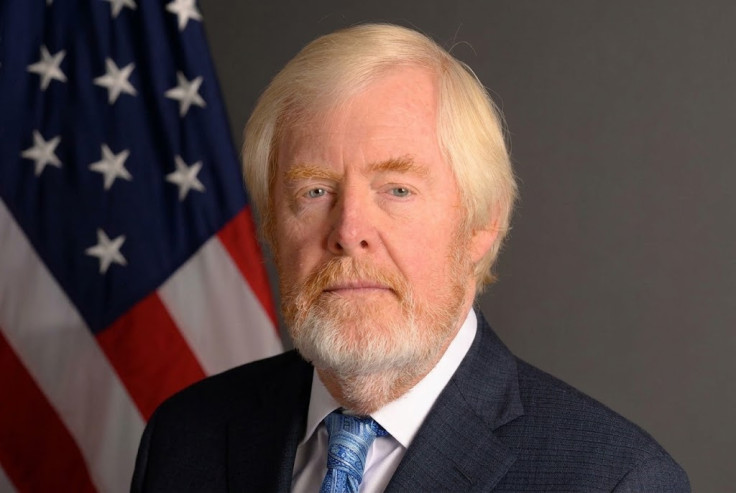
The US ambassador to South Africa has accused President Cyril Ramaphosa of failing to condemn the 'Kill the Boer' chant, escalating tensions between Washington and Pretoria.
Ambassador L Brent Bozell III made the allegation in an interview with Fox News Digital after South Africa's foreign ministry summoned him for a third time over what it described as his 'undiplomatic conduct.'
Bozell has repeatedly raised concerns previously aired by President Donald Trump during a tense Oval Office meeting with Ramaphosa on May 21, 2025.
Those concerns include alleged discrimination based on race, claims of violence against farmers, South Africa's Expropriation Act and the possibility of expropriation without compensation, as well as alleged incitement against minority groups.
Bozell, founder of the Media Research Center, has been in post for nine months.
The ambassador said three of five requests from the Trump administration had been ignored by South Africa. One of the demands concerns Trump's call for Ramaphosa to condemn the 'Kill the Boer! Kill the farmer!' chant.
Bozell said Ramaphosa had cited South African court rulings on the chant, which found that the song did not constitute prohibited hate speech in the circumstances considered by the courts.
In 2022, the Equality Court rejected a hate-speech complaint brought by AfriForum over performances of the song by Julius Malema and others. The Supreme Court of Appeal dismissed AfriForum's appeal in 2024, finding that the song had to be assessed in its full political and historical context. The Constitutional Court declined to hear a further appeal in March 2025.
Bozell said the rulings did not prevent Ramaphosa from publicly condemning the chant.
'You've got a president of South Africa who refuses to condemn an incitement to kill,' Bozell stated. He argued that Ramaphosa could still speak out against the slogan, even if South Africa's courts had reached a different conclusion.
'If President Ramaphosa, if he wants to, he can do it. It's just as simple as that,' he said.
Bozell described the chant as hate speech, despite the South African court findings concerning the performances before them. He pointed to scenes at public gatherings.
'How hard is it to say this chant, where some, where people do it, 50,000 people in the stadium jump up and down, pantomiming guns, shooting people, how hard is it to say, stop it?' he said. 'This is awful that anybody would be inciting people to kill.'
Bozell previously apologised in March after remarks in which he dismissed South African court findings on the chant.
He later said his personal view remained that the chant constituted hate speech, while acknowledging that the US government respected the independence and findings of South Africa's judiciary.
Race Rules and Investment Concerns
Bozell also criticised South Africa's black-ownership and empowerment requirements affecting mining and telecommunications companies.
Bozell said American companies and the US government had 'literally billions of dollars' in potential mining investment that would not proceed while what he described as race-based ownership requirements remained in place.
'You've got a government that has said it's not going to do any more for the Afrikaner rural community, and it's got a government that's saying no, your mining has to go through race-based programmes,' Bozell said.
'Those were three strikes and you're out as far as we were concerned.'
South Africa's 2018 Mining Charter includes a 30 per cent black economic empowerment shareholding requirement for new mining rights, although the sector's ownership rules have been subject to regulatory changes and litigation.
Bozell said the United States wanted a different model from China's involvement in African mining.
'We're saying to South Africa, we'll come in, we'll do the mining, we'll do it right there in South Africa,' he said. 'South Africa gets the money, not the Chinese.'
Starlink was another example cited by the ambassador. Bozell said Elon Musk had offered to install Starlink in 500 South African schools and pay for the service indefinitely.
He said the company's proposed entry into South Africa had been hindered by the country's 30 per cent ownership requirement for telecommunications licence holders.
South Africa's telecommunications rules require at least 30 per cent ownership by historically disadvantaged groups for individual licence holders, according to the Independent Communications Authority of South Africa. ICASA said in May that replacing the statutory requirement with equity-equivalent investment programmes would require an amendment to the law.
Pretoria Pushes Back
South Africa's Department of International Relations confirmed on Friday that it had issued Bozell a third démarche, or formal diplomatic protest. A senior official told reporters that the ambassador had been called in to explain his 'undiplomatic conduct.'
'This is a record,' the official said. 'The issues related to the bilateral relations between the two countries are a subject of ongoing discussions. There is commitment from both sides to resolve the outstanding matters. South Africa values the relationship with the USA. It is a mutually beneficial partnership.'
'We are not interested in diplomatic manoeuvring, procedural delays, or dialogue for dialogue's sake,' a spokesperson said. 'The ball is now squarely in the Government of South Africa's court to outline the relationship it wants with the United States and respond accordingly to President Trump's executive order.'
The dispute also reflects wider US concern about South Africa's foreign-policy alignments. Bozell said Trump was worried that the country was 'systematically leaving the non-alignment space and moving closer and closer to our adversaries.'
He questioned South Africa's ties with Iran, Russia, China and Cuba and criticised the African National Congress over its contacts with Hamas.
'There are people who are living in the glory days of the Soviet Union, and they want to go back to the good old days of communism,' Bozell said. 'Why are they still working with Cuba?'
Despite the friction, Bozell said he wanted the relationship to survive.
'Temperatures can go up, but I want their temperature to go down too,' he said. 'We want this partnership. We want to figure this out.'
The dispute remains unresolved, although both sides have said they want the relationship to continue.
© Copyright IBTimes 2026. All rights reserved.