

What Is Doomsday Clock? Scientist Sets The Clock To 85 Seconds To Midnight — Are We Really Running Out of Time?
The Doomsday Clock is a metaphor for humanity's peril and a call to action on global threats
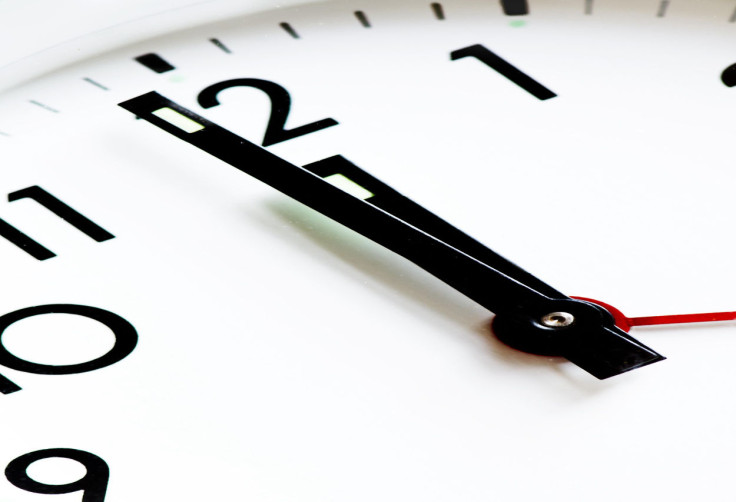
We are officially 85 seconds from midnight. On 27 January 2026, the Bulletin of the Atomic Scientists' Science and Security Board (SASB) adjusted the Doomsday Clock as a desperate call to action against escalating global threats.
As the world reacts to this shift, we break down exactly what the Clock is: what does this symbolic countdown actually represent, and why does its message matter now more than ever? With the window for prevention seemingly closing, are we simply running out of time—or has the hour already passed, leaving humanity to operate on borrowed time?
What is the Doomsday Clock?
The Doomsday Clock was created in 1945 by a group of scientists who had worked on the Manhattan Project—the codename for the development of the atomic bomb during World War II. They went on to establish the Bulletin of the Atomic Scientists as a non-profit organisation in response to the dawn of the nuclear age.
Originally, the Bulletin's mission was to assess the threat posed by nuclear weapons. In 2007, however, it expanded the Clock's scope to include the growing danger of the climate crisis. First set at seven minutes to midnight, the Clock's hands are adjusted annually by the SASB.
⏰ The @BulletinAtomic Doomsday Clock is now at 85 seconds to midnight - the closest humanity has ever been to global disaster.
— Future of Life Institute (@FLI_org) January 27, 2026
👉 The clock has moved 4 seconds closer than last year due to "dangerous trends in nuclear risk, climate change, disruptive technologies like AI, and… pic.twitter.com/QbW7Ue2wqR
For more than 79 years, the time has reflected how close experts believe humanity is to global catastrophe—sometimes moving forward, sometimes remaining unchanged. The decision on the Clock's time is made by the SASB in consultation with the Bulletin's Board of Sponsors, which includes eight Nobel laureates, many from the fields of physics and chemistry. The Board of Sponsors was formed by Albert Einstein in December 1948, with J. Robert Oppenheimer serving as its first chair.
The Doomsday Clock is not a literal timepiece, but a universally recognised metaphor for humanity's proximity to self-destruction. Today, the Bulletin evaluates the world's vulnerability to 'technologies of our own making', with a primary focus on:
- Nuclear proliferation and the threat of atomic warfare
- Climate change and the resulting ecological instability
- Disruptive technologies, including unregulated Artificial Intelligence (AI) and biological threats
2026 Update: 85 Seconds To Midnight
In 2025, the Clock was set at 89 seconds to midnight. This year, it is set at 85 seconds to midnight, the closest the timepiece has ever been to midnight, according to the Bulletin of the Atomic Scientists.
The major factors behind this decision included growing nuclear threats, disruptive technologies like artificial intelligence (AI), multiple biological security concerns, and the ongoing climate crisis.
In the SASB press release, Alexandra Bell, president and CEO of the Bulletin of the Atomic Scientists, explained the decision, saying: 'Humanity has not made sufficient progress on the existential risks that endanger us all.'
Bell added, 'The Doomsday Clock is a tool for communicating how close we are to destroying the world with technologies of our own making. The risks we face from nuclear weapons, climate change, and disruptive technologies are all growing.'
Last year, the Bulletin warned that global risks have worsened as nations ignored calls for cooperation, with escalating conflicts involving nuclear-armed states, the looming expiry of the last US–Russia nuclear treaty, unaddressed biological threats, and unregulated AI intensifying misinformation and compounding every major existential danger.
'Rather than heed this warning, major countries became even more aggressive, adversarial and nationalistic,' said Dr Daniel Holz, Chair of the SASB.
The Midnight Scenario: What Happens at the End of the Countdown?
The clock is a metaphor for humanity's proximity to self-destruction. Midnight represents the moment humanity has made Earth uninhabitable.
Although the Doomsday Clock has never reached midnight, former Bulletin president and CEO Rachel Bronson, who now serves as a senior adviser, has said she hopes it never will.
She said, 'When the clock is at midnight, that means there's been some sort of nuclear exchange or catastrophic climate change that's wiped out humanity.' She added, 'We never really want to get there, and we won't know it when we do.'
Are We Really Running Out of Time?
The move to 85 seconds suggests that the window for meaningful intervention is closing rapidly. Bell said that the clock's message is clear: 'Catastrophic risks are on the rise, cooperation is on the decline, and we are running out of time. Every second counts.'
She added: 'It is a hard truth, but this is our reality. Change is both necessary and possible, but the global community must demand swift action from their leaders.'
Can the Clock Be Turned Back?
Historically, the clock has moved backwards. In 1991 following the end of the Cold War, it was set to a record 17 minutes from midnight.
As Bronson noted: 'We at the Bulletin believe that because humans created these threats, we can reduce them. But doing so is not easy, nor has it ever been. And it requires serious work and global engagement at all levels of society.'
The Bulletin calls for urgent action through renewed diplomacy between nuclear powers to avert an arms race, the creation of strict international rules governing military uses of artificial intelligence, and aggressive climate measures that go beyond pledges to dismantle fossil fuel infrastructure.
With everything happening in the world—and with the way humanity, particularly its leaders, operate today—we are undoubtedly running out of time. Yet we are not at the end. There are still steps that can be taken, even as the world continues to operate on borrowed time.
The 85-seconds-to-midnight warning is not a death sentence; it is a final, urgent call for the global community to change course before the hour strikes.
© Copyright IBTimes 2026. All rights reserved.