

Yayoi Kusama Dead at 97: Inside the Trauma and Hallucinations That Inspired Her Famous Polka Dots
The Japanese artist transformed frightening childhood visions into the polka dots and mirrored worlds that made her a global icon
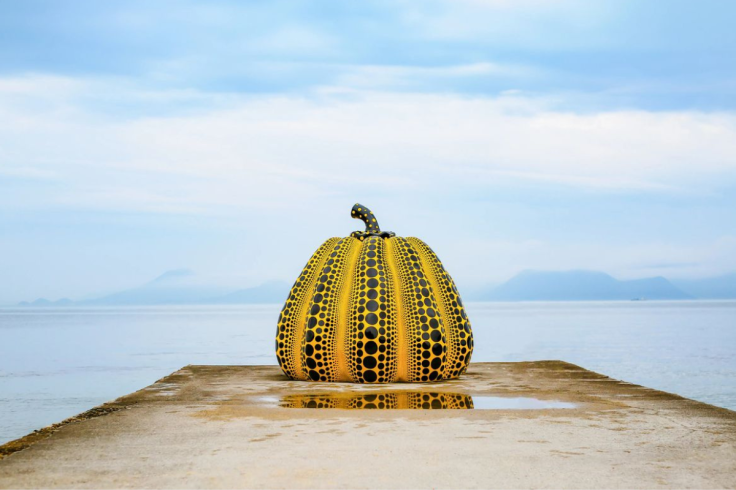
Yayoi Kusama, the Japanese artist who transformed childhood hallucinations and personal trauma into internationally recognised polka-dot artworks, has died aged 97.
Kusama died at a Tokyo hospital on 14 August, according to an announcement published by her studio on Thursday. A cause of death was not disclosed. Her studio said she continued painting until her final days.
Behind Kusama's colourful pumpkins, mirrored rooms and seemingly playful dots was a lifelong struggle with frightening visions and psychological distress. Creating art became her method of confronting experiences that began when she was a child.
Childhood Hallucinations Became Polka Dots
Born in Matsumoto, Japan, in 1929, Kusama began experiencing visual and auditory hallucinations at approximately 10 years old.
She described seeing flashes of light, auras and enormous fields of dots. Patterns appeared to multiply across walls, ceilings, furniture and her own body. Flowers also seemed to speak to her.
Kusama feared that the repeating patterns would completely consume her. She later called this sensation 'self-obliteration', an idea that became central to her paintings and immersive installations.
Drawing what she saw helped her manage the fear. Some of her surviving childhood pictures already show people and objects covered in dots, revealing that her most recognisable artistic motif was rooted in those early visions.
Family Trauma Shaped Her Art
Kusama also described growing up in a deeply troubled household.
Her mother reportedly discouraged her artistic ambitions, confiscated her drawings and sometimes physically punished her. Kusama said she was sent to observe her father's extramarital relationships, an experience that contributed to her fear of sex.
Those memories later appeared in her work through repeated phallic sculptures and performances exploring sexuality, obsession and control.
As a teenager during the Second World War, Kusama worked in a military factory sewing parachutes for the Japanese army. She remembered spending that period surrounded by darkness, air-raid warnings and American bombers.
Art offered an escape from both her home life and the wartime expectations imposed on Japanese women.
Kusama Took Her Visions to New York
Kusama left Japan for the United States in 1957, before moving to New York the following year.
She arrived with limited money but quickly entered the city's experimental art scene. Her vast Infinity Net paintings featured thousands of repeated loops and dots stretching across enormous canvases.
During the 1960s, she created mirrored installations, soft sculptures and provocative public performances. She also organised anti-war demonstrations and painted dots across naked participants.
Kusama worked alongside artists including Andy Warhol and Claes Oldenburg, but struggled to receive the same recognition as her male contemporaries. She eventually returned to Japan in 1973 while experiencing declining physical and mental health.
Art Became Kusama's Lifelong Treatment
In 1977, Kusama voluntarily entered a psychiatric hospital in Tokyo. She continued living there while travelling to a nearby studio to work.
Rather than ending her career, the arrangement gave Kusama the stability to keep painting, writing and designing installations. She repeatedly described creating art as the method she used to relieve anxiety, fear and psychological pain.
Her international reputation surged during the 1990s. The mirrored Infinity Rooms later became some of the world's most popular immersive artworks, attracting enormous queues and spreading widely across social media.
Her dots and pumpkins also appeared on sculptures, clothing and luxury products through collaborations with brands including Louis Vuitton.
Kusama received Japan's prestigious Order of Culture in 2016. Her studio said her final works remained focused on eternal love, humanity and the soul.
What millions of visitors experienced as a dazzling universe of colour began as one child's attempt to survive a frightening world of multiplying patterns. Kusama turned those visions into an artistic language recognised around the world.
© Copyright IBTimes 2026. All rights reserved.