

3I/ATLAS Alien Tech Hunt: No Radio Signals Found During Earth's Closest Approach
Astronomers reveal the truth about 3I/ATLAS. Search for alien radio signals comes up empty as the interstellar visitor flies past Earth.

In the huge, quiet theatre of the universe, 3I/ATLAS has gotten more attention than almost any other performer. Since it was found in July 2025, this interstellar nomad has been the subject of a lot of speculation. Some people think that its strange chemical signature and erratic movements are signs that it is an alien probe.
But when the traveler got closest to Earth on December 19, the most sensitive 'ears' of humanity turned towards the stars to settle the argument once and for all. The flyby, which took place 167 million miles (1.7 AU) from Earth, was the closest the object will ever get to our planet before it disappears into deep space forever.
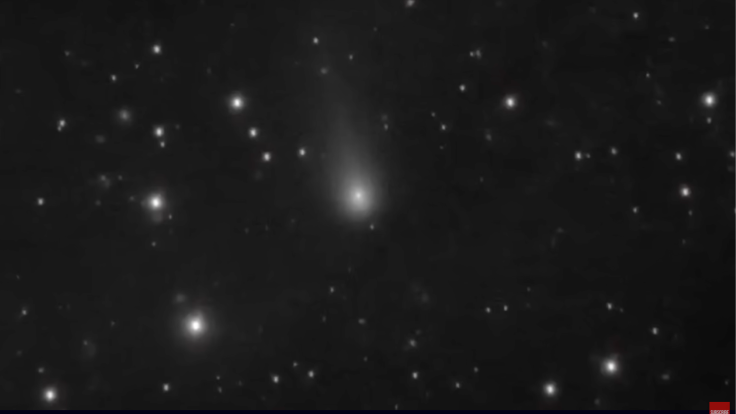
Deep Space Signals: The Hunt For Technosignatures On 3I/ATLAS
The search for 'technosignatures'—telltale signs of technology such as narrowband radio signals—reached a crescendo just hours before the comet's closest flyby. Researchers utilised the 100-metre Green Bank Telescope (GBT), the world's largest steerable single-dish radio telescope, to listen for any artificial emissions.
Because interstellar probes would theoretically use efficient narrowband signals to communicate across the void, the GBT was the perfect tool for the job. It is capable of detecting an Effective Isotropic Radiated Power (EIRP) as low as 0.1 W—roughly the power of a mobile phone handset at that immense distance.
On 18 December 2025, less than 24 hours before the comet reached its minimum distance of 167 million miles (1.7 AU) from Earth, scientists scanned frequencies between one and twelve GHz. While nine 'events of interest' initially piqued their curiosity, further scrutiny revealed them to be mere terrestrial phantoms.
These signals appeared in off-target scans or matched known patterns of human-made radio-frequency interference (RFI). Ultimately, the Breakthrough Listen initiative reported a nondetection, confirming that 3I/ATLAS is not broadcasting messages to a distant civilisation. 'We find no credible detections of narrowband radio technosignatures originating from 3I/ATLAS,' the team wrote in their formal report, effectively ruling out any active transmitters more powerful than a pocket torch.

Outgassing and 'Impossible' Jets: The Natural Wonders Of 3I/ATLAS
If it isn't a spaceship, what exactly is it? Data from a global network of observatories, including the MeerKAT telescope in South Africa and the Hubble Space Telescope, has painted a picture of a remarkably 'normal' interstellar visitor. Unlike the enigmatic, cigar-shaped 1I/'Oumuamua, which lacked a visible tail, 3I/ATLAS has been an open book.
New high-resolution images from the Gemini Multi-Object Spectrograph (GMOS) have revealed a bright, asymmetric coma, further confirming that this is an icy, active comet rather than a rigid metallic craft. MeerKAT detected hydroxyl signatures, a clear indicator of sunlight breaking down water ice, while the James Webb Space Telescope (JWST) revealed high levels of carbon monoxide, suggesting the comet was forged in a frigid, alien environment billions of years ago.
Perhaps most intriguing is the comet's 'anti-tail'—a rare feature that appears to point toward the Sun rather than away from it. Within this structure, researchers discovered jet-like plumes that exhibit a strange precessional wobble every 7 hours and 45 minutes. Far from being artificial thrusters, these are actually natural water and gas jets.
Scientists have calculated that these jets provide a 'non-gravitational acceleration'—a tiny, rocket-like push—consistent with a nucleus roughly 1 kilometre in diameter. 'This object is a comet. It looks and behaves like a comet and all evidence points to it being a comet,' stated NASA Associate Administrator Amit Kshatriya during a press briefing held after the US government shutdown ended.
As 3I/ATLAS now begins its long journey back into the dark, leaving our solar system at a staggering 153,000 miles per hour, it leaves behind a wealth of data. It may not be the alien messenger some hoped for, but as a pristine relic from another star system, it has offered us a rare, fleeting glimpse into the chemistry of a world we may never reach. By March 2026, the comet will pass the orbit of Jupiter and begin to fade, eventually crossing the orbits of the outer giants by 2028 as it returns to the interstellar void.
While the radio silence from 3I/ATLAS may have disappointed those hunting for little green men, its natural complexity is arguably more profound. It proves that the same laws of physics and chemistry that govern our own backyard are written across the stars.
© Copyright IBTimes 2026. All rights reserved.