

Apple's £1,999 iPhone Duo Launch Sparks Huge Demand, but Reviewers Warn Most Buyers Should Think Twice
Pre-order delivery estimates have slipped into late January, while reviewers cite the device's price, Touch ID and foldable design as potential drawbacks
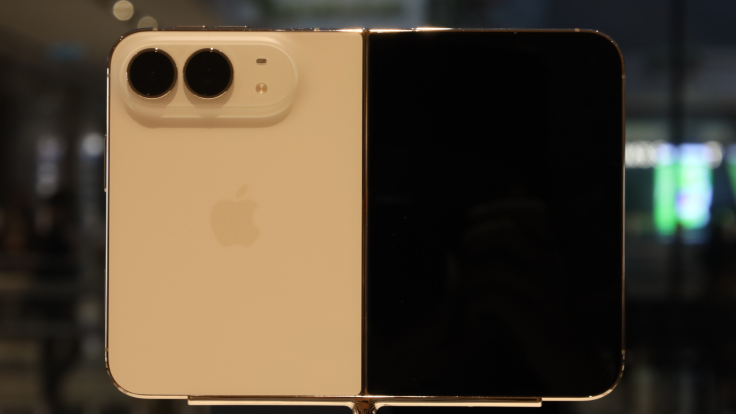
Apple's £1,999 iPhone Duo, the company's first foldable phone, has launched to such strong demand that some buyers are already being told they may have to wait until late January for delivery.
Yet early reviewers are warning that most people should think carefully before paying nearly £2,000 for a device some still describe as closer to a prototype than a finished everyday phone.
The phone starts at £1,999 in the UK and $1,999 in the US. Its launch is an early test for chief executive John Ternus, who took over shortly before Apple unveiled the device on 9 September.
Reviewers have raised questions about its practicality, its compromises and whether the price is justified, particularly for buyers who would normally choose a standard iPhone.
Supply Strained Within Minutes
Pre-orders opened on 16 October. Within minutes, Apple's online delivery estimates for some orders had slipped to late January, according to Reuters. Apple limited each customer to two devices, suggesting the company is trying to manage early demand and available stock carefully.
The company also restricted walk-in availability in some markets, with in-store stock and collection arrangements varying by country. Delayed deliveries and limited stock show that demand has outpaced available supply, but they do not reveal how many phones have been sold, as Apple has not disclosed pre-order numbers or first-weekend sales.
In Sydney, where a store opened at 8am, 48-year-old engineer Simon Krishnan paid A$3,899 for a 512GB model and admitted it was an indulgence. In the UK, the 512GB version costs £2,199, £200 more than the 256GB model, underlining how quickly the price rises for buyers who want more storage on top of the already high starting cost.
Early Reviews Sound a Note of Caution
Early verdicts have been more cautious than the queues suggest. Apple commentator John Gruber wrote on Daring Fireball on 21 October that the iPhone Duo was an 'extraordinarily polished prototype' rather than a finished product he would want to carry every day.
Technology reviewer Marques Brownlee said the phone may suit buyers who are comfortable spending about $2,000 (£1,495) on a foldable, but cautioned that some users may need time to adjust to its design. His review focused on how the folding form factor changes day-to-day use and how that may not appeal to everyone coming from a regular iPhone.
Reviewers have also criticised the absence of Face ID. The device uses Touch ID instead, which some see as a step back compared with recent flagship iPhones that rely on facial recognition. Others have raised concerns about the trade-offs that often come with foldable screens, including overall thickness and questions about long-term durability.
Such assessments could influence whether Apple can turn initial interest into sustained demand for foldable phones and may shape how Ternus's first major product launch is perceived over the next few upgrade cycles.
Big Stakes in a Tough Market
Analysts nonetheless expect Apple to have a significant impact on the category. The research firm IDC forecasts that Apple will capture 44% of the foldable-phone market's value and 31% of its unit sales in 2026.
It also expects the company to lead in both revenue and shipments by 2027. The figures are projections, not measured results, for a product that has only just reached shops.
The launch comes as Apple remains heavily reliant on the iPhone. The business generated net sales of $54.25 bilion (£40.56 billion) in the quarter ended 27 June 2026, according to the company's regulatory filing, and a new, more expensive iPhone tier could help support that revenue if customers accept the Duo's price.
Apple is also entering a difficult market in China, where smartphone shipments fell 15.4% year on year to 57.9 million units in the third quarter, according to IDC data published on 13 October and reported by Reuters. It was the sixth consecutive quarterly decline.
Analysts have cited weak consumer spending and rising memory and component costs among the pressures, factors that could affect demand for a premium-priced foldable. For now, the iPhone Duo's long-term success remains uncertain, despite its strong start.
© Copyright IBTimes 2026. All rights reserved.