

Buying an Imported China-Market Phone in the US? Why One Writer Warns 'You Buy at Your Own Risk'
Imported phones can deliver impressive cameras and batteries, but buyers should check US carrier support, Google services and repair options before committing
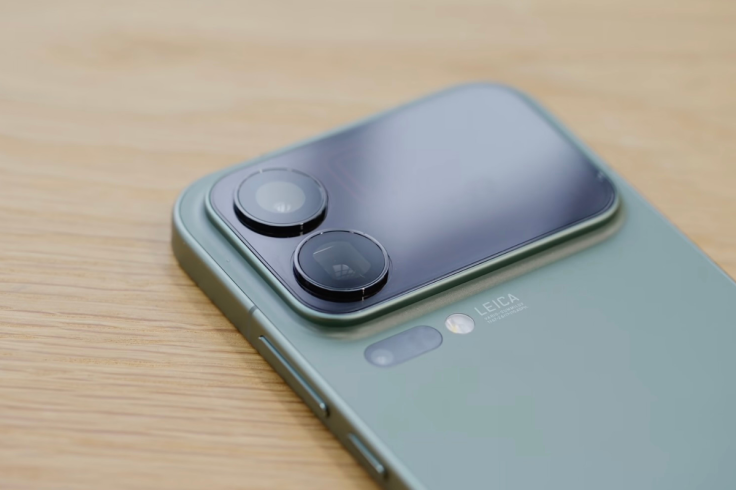
Buying a high-spec Chinese smartphone for use in the US could leave you without vital network features, Google apps or any meaningful repair support, a technology writer has warned.
How-To Geek contributor Jon Fingas told readers on 5 October that importing phones built for China's domestic market involves 'you buy at your own risk' trade-offs, with potential problems ranging from patchy 5G coverage and broken Wi-Fi calling to limited access to warranty repairs.
Fingas said some imported models offer powerful cameras, large silicon-carbon batteries and features at prices that can undercut American and South Korean rivals. Drawing on devices he had used himself, he praised their photography and battery life but argued that those advantages can be offset by compatibility and support problems.
Imported Chinese Phones May Face US Network Limits
Fingas cautioned buyers against assuming that an imported handset will work fully with their existing carrier. Some models intended for China's domestic market do not support every LTE or 5G band used by US networks, which can affect coverage or access to certain network features.
He also said features such as voice over LTE and Wi-Fi calling may not work as expected on every imported device. The extent of any limitation depends on the handset, its software and the carrier rather than simply where the phone was manufactured.
Fingas described T-Mobile as potentially easier to use with some imported models because of frequency overlap and eSIM support. However, T-Mobile advises customers bringing their own devices to check compatibility using the phone's IMEI and says it cannot guarantee the performance or feature compatibility of devices it has not sold or tested.
AT&T and Verizon likewise require customers bringing their own phones to confirm that a specific device is compatible with their networks. AT&T directs users to its compatibility tools and list of tested and approved phones, while Verizon provides an IMEI-based compatibility check.
That means buyers should verify the exact model before purchasing rather than assume that a global or unlocked version will provide full US carrier support.
China-Market Phones Can Bring App Complications
Software can create another obstacle. Fingas said phones intended specifically for China's domestic market may arrive without Google Mobile Services or first-party Google apps such as Gmail and Google Maps.
Some users turn to sideloading software or installing alternative firmware, but those approaches are model-dependent and can create further compatibility issues.
Google says contactless payments through Google Wallet may not work on devices running custom ROMs, modified factory software or unlocked bootloaders, or on devices that are not Play Protect certified.
Fingas said Google Wallet was the main app-related problem he had encountered personally, while noting that experiences vary from one device to another. Apps and services can also be affected by regional restrictions or software differences.
He also described Xiaomi phones he had used as coming with numerous preinstalled apps he did not use and extensive interface customisation. Phones built for China's domestic market may also present Chinese-language menus during setup or include apps intended primarily for use in China.
Imported Phones Can Leave Buyers With Fewer Support Options
For Fingas, after-sales support is the strongest reason for caution. Imported models that are not officially distributed in the US may offer fewer domestic options for troubleshooting, warranty work or authorised repairs. 'You buy at your own risk,' Fingas wrote.
By contrast, brands with established US retail or service networks, including Apple, Google, Motorola and Samsung, generally give customers more domestic avenues for support. Fingas also warned that independent repair shops may have difficulty sourcing replacement parts for models that are not officially sold in the country.
Accessories can pose similar practical problems. Replacement cases, chargers and other extras may be harder to find locally, particularly if buyers want to retain proprietary charging features supplied with a particular handset.
None of those concerns means every imported phone will fail to work in the US. Fingas' argument is instead that buyers should understand the precise model, network support, software requirements and repair options before committing to a device that was not designed or officially distributed for the American market.
For buyers comfortable researching those limitations, the hardware may still be appealing. For everyone else, impressive specifications may be less valuable if essential network features, payments or repair support prove difficult to use.
© Copyright IBTimes 2026. All rights reserved.