

Bitcoin Price Jumps to $81.5K as Strong US GDP and Steady Inflation Overshadow Alphabet's Q3 Miss
The cryptocurrency recovered from a dip below $80,000 after US GDP exceeded forecasts while inflation remained in line with expectations
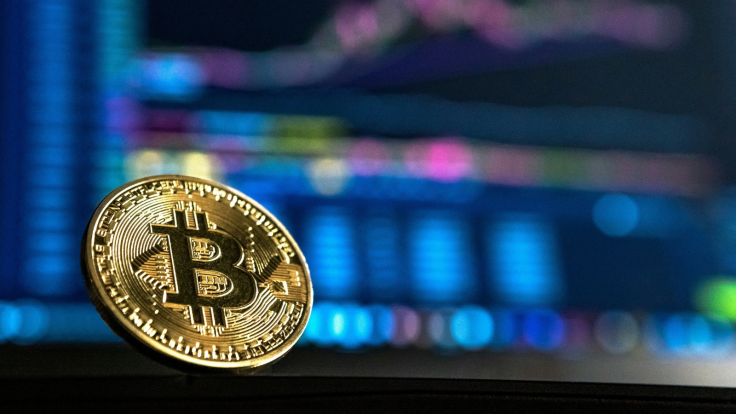
Bitcoin surged to an intraday high of $81,547 (£66,868) on Thursday as stronger-than-expected US economic growth and inflation in line with forecasts coincided with a rebound from a brief dip below $80,000 (£65,600) triggered by a sharp sell-off in Alphabet shares during a volatile 24-hour stretch.
Bitcoin climbed above $81,000 (£66,420) during the US trading session after the latest data showed robust growth and steady inflation. The move followed a period in which the cryptocurrency had fallen under $80,000 (£65,600) as shares in Alphabet slumped on Wall Street.
Bitcoin's intraday peak of $81,547 (£66,868) on Bitstamp, according to TradingView data, came after it had earlier dropped to a low of $79,607 (£65,277).
US Growth Tops Forecasts as Inflation Holds Steady
The US Bureau of Economic Analysis (BEA) said in its advance estimate that GDP expanded at an annualised rate of 3.4% in the third quarter of 2026, beating economists' expectations of 3.2%. Growth accelerated from 2.2% in the second quarter.
Chris Rupkey, chief economist at Fwdbonds, told CNBC that the economy was powering ahead despite geopolitical risks and the damage higher energy costs had done to some sectors. He said growth had returned above a 3% run rate for the first time in a year.
The BEA also reported that the Personal Consumption Expenditures (PCE) price index, an inflation gauge closely watched by Federal Reserve policymakers, rose 0.5% month on month and 3.6% year on year in September. Both readings were in line with market expectations. Core PCE, which excludes food and energy, increased 3.1% over the year.
Inflation therefore remains above the Fed's 2% target, but the figures gave investors a clearer backdrop after a turbulent session. The data alone does not establish what drove Bitcoin's recovery and other factors, including positioning and technical levels, may also have played a role.
The releases followed Wednesday's decision by the Federal Open Market Committee (FOMC) to keep the target range for the federal funds rate at 3.75% to 4%.
In its post-meeting statement, the committee said economic activity was 'expanding at a strong pace' and that inflation remained 'elevated'. It also described household spending as resilient, productivity growth as strong and capital investment as robust, language that suggested policymakers still see underlying momentum in the US economy.
On Wall Street, Alphabet shares fell by about 12% on Thursday after the company reported disappointing third-quarter results, weighing on the broader US market. The sell-off had contributed to Bitcoin's earlier dip below $80,000 (£65,600) as major technology stocks came under pressure and risk appetite weakened.
Key Level at $81,400 in Focus for Traders
Crypto analyst Rekt Capital identified $81,400 (£66,748) as a level Bitcoin would need to reclaim on a weekly closing basis to strengthen the bullish technical outlook, according to his analysis on X. He said Bitcoin was continuing to fluctuate around weekly levels of about $80,400 (£65,928) and $81,400 (£66,748), and that this could persist into the weekly close.
Short-term charts show Bitcoin repeatedly stalling near the low $80,000s (around £65,600–£66,200), with rallies met by selling as traders react to data releases and shifting expectations for US interest rates.
Bitcoin was on course to end October about 3.3% lower on a month-to-date basis, according to the same analysis. October has historically been a strong month for the cryptocurrency, although average returns vary depending on the dataset and calculation method used.
Technical levels are interpretations rather than certainties. Whether Bitcoin can hold above $81,400 (£66,748) remains uncertain, and a sustained move higher would need to be confirmed by subsequent trading and further macroeconomic signals.
© Copyright IBTimes 2026. All rights reserved.