

Celebrity Deepfake Scams Explode as AI Passes 8M Files — Fans Are Losing Everything
AI-generated deepfakes are driving a surge in celebrity scam content, putting millions of fans at growing risk of fraud.
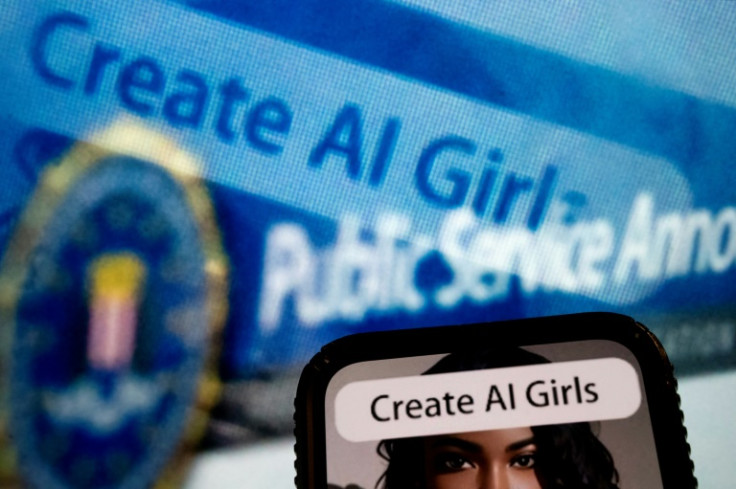
The rapid spread of artificial intelligence-generated content is fuelling a sharp rise in celebrity impersonation scams, exposing fans to escalating financial and emotional harm. As deepfake videos and cloned voices become more realistic and widely available, fraudsters are increasingly exploiting the trust people place in familiar public figures.
New data suggests the scale of the problem is accelerating faster than many consumers and platforms can adapt. With manipulated content now circulating across social media feeds, private messages, and online adverts, experts warn that recognising what is real is becoming harder just as the stakes for victims grow higher.
Read More: Gilbert Arenas Laughs and Gasps at Matt Barnes' $61k AI Scam Breakdown
Read More: Google Issues Urgent Scam Warning: Millions at Risk as Criminals Use AI to Steal Money, Data and Identities
Recent cases show that celebrity deepfake scams are no longer fringe incidents. Instead, they represent a fast-evolving fraud model built on automation, personalisation, and emotional manipulation, raising concerns that 2026 could bring even wider abuse.
What The Data Shows About Deepfake Growth
According to DeepStrike's Deepfake Statistics 2025, global deepfake production was projected to exceed 8 million files in 2025, marking a sixteenfold increase since 2023. What was once a niche technology has become a mass-scale tool, capable of generating convincing audio, video, and images in minutes.
Europol has separately warned that by 2026, as much as 90 per cent of online content could be synthetically generated.
This volume makes traditional verification methods, such as visual inspection or instinctive judgement, increasingly unreliable, particularly when content appears in trusted contexts, such as celebrity interviews, endorsements, or private messages.
Researchers say the abundance of public footage of celebrities makes them ideal targets. High-quality source material allows scammers to train AI models that closely replicate real voices and facial movements, blurring the line between authentic media and manipulation.
How Celebrity Impersonation Scams Operate Today
Modern celebrity scams are rarely isolated efforts. Security analysts report that many operations now use multiple AI systems working together. One tool identifies potential victims, another generates deepfake video or audio, while a third refines messages based on responses.
The AI revolution is real, but so is the wave of AI powered fraud.
— Jan Lukas (@JL_BYWealth) January 9, 2026
Don't let the hype blind you. If it sounds too good to be true, it’s not AI—it’s a scam.
🚩Spotting an AI scam on X is getting harder, but the rules remain:
🔹Guaranteed returns? Scam.
🔹Deepfake celebrity…
'We're seeing scams shift from isolated impersonations to coordinated AI systems that learn and adapt,' says Olga Scryaba, AI Detection Specialist and Head of Product at isFake.ai. 'That makes celebrity scams more persistent and harder to disrupt.'
Fraudsters also rely on so-called persona kits, which bundle cloned voices, synthetic faces, and fabricated backstories. These kits reduce technical barriers and allow scams to be repeated at scale, often targeting victims over weeks or months to build trust and reduce suspicion.
Warning Signs Experts Continue To See
Despite the sophistication of deepfakes, patterns still emerge across documented cases. Requests for secrecy, urgency, or unconventional payment methods remain consistent red flags. Gift cards, cryptocurrency, and bank-linked transfers are frequently used to bypass consumer protections.
Experts also note that scams increasingly appear in environments designed for rapid consumption. 'AI content is published and consumed in spaces built for speed and emotional engagement,' Scryaba explains. 'People scroll without stopping to fact-check, and over time they stop questioning authenticity altogether.'
The Steve Burton Deepfake Romance Case
One well-documented case involved an AI-generated impersonation of Steve Burton, best known for his role on General Hospital. Scammers used synthetic video and cloned voice messages to convince a fan she was in a private relationship with the actor.
Over time, the victim transferred more than £ 63,000 ($ 80,000) via gift cards, cryptocurrency, and other services before her daughter uncovered the fraud. Analysis later revealed cloned voice patterns and subtle visual inconsistencies typical of synthetic media.
'The risk is no longer limited to obviously fake videos,' Scryaba says. 'Modern deepfake scams rely on realism, repetition, and personalisation.'
Why The Risk Will Grow In 2026
With deepfake production continuing to scale and detection tools struggling to keep pace, experts expect celebrity-based scams to rise further next year.
McAfee Labs' 2025 Most Dangerous Celebrity: Deepfake Deception List highlights how frequently scammers hijack famous likenesses, with Taylor Swift topping the rankings, followed by Scarlett Johansson, Jenna Ortega, and Sydney Sweeney.
The firm's first Influencer Deepfake Deception List shows similar abuse spreading across social platforms, suggesting the threat is expanding beyond Hollywood.
'As synthetic content becomes more common, verification has to become a habit,' Scryaba warns. 'The cost of assuming something is real is simply too high.'
© Copyright IBTimes 2026. All rights reserved.