

Is Europa Dead? Researchers Reveal Habitability Doubt as 3I/ATLAS Approaches
Is Europa dead? New research casts doubt on life on Jupiter's moon as 3I/ATLAS closes in
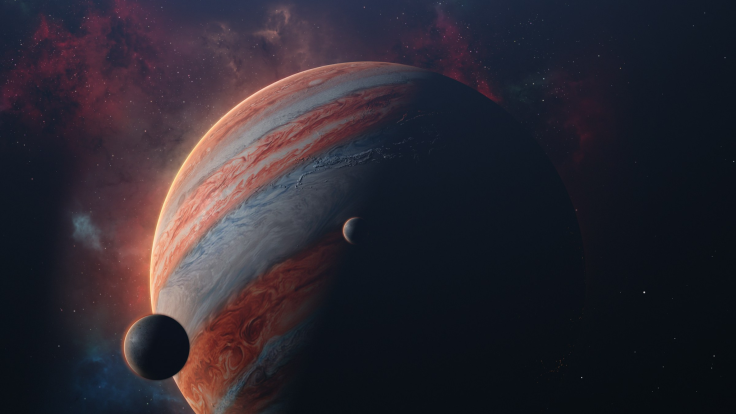
For decades, the frozen plains of Jupiter's moon, Europa, have served as the crown jewel of astrobiology. Beneath a fractured crust of ice, scientists have long believed a global ocean of salty liquid water — holding twice the volume of Earth's oceans — could be the most likely sanctuary for extraterrestrial life in our solar system. However, a new wave of scientific pessimism is threatening to pull the rug out from under those long-held dreams.
A startling study, led by planetary scientist Paul Byrne of Washington University in St. Louis and unveiled during a Jan. 6 press briefing, suggests that Europa might be 'dead' after all. By modelling the moon's size, rocky core and the immense gravitational tug of Jupiter, Byrne's team concluded that Europa's rocky seafloor may be mechanically too strong to allow for the tectonic fracturing and volcanic activity seen on Earth.
The research suggests that Europa likely lacks the hydrothermal 'black smokers' or seafloor volcanoes — vital geologic engines that many biologists believe are essential for providing the chemical energy and nutrients needed to power life. Without this continuous energy exchange, the moon's subsurface sea could be nothing more than a chemically stagnant and barren graveyard.
The Interstellar Mystery of 3I/ATLAS
The arrival of the interstellar visitor 3I/ATLAS — only the third such object ever discovered, following 'Oumuamua and Borisov' — adds a layer of cosmic drama to an already heated debate. While this object, discovered in July 2025, isn't expected to collide with Europa, its trajectory brings it into the same gravitational backyard at a moment when our understanding of the Jovian moons is being challenged.
3I/ATLAS is projected to make its closest pass to Jupiter on March 16, 2026, passing roughly 0.36 astronomical units (54 million kilometres) from the gas giant. Harvard astrophysicist Avi Loeb has previously explored the provocative idea that such interstellar travellers are not merely cosmic debris but potential carriers of complex chemistry.
Loeb has highlighted that 3I/ATLAS is massive, possibly several kilometres across, and possesses an 'impossible' water emission rate — discharging roughly 40 kilograms of water per second even when far from the Sun's warmth.
Could 3I/ATLAS provide a new lens through which we view Europa? While there is no evidence the object is 'seeding' the moon with life, its presence reminds us that Europa exists within a dynamic system. The object itself has already baffled astronomers with an unexplained sunward-facing 'anti-tail' jet, sparking talk of exotic physical processes that remain entirely alien to our current models.

Why the 3I/ATLAS Encounter Challenges Stagnation Theories
The recent 'dead Europa' study relies almost entirely on indirect modelling. No human-made craft has ever tasted the water of Europa's deep ocean or touched its seafloor. Critics of the study argue that declaring the moon uninhabitable now is premature, especially as NASA's flagship mission, the Europa Clipper, is already en route.
Launched on Oct. 14, 2024, the Europa Clipper is a solar-powered spacecraft the size of a basketball court. It is currently on a 1.8 billion-mile journey, set to arrive at the Jupiter system in April 2030. The mission is specifically designed to perform 49 close flybys, some as low as 25 kilometres (16 miles) above the surface, to gather the very data these models lack. Equipped with nine sophisticated instruments, including ice-penetrating radar (REASON) and a thermal imaging system (E-THEMIS), the craft will analyse ice thickness and search for active plumes of water vapour.
Furthermore, the study assumes life must follow an Earth-like blueprint. History has shown us that life is far more resilient than we often give it credit for. By the time 3I/ATLAS makes its pass in March 2026, the scientific community may find that the energy gradients required for life on Europa are driven by factors not yet considered, such as intense tidal flexing or radiation-driven chemical cycles from Jupiter's magnetosphere. In the world of science, the absence of proof is not proof of absence.
Declaring Europa a lost cause before we have arrived to look for ourselves seems like a failure of the scientific imagination. As 3I/ATLAS closes in, the debate over Jupiter's most famous moon is only just beginning. We are at a crossroads where hard data will finally replace speculation. Until then, the prudent position remains one of skepticism tempered with hope, an acknowledgement that the most important discoveries often arrive only after we stop assuming we already know the answer.
© Copyright IBTimes 2026. All rights reserved.